
B2B FORMAT COMPARISON FOR OFFICES FITNESS CENTERS APARTMENTS AND HOTELS
AI Smart Cooler vs. Micro Market: What Is a Micro Market and Which Format Fits Your Location?
If you are asking what is a micro market, the practical answer is an unattended retail area that usually combines open shelves, refrigerated or frozen fixtures and a self-checkout point. An AI smart cooler is a more contained format: customers access a cabinet, select products and complete checkout through the configured recognition and payment workflow. Neither format is universally better. The right choice depends on space, assortment, loss controls, customer flow, investment limits, staffing and replenishment capability.
Featured Snippet
A micro market is an unattended retail area with open shelving, refrigerated or frozen fixtures and self-checkout. An AI smart cooler places the assortment inside a controlled cabinet. Micro markets can support broader choice and browsing; smart coolers can fit tighter sites and keep access more controlled. Site evidence should decide.
What Is a Micro Market and How Is It Different from an AI Smart Cooler?
A micro market behaves like a compact self-service store. Customers browse products displayed on open shelves and in coolers, then identify and pay for their basket at a kiosk or another configured checkout point. Its flexibility comes from combining several fixture types, but that also increases layout, catalog and operating complexity.
An AI smart cooler concentrates the journey around a cabinet. Depending on the quoted configuration, access control, cameras, weight sensing or other product-recognition methods may help associate products with a transaction. The format still requires a maintained product catalog, suitable lighting and visibility, reliable connectivity, payment integration, replenishment discipline and human review of exceptions.
AI Smart Cooler vs. Micro Market Comparison
| Decision factor | AI smart cooler | Micro market | Buyer evidence |
|---|---|---|---|
| Space and site works | Contained cabinet footprint; confirm door clearance, power, network and ventilation | Open shelving plus cold fixtures and checkout need a planned retail zone | Measured plan, traffic path and utility survey |
| Assortment | Primarily products compatible with cabinet dimensions and temperature configuration | Can combine ambient, chilled and possibly frozen categories across fixtures | SKU list, package dimensions, storage rules and category roles |
| Loss exposure | Controlled access and transaction matching can support review; exceptions remain possible | Open shelves increase physical access and require proportionate controls | Pilot reconciliation, incident process and privacy review |
| Buying experience | Open, take and close or another configured cabinet flow | Browse a small store, collect items and use self-checkout | Observed user tests including exception paths |
| Upfront investment | Cabinet, software, payments, connectivity, installation and service | Fixtures, refrigeration, checkout, networking, installation and store preparation | Comparable written quotations with inclusions and recurring fees |
| People and replenishment | Route staff restock, rotate and reconcile the cabinet | Broader merchandising, cleaning, replenishment and store presentation workload | Labor map, refill frequency and service ownership |
Start with Space Constraints and Customer Traffic
A compact location may favor a smart cooler because the offer stays inside one cabinet. However, “compact” does not remove the need for door swing, customer approach, electrical supply, connectivity, ventilation and safe replenishment access. Buyers should measure the real site instead of selecting from a product image.
A micro market needs enough room for browsing, fixtures, checkout, circulation and restocking without blocking the host location. It can become more valuable when traffic and dwell time support a broader assortment, but extra floor area is only useful if customers can understand the layout and operators can maintain it.
Match the Product Mix to Temperature and Packaging
Smart coolers are suited to products that physically fit the shelves and remain compatible with the quoted temperature and recognition setup. Drinks, packaged snacks and selected fresh foods may be candidates, subject to packaging, shelf life, allergens and local food rules. Products should never be added solely because the cabinet has empty space.
A micro market can separate ambient, chilled and other categories across appropriate fixtures. That flexibility supports meal occasions and larger baskets, but it also creates more date codes, planograms and storage conditions to manage. The buyer should map every category to a fixture, handling rule and replenishment owner.
Compare Loss Risk Data and Privacy Boundaries
A controlled cabinet can reduce casual physical access, but it does not eliminate loss, recognition errors, payment exceptions or disputes. A micro market exposes more open merchandise and may need layout, camera, access or staffing controls. Neither format should be described as theft-proof.
For both formats, buyers should define transaction-to-inventory reconciliation, exception review, data access, retention and customer support. Pilot results should separate catalog errors, restocking mistakes, technical exceptions and suspected loss instead of treating every discrepancy as customer theft.
Test the Complete Buying Experience
The smart-cooler journey may include payment verification, cabinet access, product browsing, item take-or-return, door closure and final confirmation. A micro-market journey may include browsing several fixtures, scanning or selecting items, basket review, payment and receipt. The exact flow depends on configuration.
Testing should include first-time users, accessibility needs, payment declines, an unrecognized product, a returned item, network degradation and a request for help. A short normal transaction is not enough to prove that the full experience works.
Evaluate Investment Staffing and Replenishment Together
Do not compare cabinet price with a micro-market checkout price alone. Build a full scope that includes fixtures, refrigeration, payment hardware, software, connectivity, installation, site work, branding, training, service, payment costs and recurring licenses. Use written quotations; do not assume a return based on a generic revenue claim.
Staffing also changes by format. A smart cooler may concentrate replenishment in one cabinet, while a micro market may require more merchandising, cleaning and category rotation. Both need remote review, support and physical service. Model route time, refill frequency, waste and exception handling with local data.
Four Location Playbooks and Suggested Images
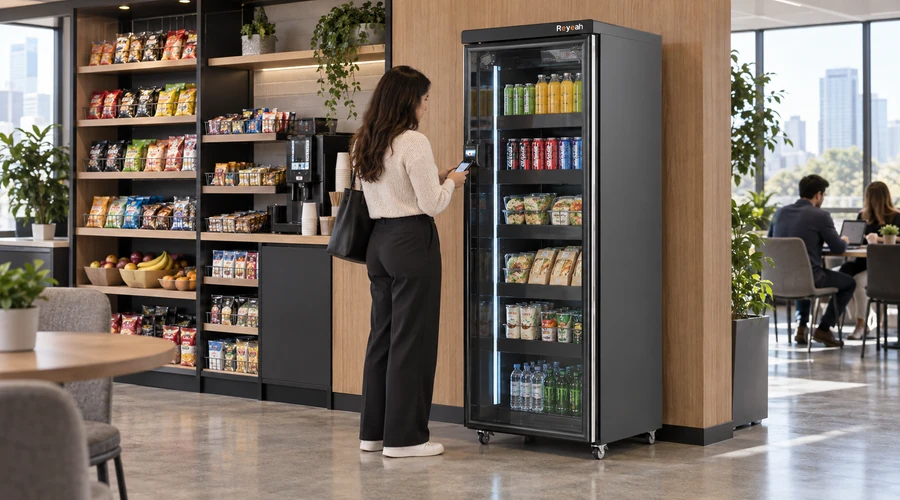
1. Office
An office with limited retail space may use a controlled cabinet near a break area. If employee traffic, lunch choice and available floor area justify a larger range, a micro market may fit better. Check peak queues, fresh-food rotation and access outside staffed hours.
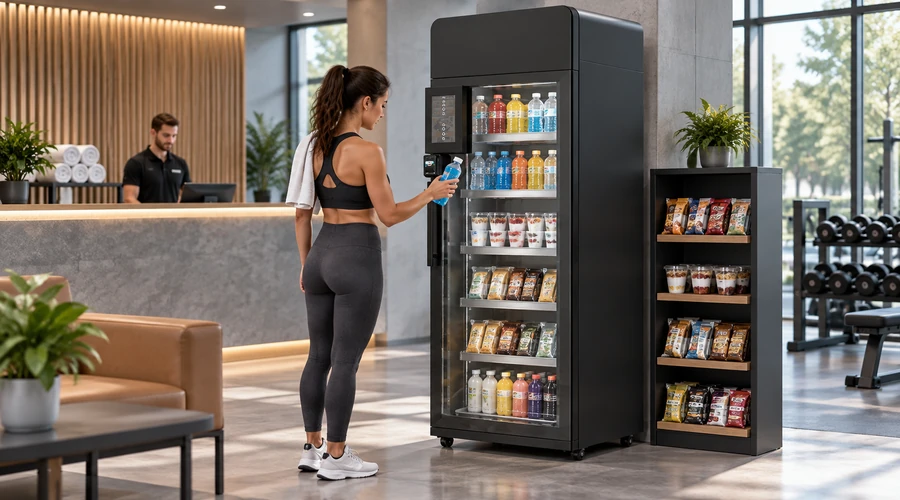
2. Fitness center
A gym often needs chilled grab-and-go products near reception or recovery areas. A smart cooler can keep the offer contained; a micro market can add ambient accessories and broader food choice when space and replenishment support it. Do not make nutrition or performance claims without compliant product evidence.
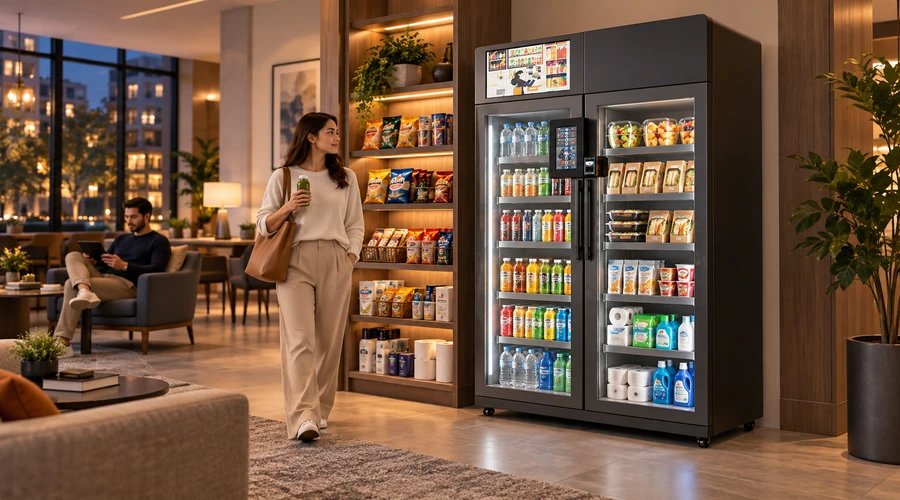
3. Apartment
An apartment amenity area may value a broader resident assortment and access at different hours. A dual-door cabinet is a candidate where one contained unit is preferred; a micro market may suit a larger clubhouse. Review resident access, guest use, noise, delivery routes and support.
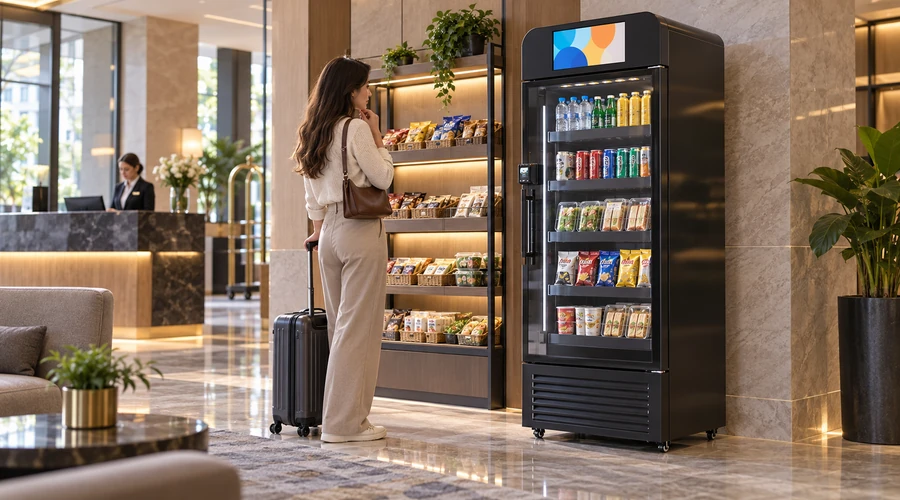
4. Hotel
A hotel should consider lobby flow, guest languages, late-hour access and staff escalation. A display-equipped cabinet may support on-screen communication; a micro market may provide a more store-like lobby offer. Any advertising or interface scope must be confirmed in the project quotation.
Four Reyeah Products to Verify
These official product pages are shortlist references, not proof of suitability. Confirm cabinet configuration, refrigeration, recognition, payment, dimensions, installation, software, service and commercial terms in writing.
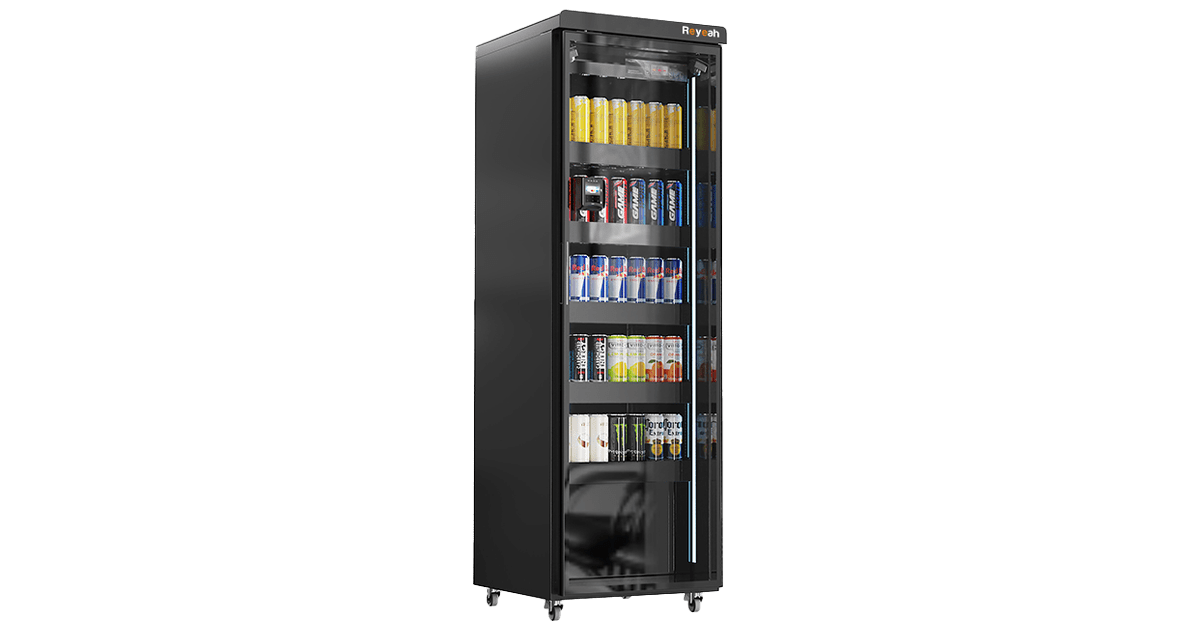
A controlled-access candidate for compact sites. Confirm refrigeration, recognition, payment, software and service scope in writing.
View X12 details →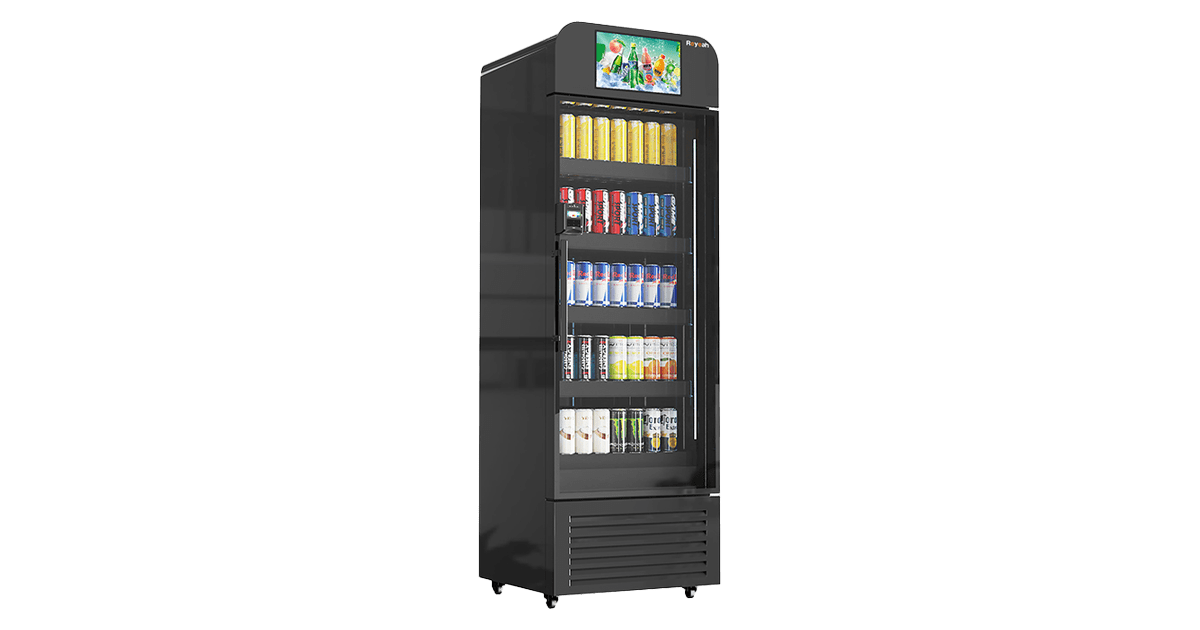
A display-equipped candidate where guidance or product communication matters. Confirm the exact quoted interface and service scope.
View X13 details →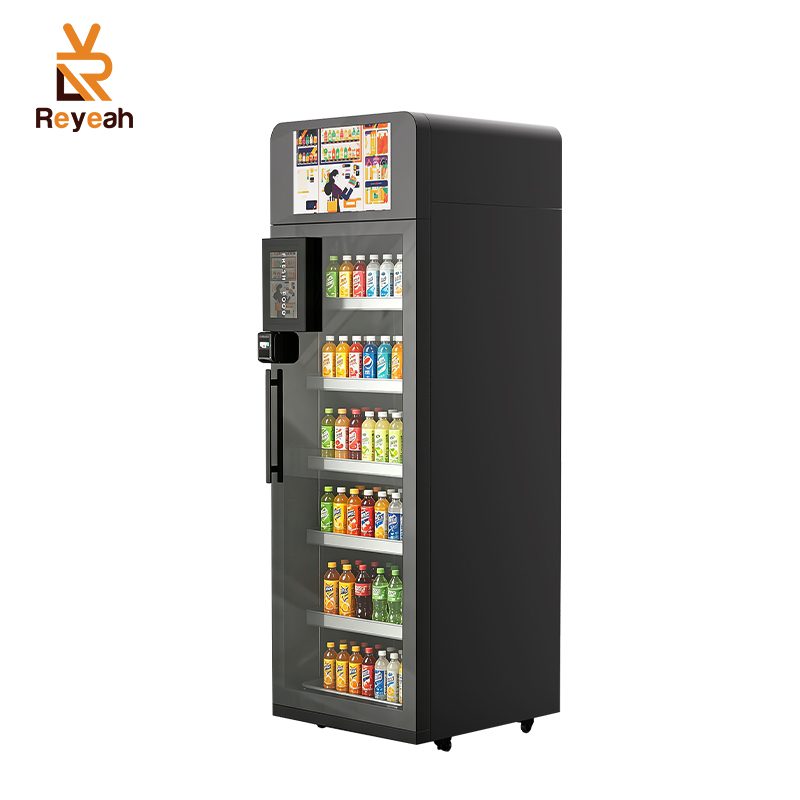
A smart-cooler candidate for chilled grab-and-go products. Confirm temperature, recognition, payment and regional support.
View X14 details →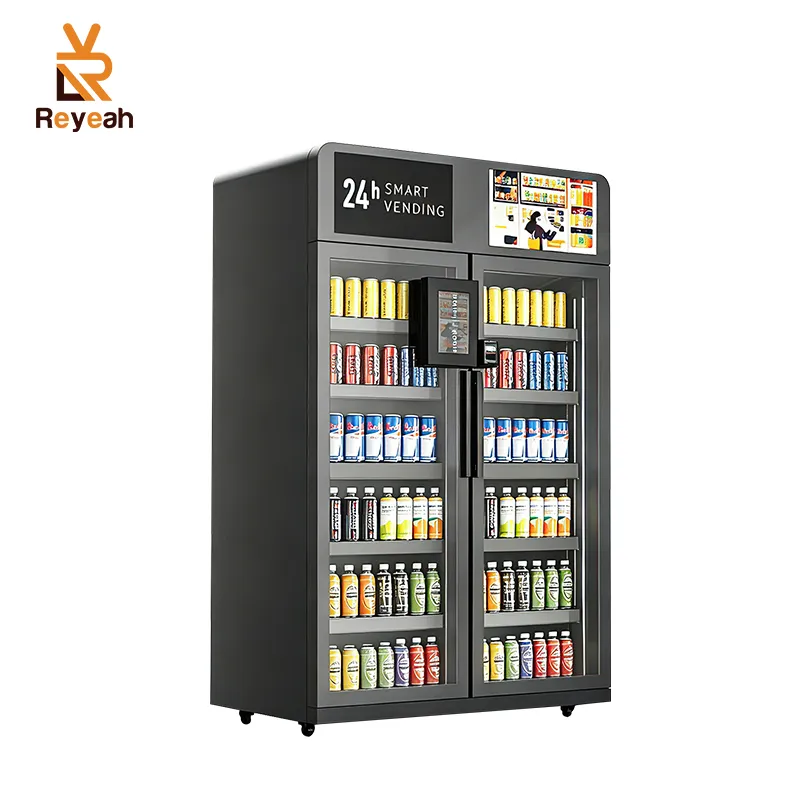
A dual-door candidate for a broader contained assortment. Confirm footprint, access logic and the complete quoted configuration.
View X15 details →Deployment Checklist Before Choosing a Format
- Measure footprint, door clearance, circulation, utilities, ventilation and replenishment access.
- Define customer groups, dayparts, basket missions and accessibility requirements.
- Map every SKU to package dimensions, temperature, shelf life, allergen and local compliance controls.
- Document payments, access, catalog, recognition, connectivity, privacy and exception workflows.
- Obtain comparable quotations that show included hardware, software, installation, recurring fees and service.
- Pilot both the normal journey and failure paths; reconcile transactions, inventory, waste and support events.
- Select the format only after the site evidence supports the operating workload and customer experience.
Conclusion The Site Determines the Format
The answer to what is a micro market is useful only when it leads to a site decision. Choose an AI smart cooler when a contained cabinet matches space, assortment and operating capacity. Choose a micro market when the location can support a broader store-like range, open merchandising and the added operating workload. In both cases, pilot evidence and written specifications matter more than a universal claim.
Need help comparing what is a micro market with an AI smart cooler for your location? Contact Reyeah to review the site, product mix and configuration questions.
Discuss Your Location With Reyeah