
B2B BUYING & OPERATIONS GUIDE
Vending Products for Smart Coolers: 25 Best-Selling Ideas
A practical, evidence-led framework for building a safe, operable and measurable refrigerated assortment.
Vending products for smart coolers should be chosen from evidence, not a universal “best seller” list. The 25 ideas below are practical B2B candidates, but local demand, food rules, cabinet capability, price architecture and replenishment capacity decide what earns a place. “Best-selling” describes categories worth testing, not verified sales or profit.
Featured answer: Start with drinks and durable chilled snacks, add fresh meals in small tests, then use sell-through, stockouts, waste and refill labor to decide which SKUs remain.
How to Select Vending Products for Smart Coolers
A smart cooler expands the assortment beyond shelf-stable vending, but every extra perishable SKU adds a control obligation. Buyers should define the operating system before selecting the menu.
| Decision factor | Buyer question | Evidence to collect |
|---|---|---|
| Demand | Which purchase missions occur by daypart? | Site survey, pilot transactions and customer feedback |
| Cold chain | Can receiving, storage, transport and cabinet conditions be controlled? | Procedures, logs and corrective actions |
| Shelf life & waste | How much selling time remains after delivery? | Date records, removal rules and waste counts |
| Economics | Does contribution remain after direct costs? | Supplier invoices and site-specific cost model |
| Compliance | Which labeling, allergen, tax and food-safety rules apply? | Competent local authorities and counsel |
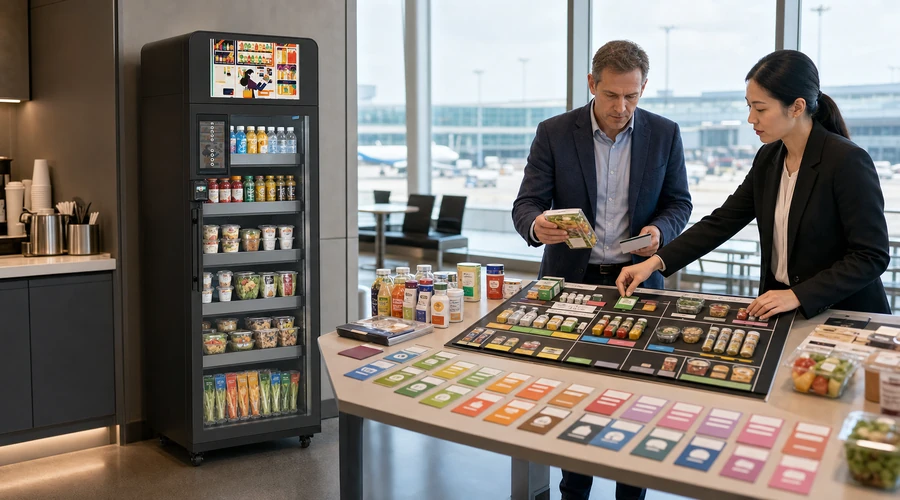
25 Product Ideas by Purchase Occasion
Use this list as a test portfolio. Begin with fewer facings and only expand after verified data supports it.
Hydration and Everyday Drinks
| # | Product | Why test it | Primary control |
|---|---|---|---|
| 1 | Still water | Broad hydration need; test bottle size and price tier. | Package integrity and rotation. |
| 2 | Sparkling water | A non-sugary alternative for offices and hospitality. | Flavor mix and slow-moving variants. |
| 3 | Unsweetened flavored water | Adds variety without relying on sweet soft drinks. | Label claims and local preference. |
| 4 | Low- or zero-sugar soft drinks | Familiar formats can support trial. | Variant duplication and date rotation. |
| 5 | Electrolyte drinks | Potential fit for gyms, factories and active sites. | Verify labels; do not imply health outcomes. |
Breakfast and Dairy Alternatives
| # | Product | Why test it | Primary control |
|---|---|---|---|
| 6 | Single-serve yogurt | Breakfast and snack occasion in one portion. | Temperature, allergens and expiry. |
| 7 | Drinkable yogurt or kefir | Portable format for commuter locations. | Short shelf life and dairy allergen. |
| 8 | Plant-based yogurt | Broadens dietary choice where demand exists. | Ingredients and cross-contact review. |
| 9 | Overnight oats | Breakfast option with clear portioning. | Date coding, texture and topping allergens. |
| 10 | Ready-to-drink coffee or tea | Supports morning and afternoon missions. | Sugar/caffeine mix and package sizes. |
Fresh Meals and Savory Choices
| # | Product | Why test it | Primary control |
|---|---|---|---|
| 11 | Sandwiches | Recognizable meal option with many fillings. | Cold chain, allergens and waste. |
| 12 | Wraps | Compact meal format suited to grab-and-go. | Seal integrity, dates and fillings. |
| 13 | Prepared salads | Supports lighter meal demand. | Strict refrigeration and short life. |
| 14 | Protein snack boxes | Combines components for a meal bridge. | Multiple allergens and component dates. |
| 15 | Hummus and vegetable cups | Plant-forward snack or light meal. | Refrigeration, sesame and fresh-cut produce. |
| 16 | Chilled ready meals | Can address lunch or shift-meal demand. | Heating access, instructions and shelf life. |
| 17 | Sushi or rice rolls | Site-specific premium meal candidate. | High perishability and local food rules. |
Fruit and Nutrient-Dense Snacks
| # | Product | Why test it | Primary control |
|---|---|---|---|
| 18 | Fresh-cut fruit cups | Convenient fresh option with visible quality. | Short life, leakage and temperature. |
| 19 | Whole fruit packs | Simple profile and lower preparation risk. | Bruising, ripeness and chilling suitability. |
| 20 | Bottled smoothies | Portable fruit-led beverage where demand supports it. | Claims, separation and expiry. |
| 21 | Cheese snack packs | Portion-controlled savory snack. | Dairy allergen, package and temperature. |
| 22 | Hard-boiled egg packs | Protein-led snack for suitable sites. | Egg allergen, odor and refrigeration. |
Treats and Targeted Add-Ons
| # | Product | Why test it | Primary control |
|---|---|---|---|
| 23 | Chilled desserts or puddings | Treat category for incremental choice. | Allergens, sugar mix and expiry. |
| 24 | Protein shakes | Potential fit for fitness and shift-work sites. | Claims, sweeteners and allergens. |
| 25 | Seasonal refrigerated treats | Creates controlled variety without a permanent slot. | Small tests and seasonal dead-stock control. |
Cold Chain, Shelf Life, Allergens and Local Rules
Refrigeration does not make every product safe indefinitely. Follow supplier storage instructions, validate receiving-to-sale controls, and define actions for temperature excursions, power loss, damaged seals or expired dates. Local rules—not this guide—determine mandatory limits and responsibilities.
Allergen information must remain legible and associated with the correct SKU. Mixed boxes and prepared meals need special review for multiple ingredients and cross-contact. Do not relabel or make nutrition claims without a compliant process.
For a general regulatory reference, review the FDA Food Code, then confirm the law applicable in the operating jurisdiction.
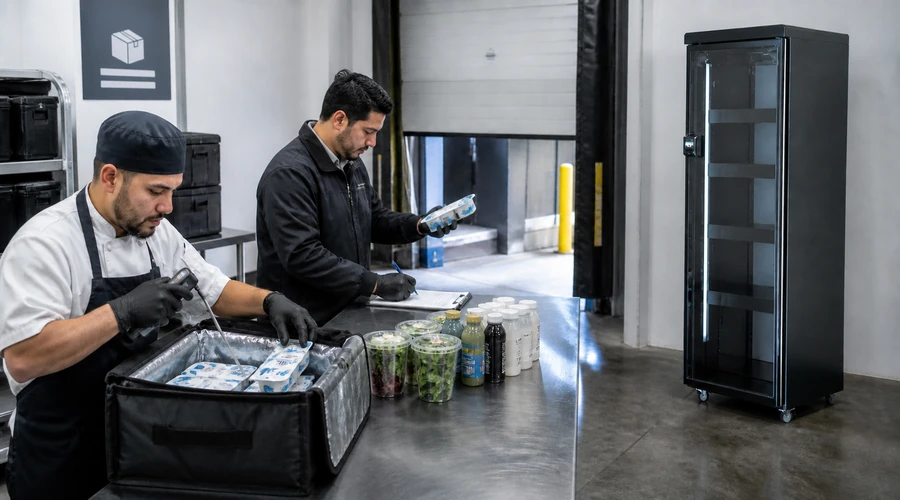
Replenishment and Rotation: Make the Assortment Operable
- Use FEFO (first-expired, first-out) where date coding supports it; inspect seals, appearance and labels.
- Set a minimum remaining shelf-life rule for receiving and loading.
- Match fresh-food ambition to delivery frequency, back-room refrigeration and staff time.
- Define removal, quarantine, refund and incident procedures before launch.
- Synchronize SKU names, package images and prices with cabinet software where required.
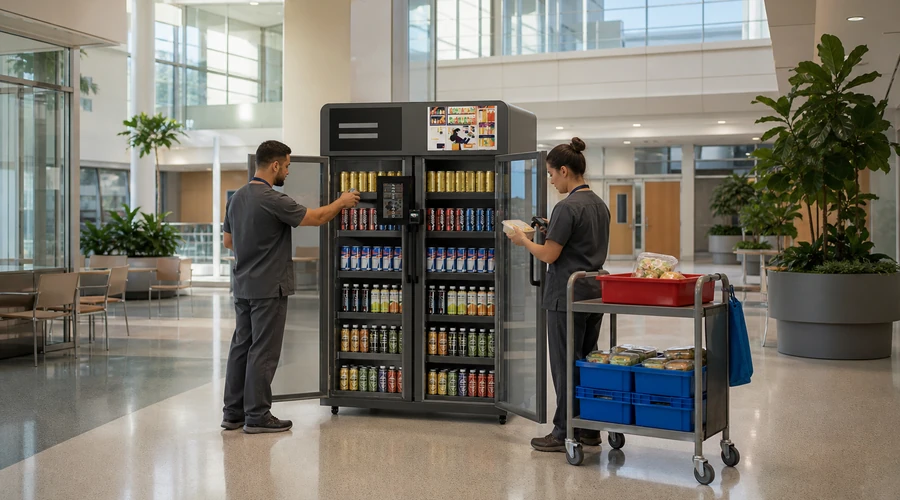
Validate Demand Without Inventing a Bestseller
Run a time-bounded pilot with a documented baseline. Evaluate unit sell-through, stockout frequency, expiry waste, gross contribution after direct costs, replenishment minutes and customer requests by daypart and site type. A fast seller can still be unsuitable when waste, service or operating costs are excessive.
| Pilot decision | Evidence | Action |
|---|---|---|
| Expand | Consistent demand, controllable waste and reliable supply | Add facings or a related SKU |
| Adjust | Demand exists but availability, price or refill timing is weak | Change par level, price test or route schedule |
| Remove | Repeated expiry, low demand or control burden | Replace and document why |
| Investigate | Inventory and transaction records disagree | Reconcile catalog, process and hardware |
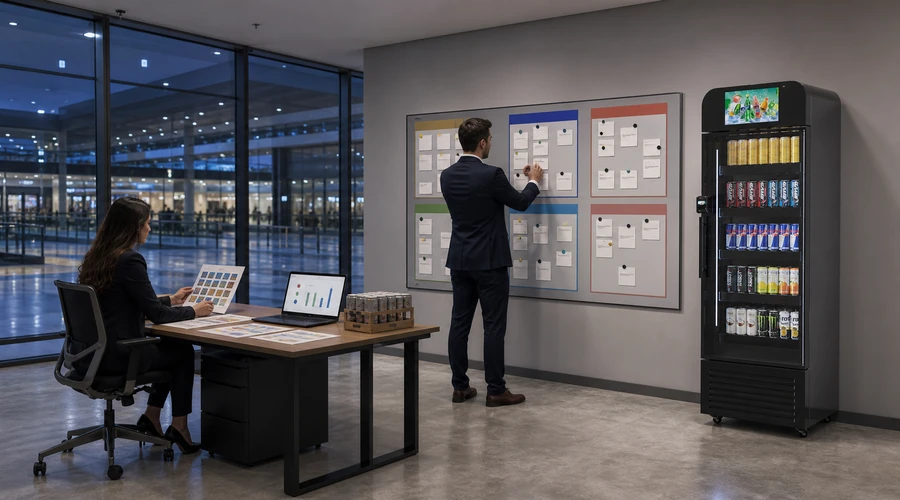
B2B Buying Checklist for a Smart Cooler Program
- Confirm cabinet temperature capability and alarm behavior in writing.
- Map receiving, storage, transport, refill and removal ownership.
- Check payment, network, catalog and inventory integrations.
- Require access controls, roles, data export and incident support terms.
- Model product, payment, service, labor, shrink and waste with site data.
- Define pilot acceptance for customer journey, reconciliation, response and food controls.
Four Reyeah Product Candidates to Verify
These are shortlist candidates, not guaranteed configurations. Verify refrigeration, recognition, payment, installation and regional support before purchase.
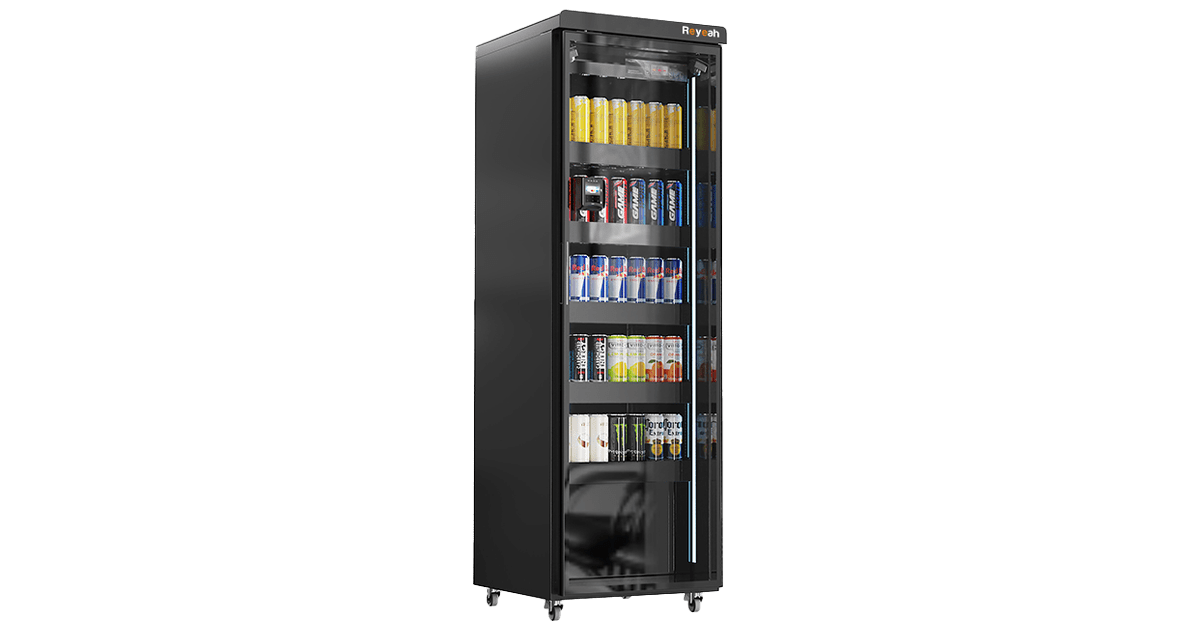
A controlled-access smart cabinet candidate; confirm refrigeration, recognition, payment and support in the quoted configuration.
View X12 details →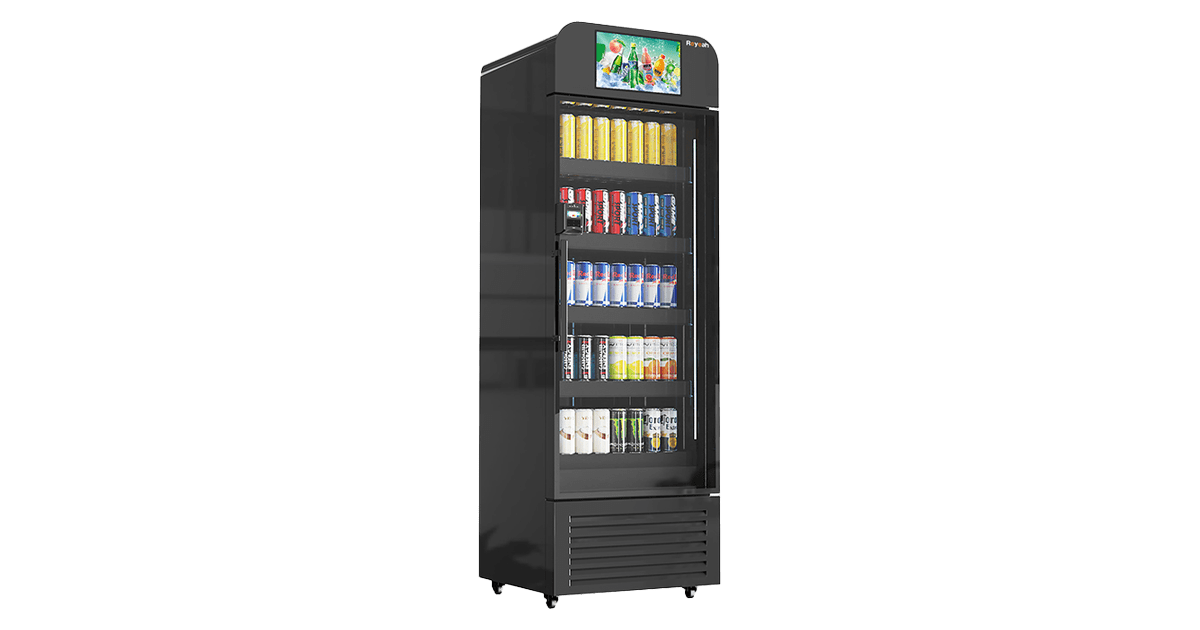
A display-led refrigerated vending candidate; confirm the content workflow and exact configuration in writing.
View X13 details →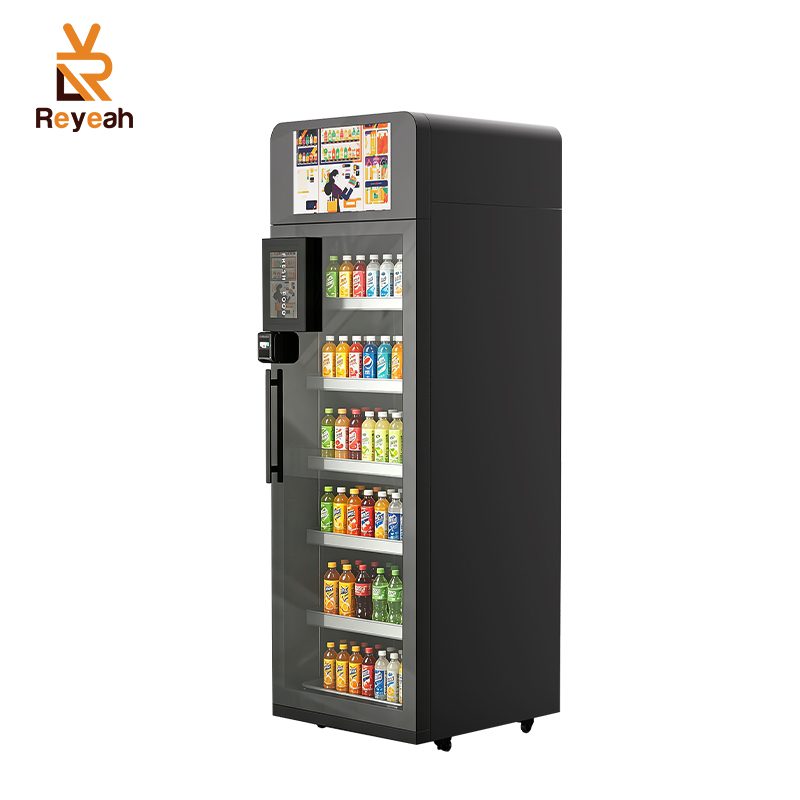
A smart-cooler candidate for chilled or frozen assortment; confirm temperature zone, loading rules, power and local service.
View X14 details →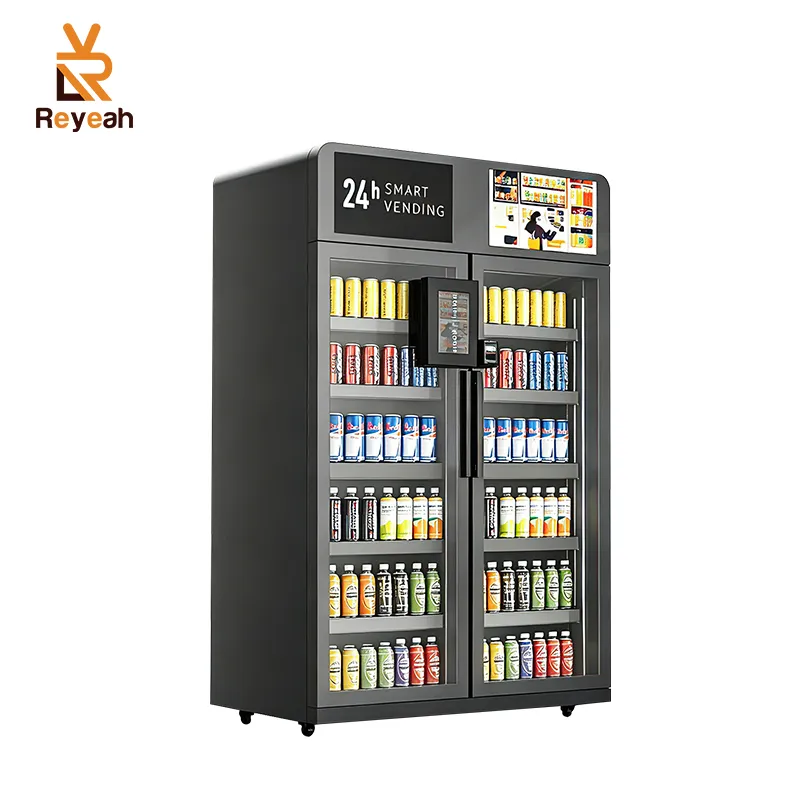
A dual-door higher-capacity candidate; confirm footprint, replenishment workflow and quoted configuration.
View X15 details →Conclusion: Build a Local, Measurable Assortment
The strongest vending products for smart coolers are not selected by trend alone. They fit the site's purchase missions, remain safe and presentable through the operating chain, and produce acceptable contribution after waste and labor. Use these 25 ideas as hypotheses, pilot controlled quantities and let verified site data determine the final range.
Share the site, cabinet shortlist and operating requirements for a configuration review.
Request a Configuration Review