
Micro Market Vending Machine for Sale: 10 Questions to Ask Before Buying
Choosing a micro market vending machine for sale is a long-term operating decision, not simply a hardware purchase. The right system must fit your product mix, location, payment market, replenishment plan, and growth strategy. It should also give your team the software visibility and supplier support needed to run unattended retail with fewer surprises.
Many B2B buyers begin by comparing cabinet prices. Yet two machines with a similar appearance can differ substantially in refrigeration, product-recognition technology, payment compatibility, cloud management, customization, and after-sales service. A lower initial quotation may become more expensive if the equipment requires frequent service, cannot support local payments, or must be replaced when the business expands.
This guide explains ten practical questions to ask before selecting micro market equipment or a vending machine supplier. It is written for operators, distributors, facility managers, and entrepreneurs planning installations in offices, hotels, hospitals, universities, airports, factories, and other commercial locations.
New to the business model? Read What Is a Micro Market? 2026 Setup, Cost & Profit Guide before using this buyer checklist.
How to Choose Micro Market Equipment Before You Buy
A micro market may combine open shelving, smart refrigerated cabinets, ambient cabinets, self-checkout technology, cashless payment, and cloud-based management. Some projects use a group of connected devices, while others begin with one smart vending machine and expand after demand is proven.
The best configuration is not automatically the largest or most expensive option. It is the system that matches what customers will buy, how often stock can be replenished, the space and power available, local payment habits, food-safety requirements, and the operator’s ability to manage the site.
Quick buying principle: Define the retail operation first, then select the hardware. A clear product, location, and service plan makes supplier quotations easier to compare.
Why These 10 Buying Questions Matter
A micro market vending machine can affect revenue, labor requirements, product availability, and customer experience for years. Asking structured questions before requesting a final quotation helps buyers compare complete solutions instead of isolated specifications.
Match usable capacity, shelf layout, and temperature control to the products customers will actually buy.
Confirm that payments, connectivity, and cloud software work in the destination country and operating environment.
Estimate replenishment workload and total cost of ownership instead of comparing purchase price alone.
Evaluate warranty, spare parts, training, technical response, and manufacturing capability before shipment.
10 Questions to Ask Before Buying a Micro Market Vending Machine
1. What Products Will the Micro Market Sell?
Start with the merchandise, because product size, packaging, temperature, and turnover determine the cabinet configuration. Packaged snacks and bottled drinks have different storage requirements from salads, dairy products, frozen meals, cosmetics, or irregularly shaped items.
Ask the supplier to review a sample SKU list, including product dimensions and expected quantities. This helps confirm shelf spacing, door layout, recognition method, refrigeration, and practical capacity. If the assortment changes seasonally, check how easily shelves and software product records can be updated.
Why it matters: equipment selected around real SKUs can improve space use, simplify replenishment, and reduce the risk of buying capacity that cannot be used effectively.
2. Is the Equipment Suitable for the Installation Location?
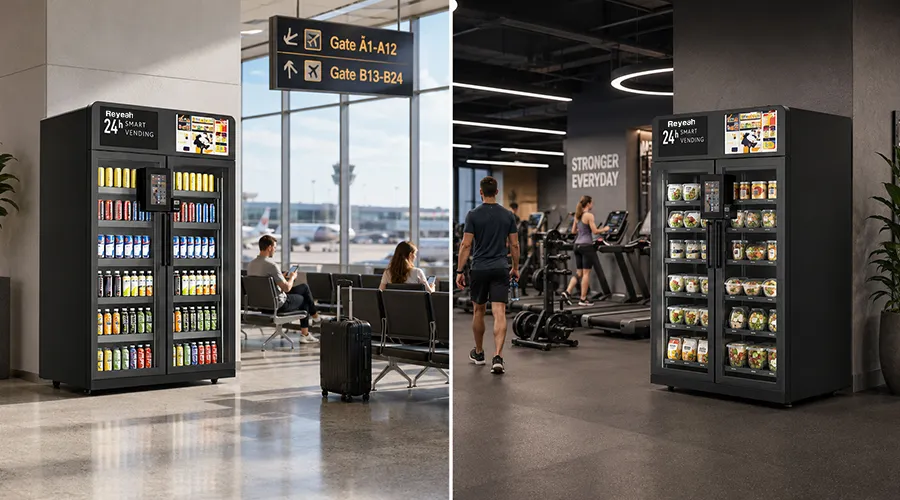
Location quality and equipment fit are separate questions. A high-traffic airport may justify larger capacity and frequent replenishment, while a small office may need a compact footprint, quiet operation, and a focused product range. Evaluate accessible floor space, doorway and lift dimensions, ventilation, power, connectivity, security, customer traffic, and service access.
Ask for the machine’s packed and unpacked dimensions, weight, power requirements, and installation clearance. For outdoor or semi-outdoor placement, confirm that the selected equipment is specifically rated for that environment; do not assume an indoor cabinet can tolerate heat, humidity, rain, or direct sunlight.
For deeper placement and assortment planning, see Micro Markets Vending: Best Products, Locations & Margins.
3. Does the System Support Fresh and Frozen Food Safely?
Fresh food can broaden customer choice, but it also increases operational responsibility. If the business will sell chilled or frozen products, confirm the temperature range of the exact ordered configuration, how temperature is measured, whether alerts are available, and what happens after a power or connectivity interruption.
The operator remains responsible for local food-safety rules, product dating, handling, and recall procedures. Equipment claims should be checked against technical documentation and the conditions at the installation site.
- Specified operating temperature for each compartment
- Temperature logs and remote exception alerts
- Door sealing, insulation, refrigeration, defrost, and condensate management
- Expiry-date or inventory-removal workflow
- Service access and replacement-part availability
For mixed chilled and frozen merchandise, evaluate the X14 AI smart cooler vending machine against your required temperature zones and local compliance needs.
4. Which Cashless Payment Methods Work in the Target Market?
Payment compatibility can determine whether customers complete a purchase. Do not accept a generic statement that a machine supports cashless payments. Confirm the exact reader, processor, acquiring arrangement, currency, transaction fees, settlement process, and supported payment methods in the destination country.
- EMV chip, contactless cards, and mobile wallets
- Local QR-code or account-based payment methods where required
- Pre-authorization and final-charge workflow for open-door shopping
- Refunds, reversals, and transaction-dispute records
- Offline behavior when connectivity is interrupted
- PCI-related responsibilities and remote payment updates
Ask which responsibilities belong to the hardware manufacturer, payment provider, and operator. A clear payment deployment plan reduces delays after the equipment arrives.

5. What Does the Cloud Management Platform Actually Include?
A smart vending machine is only as manageable as the data and controls available to the operator. Request a live software demonstration rather than relying only on a feature list. Review how inventory, transactions, device health, temperature, and user permissions are presented.
- Real-time or scheduled inventory visibility
- Sales, payment, refund, and transaction records
- Low-stock, door, temperature, and equipment alerts
- Remote product, price, and promotion updates
- Role-based access, multi-site reporting, and data export
- Software update policy, data ownership, and subscription fees
Also ask what happens if the software service is interrupted and whether historical data can be exported. These details affect operational continuity and the true long-term cost of the micro market equipment.

6. Can the Solution Scale from One Site to Multiple Locations?
Many operators test one location before expanding. A scalable system should allow additional cabinets, users, and sites to be added without rebuilding the entire technology stack. Confirm whether the same dashboard can manage different models, payment terminals, and temperature configurations.
- How many machines and locations can one account manage?
- Can inventory and pricing be controlled by site or customer group?
- Can new cabinets connect to an existing account?
- Are APIs or data exports available for larger operations?
- Which software, payment, or support costs increase as the network grows?
- Can distributors manage separate customer accounts with appropriate permissions?
Scalability is not simply machine capacity. It includes software administration, replenishment workflows, spare parts, training, and the supplier’s ability to support deployments in multiple regions.
7. How Should You Estimate ROI and Total Cost of Ownership?
The purchase price is only one part of the investment. Estimate revenue and operating cost using assumptions that reflect the proposed location. Important inputs include eligible daily traffic, conversion rate, average basket, gross margin, spoilage, payment fees, rent or revenue share, electricity, connectivity, software fees, replenishment labor, and maintenance.
Ask each supplier to separate one-time charges from recurring costs and state what is excluded from the quotation. Compare the same operating period and assumptions across alternatives. Treat projected returns as scenarios rather than guarantees.
Model your assumptions with the vending machine profit calculator; use the result as a planning estimate, not a guaranteed return.
8. Which Hardware, Branding, and Software Elements Can Be Customized?
Customization can help a micro market fit a location, merchandise strategy, or distributor brand. However, every modification can affect price, lead time, certification, serviceability, and minimum order quantity. Separate essential requirements from optional design preferences before requesting a quotation.
- Cabinet dimensions, doors, shelves, and temperature configuration
- Exterior color, graphics, logo, and lighting
- Screen content, interface language, and user flow
- Payment-terminal and connectivity integration
- Software functions, reports, APIs, and third-party integrations
- Packaging, manuals, and spare-parts kits
Request drawings or visual proofs for branded orders and obtain written confirmation of approved specifications. If certification is required, ask whether the customized configuration remains within the tested scope.
9. What Warranty and After-Sales Support Will You Receive?
Downtime can cost more than a small difference in purchase price. Before choosing a vending machine supplier, ask how faults are diagnosed, which parts can be replaced locally, and who provides support across time zones.
- Written hardware warranty and clearly stated exclusions
- Remote installation, setup, and operator training
- Support hours, languages, and target response process
- Software maintenance and standard update policy
- Spare-parts list, pricing, and typical dispatch time
- Diagnostic logs, service manuals, and replacement procedures
- Escalation route for payment, refrigeration, and software issues
For international projects, confirm Incoterms, inspection, freight-damage responsibilities, and the process for warranty parts. Keep these commitments in the quotation or contract instead of relying on informal messages.
10. Is the Supplier a Proven Vending Machine Manufacturer?
Not every seller designs or manufactures the equipment it offers. A direct vending machine manufacturer may provide stronger control over hardware, software changes, quality testing, and OEM/ODM projects, but claims still need verification.
- Factory identity, address, and production scope
- Quality-control checkpoints and pre-shipment testing
- Applicable product and management-system certificates
- Engineering ownership of hardware and software
- Documented export and customer-project experience
- OEM/ODM process, sample approval, and change control
- Warranty records, spare parts, and long-term update capability
Ask for documents relevant to the destination market and ordered configuration. Certification requirements vary by country, electrical system, payment device, and product use, so confirm compliance before placing the order. Review Reyeah’s capabilities as a smart vending machine manufacturer and request project-specific documentation before purchase.
How the 10 Buying Questions Are Distributed
Counts are derived directly from the ten-question framework in this guide; they are not revenue projections.
Micro Market Vending Machine Buyer Checklist
Use this checklist when comparing quotations for a micro market vending machine for sale. Require suppliers to answer the same questions so pricing and specifications can be evaluated consistently.
- Product list, packaging dimensions, and temperature requirements defined
- Installation space, access, power, ventilation, and connectivity checked
- Usable capacity confirmed with representative products
- Payment reader, processor, currency, and fees confirmed
- Cloud platform demonstrated; data, roles, and recurring fees reviewed
- Multi-location expansion path and additional costs documented
- ROI assumptions and total cost of ownership compared
- Customization drawings, specifications, and approvals recorded
- Warranty, training, spare parts, and support process documented
- Manufacturer identity, testing, and required certificates verified
- Freight, duties, installation, and Incoterms included in the budget
- Final quotation matches the exact approved configuration
Which Reyeah Vending Machine Should Buyers Evaluate?
Reyeah offers smart vending machine configurations for different merchandise, capacity, and site requirements. The following options are a starting point for evaluation, not a substitute for checking the current specification sheet and exact ordered configuration.
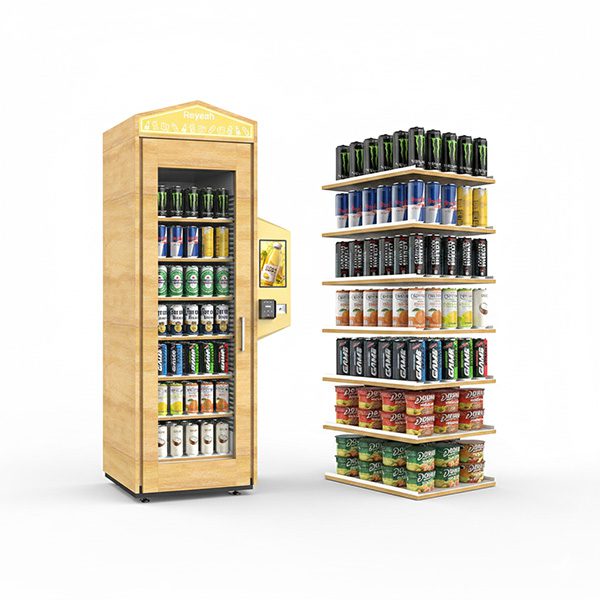
The premium-site option. X11 combines a compact single-door format, AI vision and weight sensing, a 10-inch touch display, and a furniture-style finish for lobbies, boutiques, corporate offices, and other presentation-sensitive locations.
View X11 details →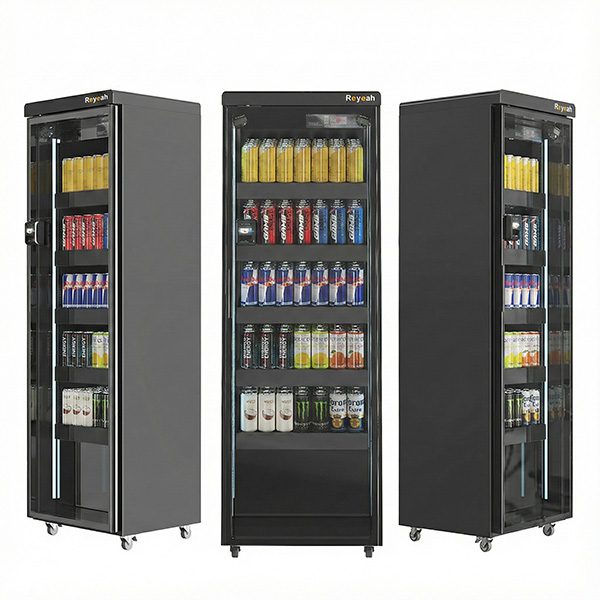
The durable high-capacity option. X12 uses an industrial painted-metal cabinet, flexible shelving, AI vision plus weight sensing, and remote cloud management for offices, gyms, factories, and busy commercial deployments.
View X12 details →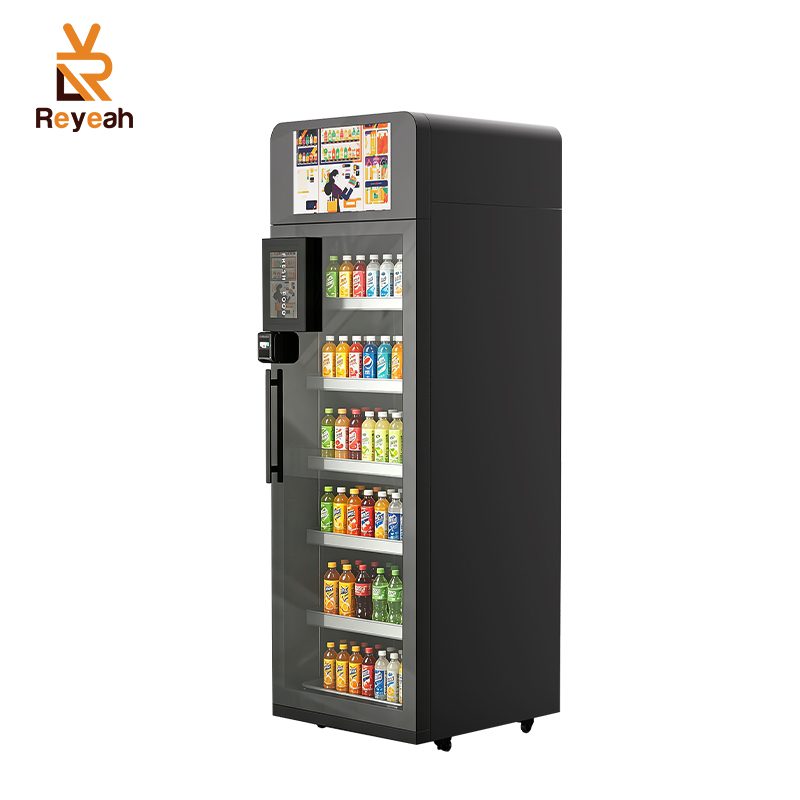
The mixed-temperature option. X14 combines chilled and frozen zones, AI product recognition, contactless checkout, and cloud monitoring for programs selling drinks, fresh food, ice cream, and frozen meals from one unit.
View X14 details →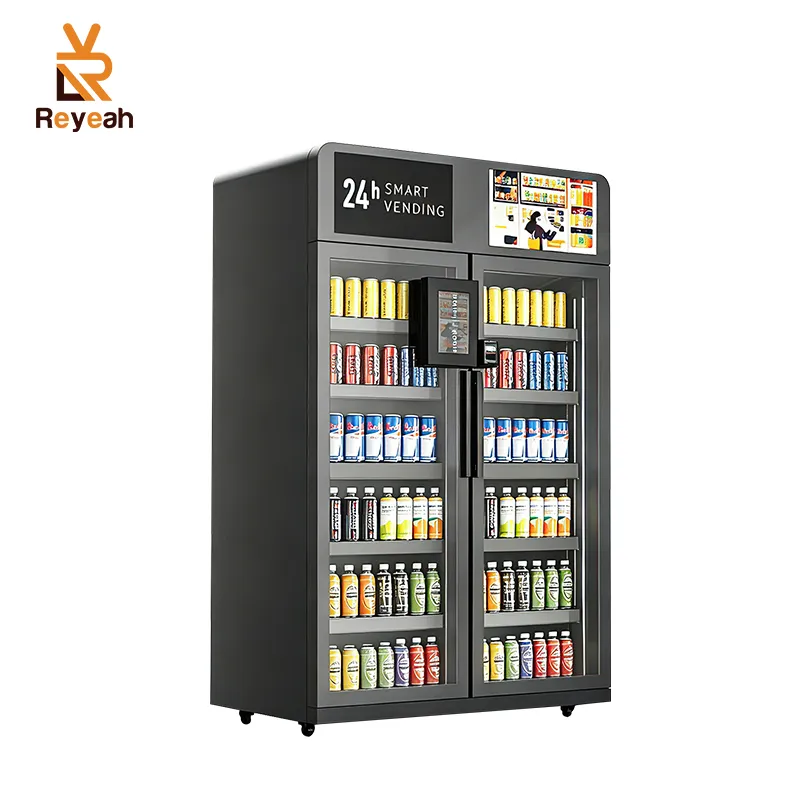
The high-traffic option. X15 provides a wide dual-door display, adjustable shelves, AI visual recognition, flexible cooling configurations, and remote management for airports, malls, hotels, offices, and larger micro markets.
View X15 details →A suitable recommendation depends on product dimensions, temperature needs, payment market, capacity, branding, and software requirements. Share these details when requesting a quotation so the configuration can be matched to the project.
Frequently Asked Questions
Final Buying Advice
A successful micro market starts with a clear operating plan and a supplier that can support the project after delivery. Compare the complete system—hardware, payments, software, refrigeration, service, and scalability—instead of choosing only by cabinet price.
When reviewing a micro market vending machine for sale, document the exact products, location conditions, payment market, expected demand, and growth plan. Those details will make quotations more accurate and help your team select equipment that can deliver reliable unattended retail service over the long term.
Share your product list, installation country, location type, payment requirements, and customization needs with Reyeah to receive a project-specific equipment recommendation and quotation.
Request a Configuration Review