
CUSTOMER PAYMENT EXPERIENCE GUIDE
Cashless Vending Machines: What Customers Expect in 2026
A practical B2B framework for payment speed, authorization, reliability, recovery and support.
Introduction: Cashless Is an End-to-End Customer Promise
Cashless vending machines are judged by more than whether a card or phone can be tapped. Customers expect clear instructions, prompt feedback, understandable authorization outcomes, reliable product delivery and a practical path to help when something goes wrong. For operators, meeting those expectations requires coordination across the reader, vending controller, network, payment gateway or processor, acquiring relationships, transaction records and customer-support process.
A fast-looking interface cannot compensate for an unclear pending charge, a product-delivery mismatch or support that cannot locate the transaction. Buyers should therefore evaluate the complete customer and operating workflow, including exceptions. This guide separates reasonable customer expectations from claims that must be tested and verified for the proposed hardware, market and payment configuration.
What Customers Expect from Cashless Vending Machines in 2026
Customers usually experience the interaction as one event, even though several systems participate. The buyer should ask the supplier to demonstrate ordinary purchases and exceptions using the intended reader, machine controller, connectivity and processing stack. A demonstration is evidence for that configuration only; it is not proof that every site, network or payment method will behave identically.
| Customer expectation | What the customer needs to see | What the operator must verify |
|---|---|---|
| Fast, clear feedback | A visible tap target and unambiguous processing, approval or decline state | Measured end-to-end behavior under normal and degraded network conditions |
| Payment choice | Supported contactless card and mobile-wallet methods appropriate to the market | Reader, gateway, processor, acquirer and regional scheme compatibility |
| Trustworthy authorization | A clear indication of whether access or vending may proceed | Preauthorization, completion, reversal and duplicate-control logic |
| Fair exception handling | A way to report a charged/no-product or other disputed outcome | Transaction lookup, vend-event matching, refund policy and escalation ownership |
| Reliable support | Visible contact route and useful transaction reference | Support hours, response definitions, evidence access and handoff rules |
Payment Speed Means Feedback, Not Just Processing Time
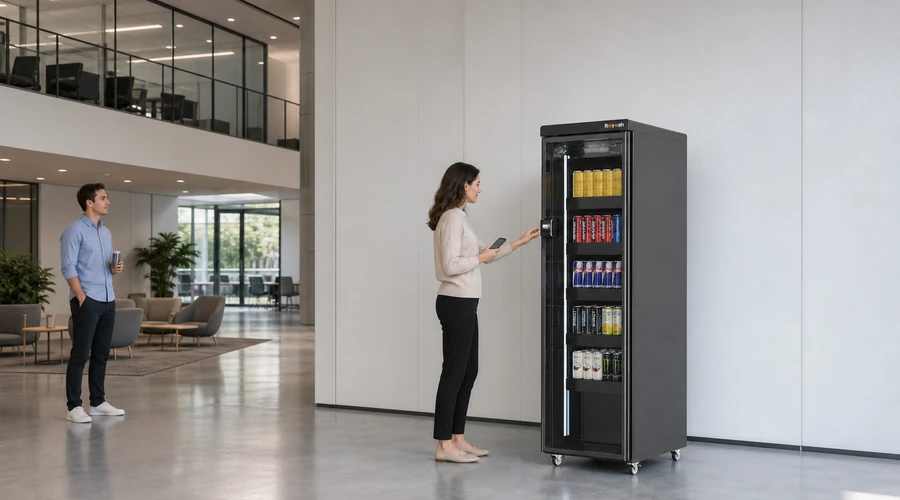
Perceived speed begins before authorization. The tap target should be easy to find, instructions should match the accepted methods, and the screen or indicator should distinguish ready, processing, approved, declined and try-again states. The machine should not invite a customer to open a door or expect a vend until the configured authorization condition has been met.
Measure time from the customer's action to each visible state, not only the processor response. Test peak traffic, weak connectivity, retry behavior and what happens if the customer removes the card or phone early. Set acceptance thresholds from observed pilot data and business requirements rather than publishing an unsupported universal speed promise.
Contactless Cards and Mobile Wallets Need System Compatibility
Contactless transactions depend on compatible components and rules. EMVCo's contactless overview explains the role of EMV contactless specifications, but a compatible contactless interface does not by itself confirm support for every card, wallet, market or acquiring route. Buyers must verify the exact reader model, firmware, payment application, gateway or processor, acquirer, currencies and payment methods in writing.
Mobile wallets can present payment credentials through the device, but the operator still needs an approved acquiring and processing path. Test common card and wallet types for the target market, as well as fallback messaging when a method is unsupported. Do not advertise a wallet or card brand until the deployed configuration and applicable usage requirements have been confirmed.
Authorization Is a Workflow, Not a Single Tap
Some unattended formats may use an authorization or preauthorization before access, followed by completion when the basket or vend is finalized. The precise flow depends on the machine, payment integration, processor and commercial configuration. Customers need clear wording about pending amounts and final charges, while operators need records that connect authorization, completion, reversal and machine events.
A decline should not leave the machine in an ambiguous access state. A timeout should have a defined retry or stop path. If an authorization is not completed, the system may need a reversal or other processor-defined handling; posting time can depend on financial institutions and should not be promised by the machine operator without verified terms. Test duplicate taps, abandoned sessions and delayed responses during acceptance.
Security Requires Shared Responsibilities and Evidence
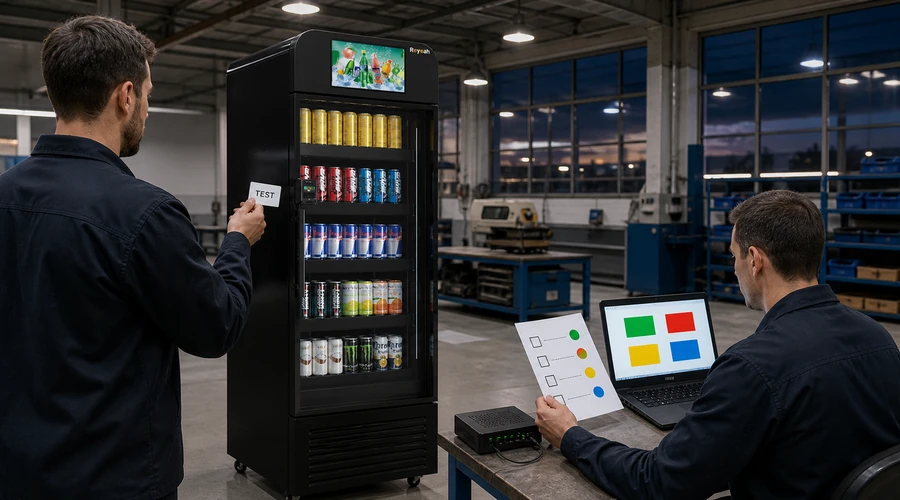
Customers expect their payment information to be handled responsibly. The PCI Security Standards Council publishes payment-card security standards and guidance, but the applicable PCI scope and responsibilities depend on the architecture, service providers and contracts. A buyer should request an accurate data-flow diagram, identify where account data can enter or be stored, and obtain current evidence directly from responsible parties rather than claiming that an entire vending operation is automatically compliant.
Tokenization and encrypted communications can reduce exposure in suitable implementations, but neither makes the complete service risk-free. Physical tamper inspection, signed software or firmware controls where supported, credential management, access logging, patch ownership, incident response and secure device replacement remain relevant. Customer-facing copy should avoid absolute claims such as 'unhackable' or '100% secure.'
Refunds and Disputes Must Be Traceable
A customer may report an approved payment with no product, the wrong product, an unclear pending authorization or a duplicate-looking entry. Support needs enough information to locate the event without asking the customer to disclose unnecessary card data. Useful references can include machine ID, location, approximate time, amount and a non-sensitive transaction reference.
Define who decides and issues refunds, which evidence is reviewed, expected communication steps and how unresolved cases escalate. Separate an authorization hold, a completed charge, a reversal and a refund in staff training because they are not interchangeable. Policies, timing and customer rights vary by processor, contract and jurisdiction, so publish only verified terms and obtain local legal review where needed.
Reliability Includes Failure Recovery
Reliability is the ability to reach a safe, understandable state when a component fails. Test lost connectivity, reader restart, power interruption, controller timeout, cabinet or vend failure, processor unavailability and delayed synchronization. For each case, document what the customer sees, whether access or vending remains disabled, how transaction state is recovered and which team receives the alert.
Offline acceptance can create financial and operational risk and may not be supported by every configuration. Buyers should not assume that 'offline mode' means guaranteed payment or uninterrupted service. If the machine cannot safely determine the transaction state, the customer message and support path should prevent repeated taps and give staff a reliable way to reconcile events later.
What Buyers Should Specify Before Deployment
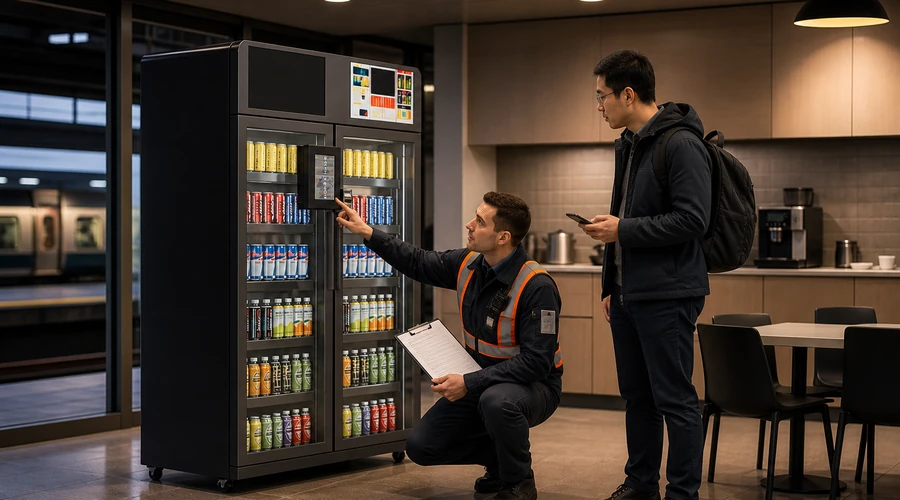
- Map the reader, controller, network, gateway or processor, acquirer and support owners.
- Confirm supported contactless cards, mobile wallets, currencies and regional payment routes in writing.
- Test ready, processing, approval, decline, timeout, cancellation, reversal, refund and recovery states.
- Define what opens a cabinet or triggers a vend and how mismatches are prevented or investigated.
- Document payment-data flow, PCI responsibility, physical inspection, software updates and incident response.
- Reconcile terminal, processor, order, vend or access and inventory records using anonymized test transactions.
- Publish a visible support route and define transaction lookup, refund ownership and escalation.
- Pilot under realistic traffic and connectivity, then set acceptance criteria from measured evidence.
Procurement should also normalize one-time, recurring and variable costs: hardware, installation, connectivity, software, processing, service, replacement, chargeback administration and contract exit. Do not compare headline hardware prices while omitting integration and operating responsibility.
Four Reyeah Product Formats to Evaluate
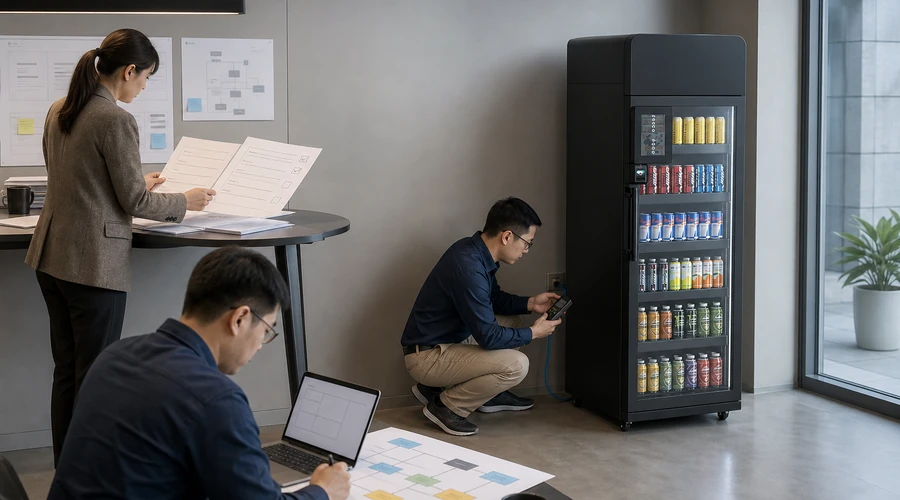
The following official pages are format candidates, not proof of a payment configuration. Confirm the quoted reader, controller, processing integration, payment methods, refrigeration, installation and service scope before purchase.
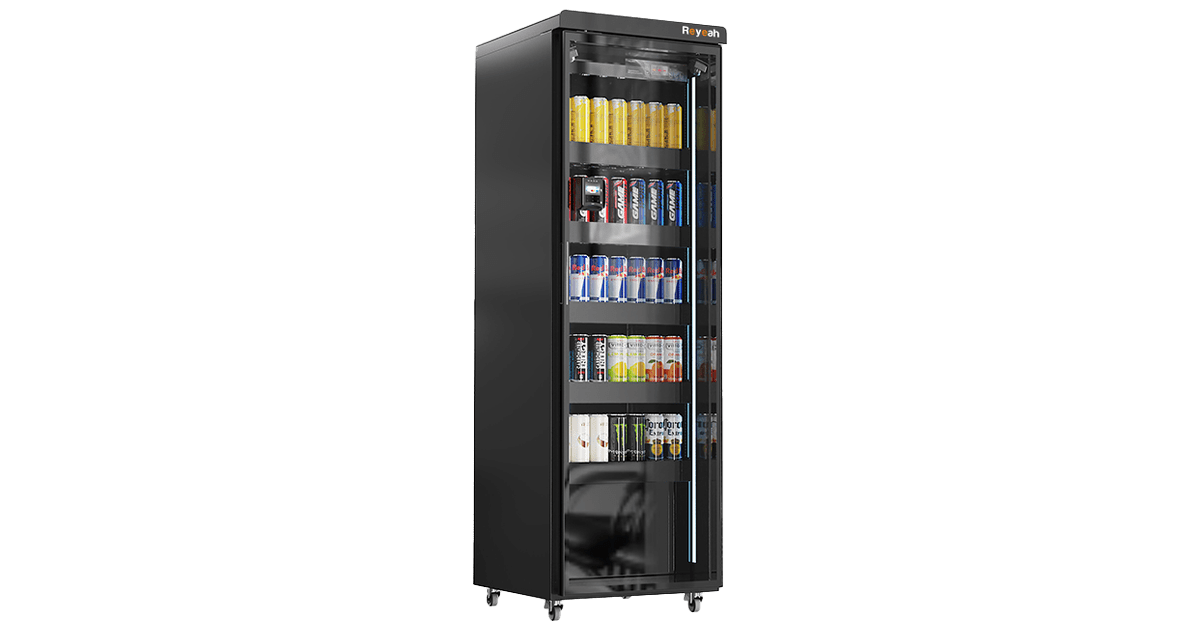
A controlled-access cabinet format candidate. Confirm the quoted payment and operating scope.
View X12 details →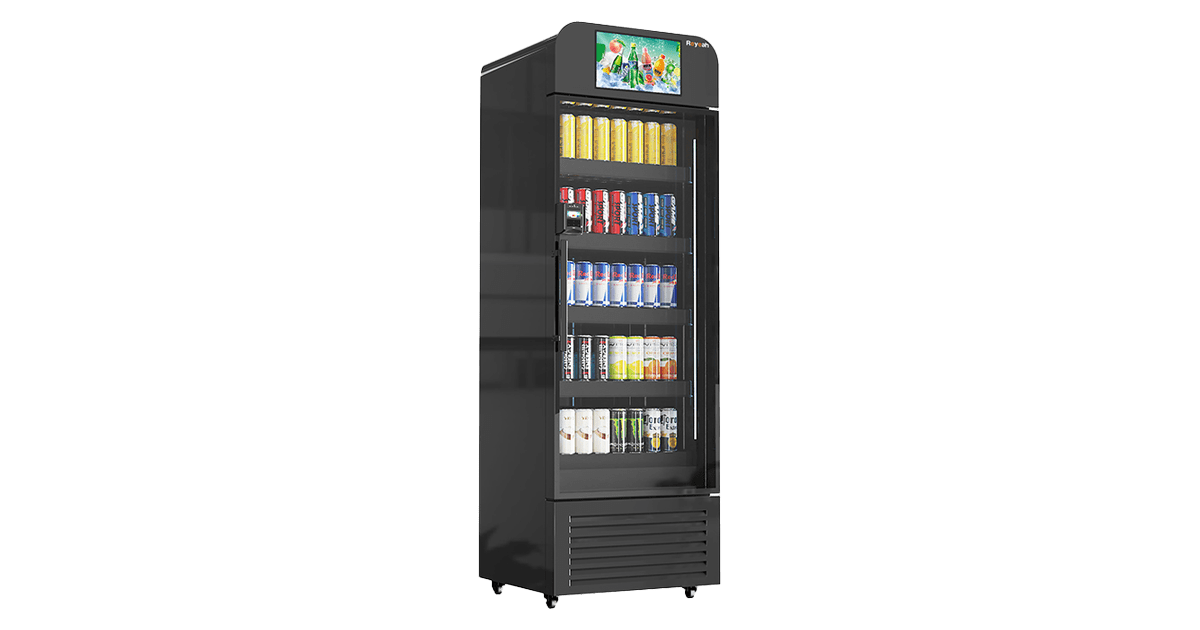
A display-led customer communication candidate. Confirm the quoted payment and operating scope.
View X13 details →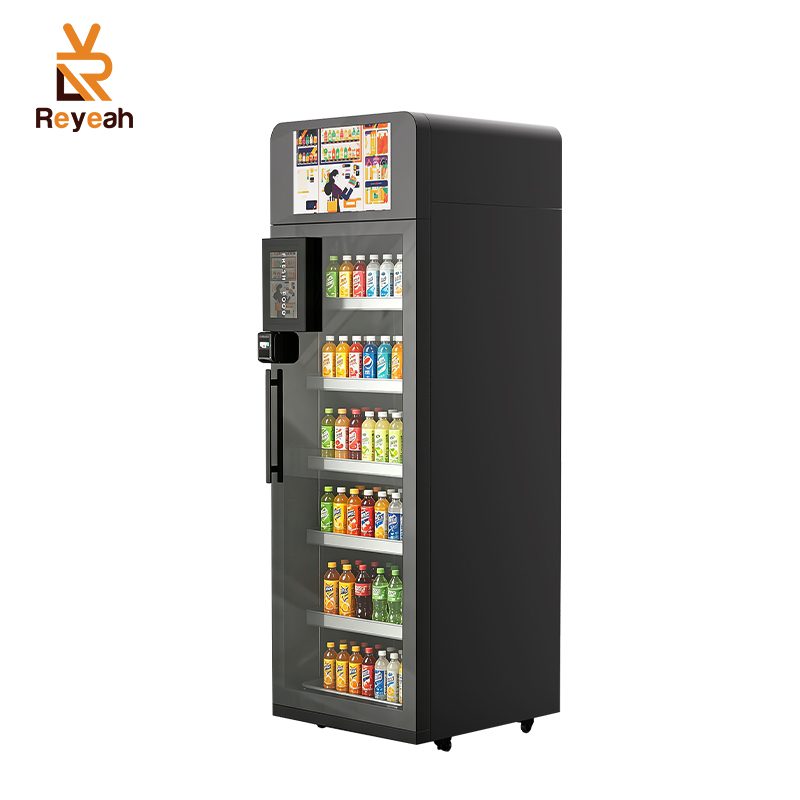
A refrigerated smart-cooler candidate. Confirm the quoted payment and operating scope.
View X14 details →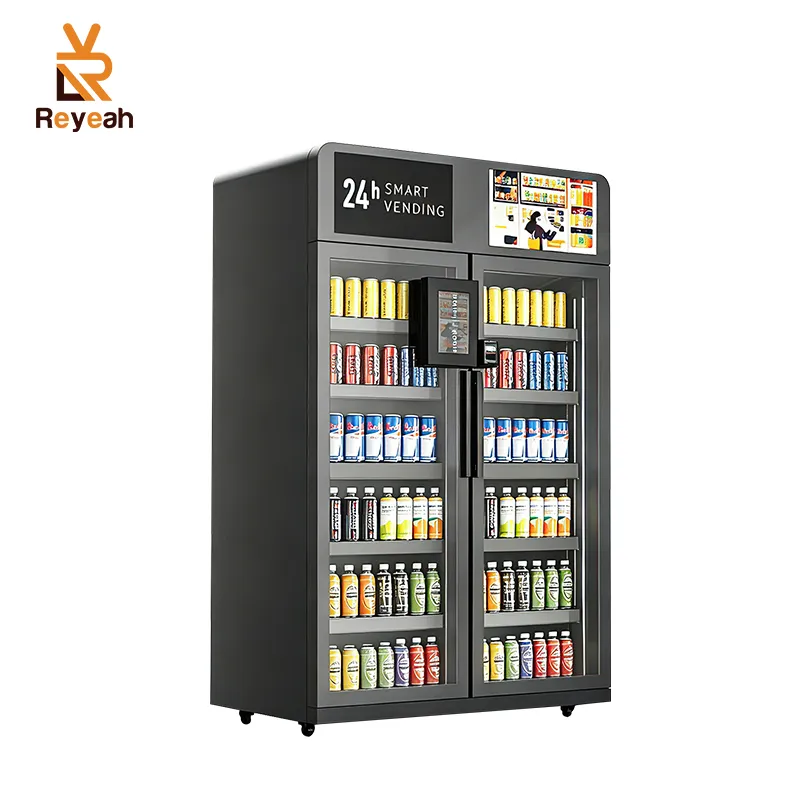
A dual-door assortment candidate. Confirm the quoted payment and operating scope.
View X15 details →Conclusion: Design Cashless Vending Around Exceptions
Cashless vending machines earn customer trust when the normal journey is clear and exception handling is equally deliberate. Buyers should evaluate visible feedback, payment compatibility, authorization and reversal logic, transaction-to-vend reconciliation, security responsibility, refund handling, recovery and support as one system. A realistic pilot should produce the evidence needed to approve, correct or reject the proposed deployment without turning assumptions into customer promises.
Share your target market, payment methods, site connectivity, customer-support model and exception requirements, then request a configuration review.
Request a Configuration Review