
Vending Machine Card Reader: 7 Features Operators Need
A B2B guide to payment coverage, standards, gateway fit, connectivity, security, machine integration and fleet support.
Introduction: Buy a Payment System, Not Just a Reader
A vending machine card reader is the customer-facing part of a larger payment system. The hardware must recognize the intended payment methods, communicate with the vending controller, connect to a processor through an approved commercial path, handle failures clearly, and give operators usable records. A reader that looks compatible can still create operational problems if the gateway, acquiring relationship, machine interface or regional acceptance plan is wrong.
Operators should compare the complete configuration rather than choosing on appearance, a single logo or an advertised transaction speed. Payment success depends on the card or wallet, terminal software, network, gateway, processor, acquirer and issuer. No supplier can responsibly guarantee that every transaction will be approved or that one configuration will work in every country.
The seven features below turn a vague cashless upgrade into a procurement checklist. They also separate three questions that are often mixed together: what customers can present, what the terminal can technically read, and what the contracted payment route is authorized to accept.
The 7 Features at a Glance
| Feature | Procurement question | Evidence to request |
|---|---|---|
| 1. Payment and regional coverage | Will target customers recognize and use the offered methods? | Market-specific acceptance list and acquirer confirmation |
| 2. Card-interface compatibility | Which contact, contactless or legacy interfaces are supported? | Exact model, kernel, approval and scheme documentation |
| 3. Gateway and acquiring fit | Can the reader use the operator's commercial payment route? | Processor, gateway, merchant account and settlement mapping |
| 4. Network and failure handling | What happens during weak coverage, timeouts and reversals? | Connectivity design and tested exception workflows |
| 5. Security and PCI boundaries | Who handles account data, keys, updates and validation? | Current listings, responsibility matrix and data-flow diagram |
| 6. Machine integration | Will power, mounting and controller communication work safely? | Interface, harness, power and installation specification |
| 7. Fleet operations and lifecycle | Can the operator reconcile, support and replace the system? | Portal demo, export fields, SLA and end-of-life plan |
1. Payment Methods and Regional Coverage
Start with the customers and market, not with the terminal brochure. A site may need contactless cards and mobile wallets, contact chip, a local debit scheme, QR-based payments, closed-loop credentials or another regional method. Availability on the reader does not prove that the operator's processor and acquirer will enable that method in the intended country and merchant category.
Ask the supplier for a market-specific acceptance matrix and have the acquiring or processing partner confirm it in writing. The matrix should distinguish card-present interfaces from wallet brands, local schemes, currencies, settlement destinations, refunds and pre-authorization use cases. For access-controlled smart cabinets, confirm how an authorization hold, final amount and release or reversal are handled.
Do not assume that adding more payment logos automatically improves conversion. Every extra method can add configuration, reconciliation or support complexity. Prioritize methods supported by observed customer demand and a complete commercial route.
2. EMV, NFC and Magnetic-Stripe Compatibility
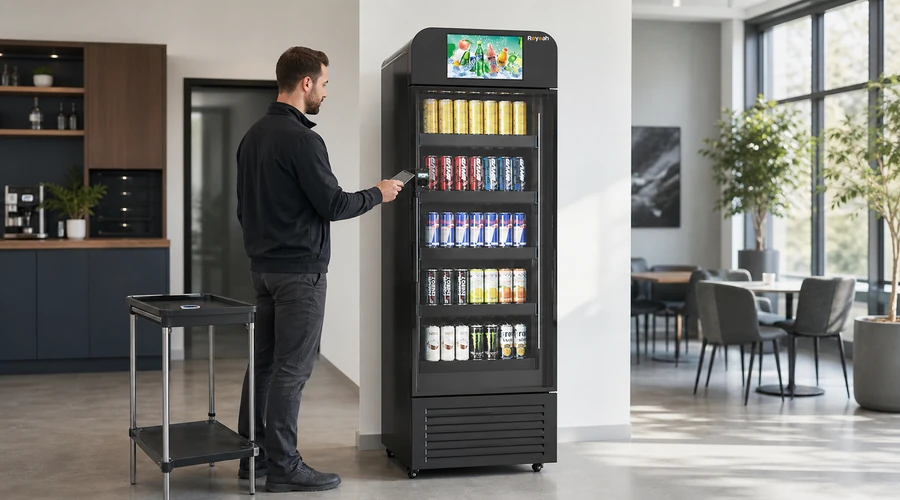
EMV contact chip and EMV contactless are payment specifications and approval ecosystems, while NFC is the short-range communication technology used by many contactless cards and mobile devices. EMVCo explains that EMV Contactless supports contactless chip cards and NFC-enabled mobile devices, with specifications governing communication between the card or device and the acceptance terminal.
Procurement language should identify the exact terminal model and supported kernels rather than using “NFC” as a synonym for every wallet or payment scheme. Request current evidence for the exact hardware, firmware and application combination being quoted. An approval associated with another model, an expired configuration or a different software build is not enough.
Magnetic-stripe capability is a legacy interface, not proof of modern security or broad acceptance. Whether it should be enabled depends on the market, scheme rules, fallback policy and risk controls. Document how chip, contactless, swipe and manual exceptions are treated instead of assuming all interfaces are interchangeable.
3. Payment Gateway, Processor and Acquirer Compatibility
A reader can be mechanically compatible with a vending machine and still be commercially unusable. The operator needs a supported chain from terminal application to gateway or processor, merchant account, acquirer and settlement bank. Confirm who contracts with whom, who prices each service, who receives settlement, and which party owns onboarding and technical escalation.
Request a complete fee schedule from the responsible providers, but do not compare only a headline transaction rate. Relevant items can include recurring platform charges, connectivity, gateway fees, minimums, refund or dispute handling, currency conversion and early termination. These vary by contract and region, so this guide does not supply generic rates.
Before fleet deployment, run live test transactions using every priority method and reconcile the terminal record, processor record and bank settlement. Include approved, declined, timed-out, cancelled, reversed and refunded examples. A successful authorization alone does not prove that reporting and settlement are correct.
4. Connectivity, Offline Behavior and Failed Transactions
Unattended payment depends on reliable communication, but every location can experience weak cellular coverage, Wi-Fi changes, antenna problems, gateway outages or device restarts. Confirm which network options are supported, who supplies and manages connectivity, how signal quality is monitored, and what the terminal displays when it cannot complete a transaction.
The phrase “offline payment” is too vague for procurement. Ask whether the system stores any transaction for later submission, under what processor and risk rules, with what limits, and who carries the loss if a later authorization fails. Do not enable store-and-forward or similar behavior merely because the device supports it; the acquirer and operator must approve the policy.
Failure handling should protect both customer experience and accounting. Test timeouts, duplicate taps, partial communication, power loss, delayed reversals and a machine that fails after authorization. Define customer messages, retry logic, remote alerts, refund ownership and the evidence needed to resolve a dispute.
| Test case | Expected operational answer | Record to retain |
|---|---|---|
| Network loss before authorization | No ambiguous vend or access decision | Terminal event and network status |
| Timeout after request | Defined retry and reversal workflow | Unique transaction reference and timestamps |
| Machine fault after approval | Controlled refund or support path | Payment result, machine event and vend/access result |
| Duplicate customer action | Duplicate prevention or clear exception handling | Linked attempts and final settlement state |
| Reader reboot or update | Safe recovery without silent data loss | Device status, version and update log |
5. PCI, Device Security and Tokenization Boundaries
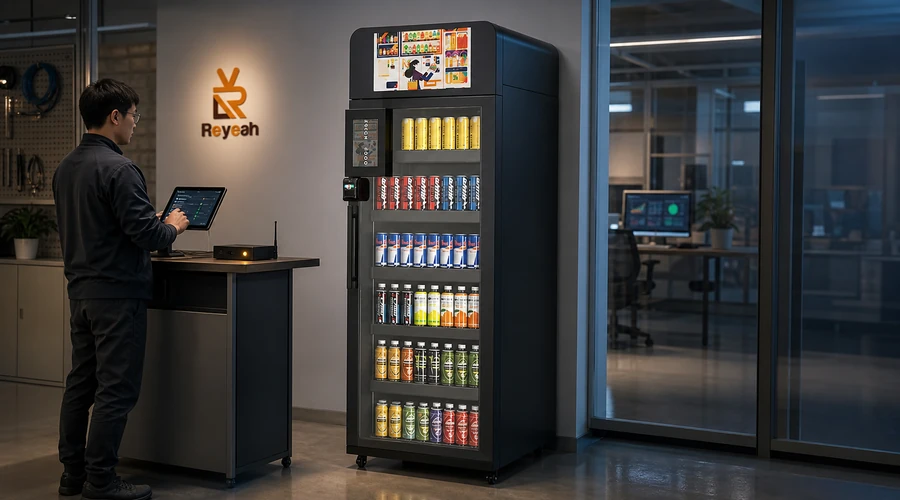
PCI is not one universal badge. PCI DSS applies to entities and environments that store, process or transmit account data, while PCI PTS POI addresses payment-device security characteristics and includes device categories such as unattended payment terminals. Buyers should request the exact device listing and expiry or revalidation information, then confirm how the deployed solution affects their own PCI responsibilities.
The existence of a listed terminal does not by itself validate the operator's installation, network, applications or business processes. Ask for a responsibility matrix covering device custody, inspection, keys, software updates, incident response, remote access and evidence retention.
Tokenization replaces a primary account number with a surrogate value in a defined implementation. PCI SSC guidance states that tokenization can reduce scope in some architectures but does not eliminate the need to maintain and validate PCI DSS compliance. Require a data-flow diagram showing where account data and tokens travel.
Review current PCI DSS materials with the acquiring partner or qualified adviser for the actual environment. Security claims must be tied to the exact model, software, service and deployment, not copied from a product family or marketing page.
6. Hardware, Installation, Power and Machine Integration
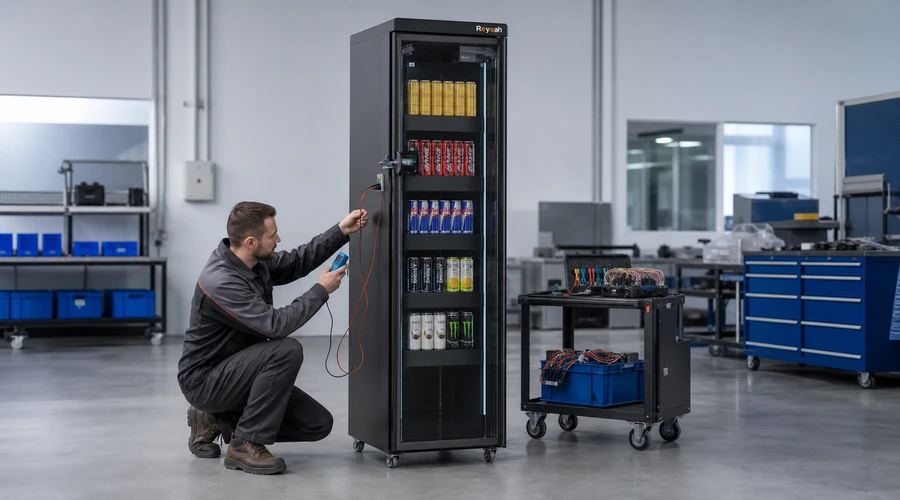
A card reader for a vending machine must fit physically and electrically. Confirm mounting dimensions, bracket requirements, cable routing, exposure, accessibility, power input and peak demand, grounding, antenna placement and service access. An improvised installation can create reliability and security problems even when the reader itself is suitable.
MDB compatibility requires exact implementation checks
For controller communication, identify the exact protocol and implementation. NAMA's MDB/ICP is a voluntary vending communication standard, but saying a machine and reader are both “MDB” does not prove plug-and-play operation. Version, command support, cashless levels, firmware, harness pinout, voltage and machine-controller behavior must be checked together.
Use the NAMA MDB/ICP reference as a technical starting point, then obtain the machine manufacturer's and reader provider's approved integration documents. Test vend authorization, price transfer, cancellations, refunds or reversals where applicable, telemetry and behavior after a power cycle.
7. Remote Management, Records, Support and Lifecycle
The operator needs more than a daily sales total. Useful remote records include terminal identity, machine identity, transaction reference, timestamp, payment method category, authorization and settlement state, vend or access result, refunds, reversals, connectivity status, firmware version and health alerts. Confirm what can be exported, how long it is retained and which users can access it.
A portal should make reconciliation and exception work faster, not simply add dashboards. Ask for a live demonstration using failed and reversed transactions. Test role-based access, alert routing, bulk configuration, audit logs, device replacement and the process for mapping a new reader to the correct machine and merchant account.
Lifecycle terms belong in the purchase decision. Document support hours, escalation ownership, update cadence, security notices, spare-device strategy, warranty boundaries, cellular changes, operating-system support and end-of-life notice. A low purchase price can be offset by poor fault diagnosis or an unsupported gateway migration.
A Practical Procurement and Pilot Checklist
- Define target countries, customer groups, currencies and priority payment methods.
- Obtain written gateway, processor, acquirer and merchant-account compatibility.
- Verify exact device, firmware, application, EMV and PCI evidence rather than product-family claims.
- Map the payment and account-data flow, including tokenization and remote access.
- Confirm mounting, power, harness, controller protocol and approved installation method.
- Survey cellular and Wi-Fi conditions at each pilot site and define connectivity ownership.
- Test approvals, declines, timeouts, reversals, refunds, power loss and machine faults.
- Reconcile terminal, processor and bank records using unique transaction references.
- Document support, update, replacement, security-notice and end-of-life responsibilities.
- Set pilot acceptance thresholds for availability, exception rate, reconciliation effort and support response.
Four Reyeah Product Candidates to Review
The following official product pages describe smart unattended retail formats. They are not evidence that every reader, acquirer or regional method is compatible. Request an exact quoted configuration and written integration confirmation before procurement.
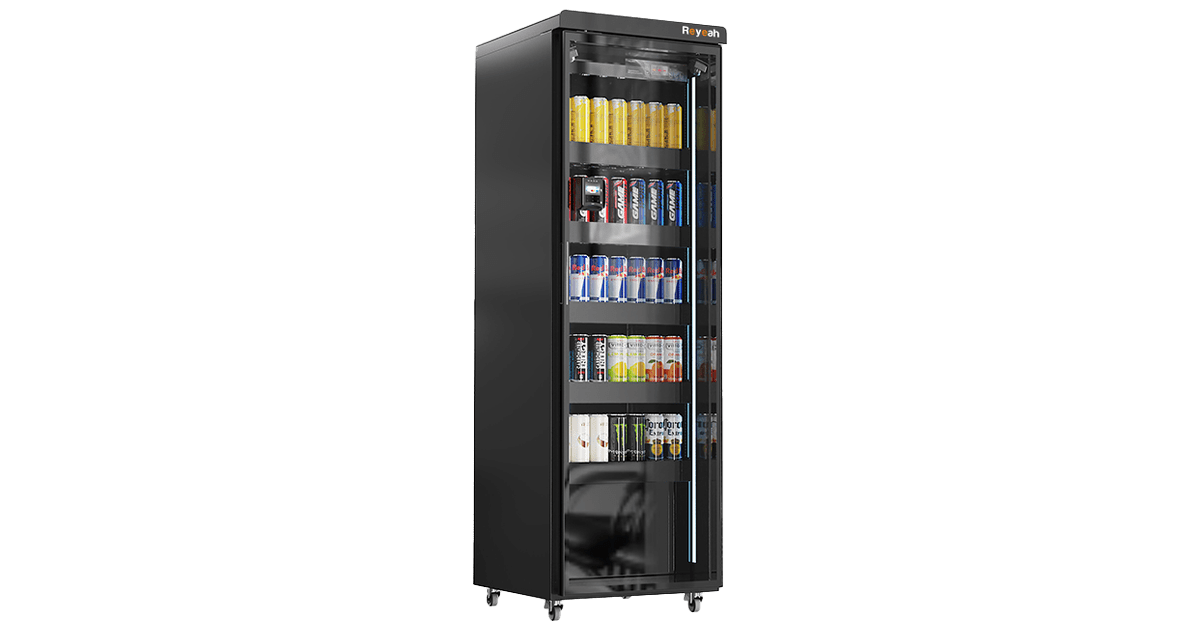
A controlled-access cabinet candidate. Verify the exact reader, pre-authorization flow, gateway, country support and settlement configuration.
View X12 details →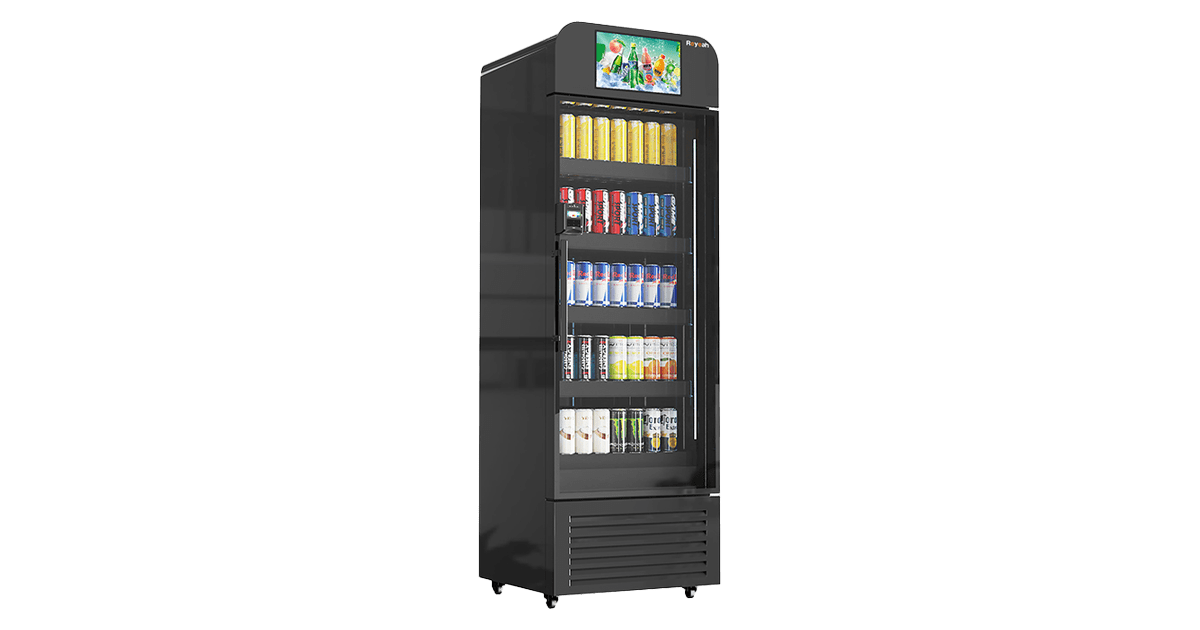
A top-display cabinet candidate where reader mounting, software, processor compatibility and fleet reporting must be confirmed.
View X13 details →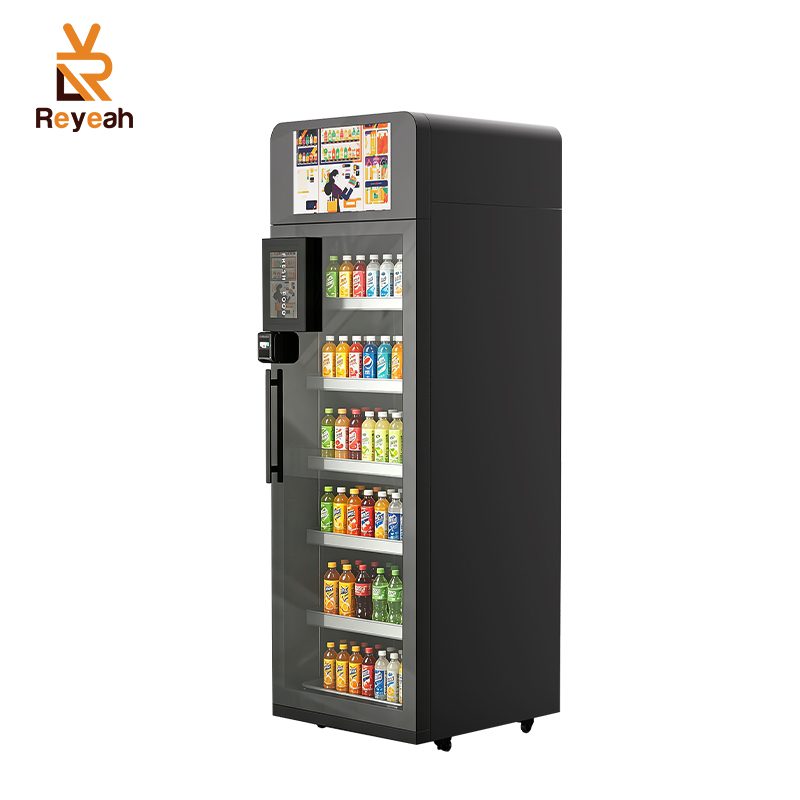
A chilled/frozen unattended-retail candidate. Verify payment-to-access workflow, network behavior, exception handling and local configuration.
View X14 details →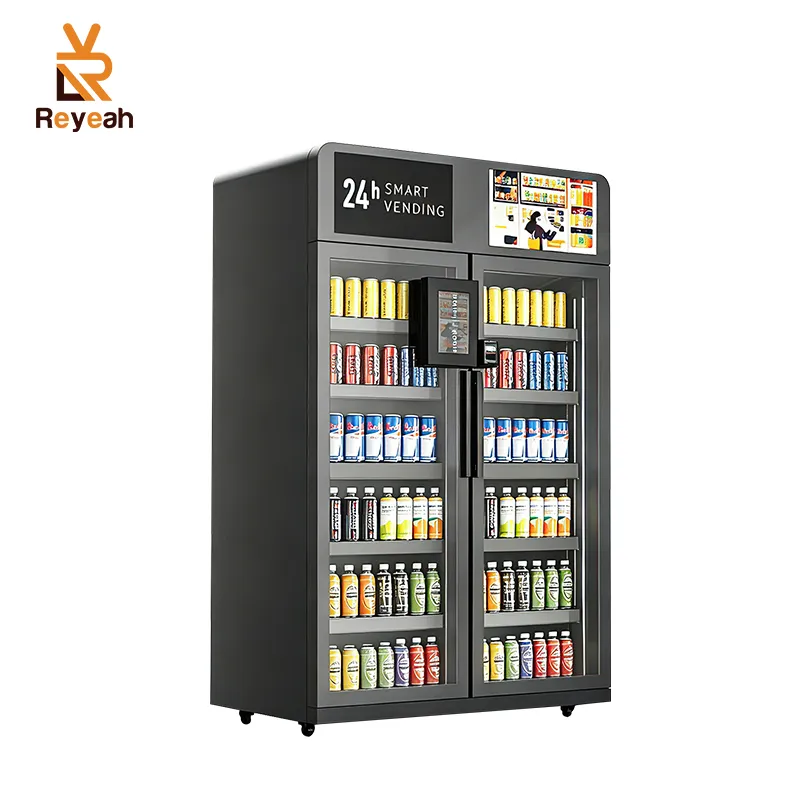
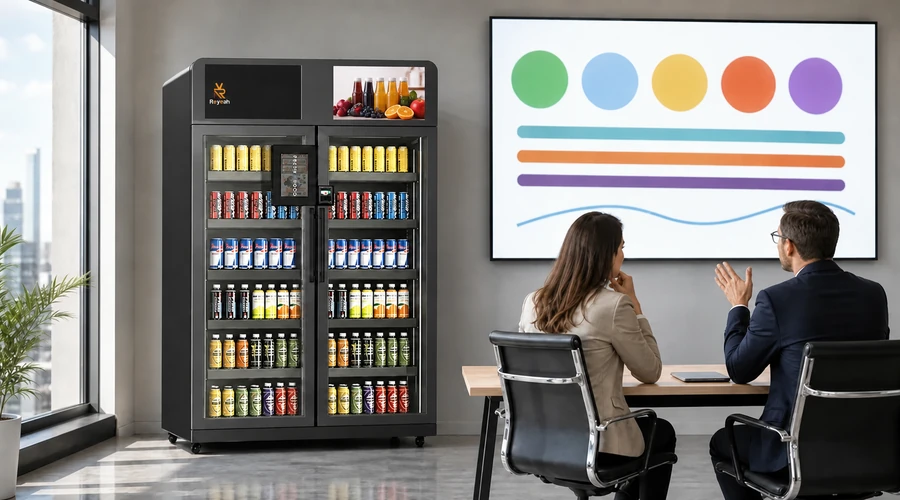
A larger or multi-zone candidate. Verify reader quantity, controller mapping and reconciliation by machine or zone.
View X15 details →Conclusion: Choose for the Whole Payment Lifecycle
The best vending machine card reader is not the one with the longest list of logos. It is the configuration that matches customer payment demand, the local acquiring route, the machine controller, the site's connectivity and the operator's security and support responsibilities. Evidence should be specific to the model, firmware, application, processor and market.
Run a controlled pilot before a fleet rollout. Test normal transactions and failure states, reconcile every system, inspect the operational workload and confirm lifecycle obligations. This approach cannot guarantee approvals, universal acceptance, uptime, settlement or fraud elimination, but it gives buyers a defensible basis for comparison.
Share the machine model, deployment market, payment methods, gateway and network requirements, then request a configuration review.
Request a Configuration ReviewFrequently Asked Questions
Authoritative Sources
- EMVCo: EMV Contactless Chip—contactless cards, NFC-enabled devices, terminal kernels and approval processes.
- PCI Security Standards Council: PCI DSS—responsibilities for environments that store, process or transmit payment account data.
- PCI SSC: PTS Point of Interaction—security requirements and listings for payment devices, including unattended terminals.
- PCI SSC: Tokenization Guidelines—tokenization concepts and the boundary that tokenization does not replace PCI DSS obligations.
- NAMA: MDB/ICP Version 4.3—a voluntary vending communication interface standard whose exact implementation must be verified.
