
Micro Vending in 2026: Small Footprint, Bigger Revenue
A B2B planning guide to location demand, assortment, unit economics, equipment fit and disciplined operations.
Introduction: Small Space Is an Operating Constraint, Not a Revenue Promise
Micro vending brings unattended retail into locations where a full store or large micro market may not fit. A compact cabinet, smart cooler or tightly designed product zone can serve offices, residential buildings, gyms, clinics, hotels and other controlled environments. The smaller footprint can lower space requirements and simplify a pilot, but it does not automatically create profit.
Revenue potential comes from a chain of decisions: enough relevant traffic, a product mix matched to the audience, pricing that supports contribution margin, reliable payment and equipment, accurate replenishment, and a service route that does not consume the margin. “Bigger revenue” therefore means improving sales productivity from limited space—not promising a fixed return.
This guide gives B2B buyers a framework for choosing a site, modeling unit economics, selecting equipment and operating a small-footprint format. All financial examples should be built from local quotes and observed pilot data rather than borrowed industry averages.
What Micro Vending Means in 2026
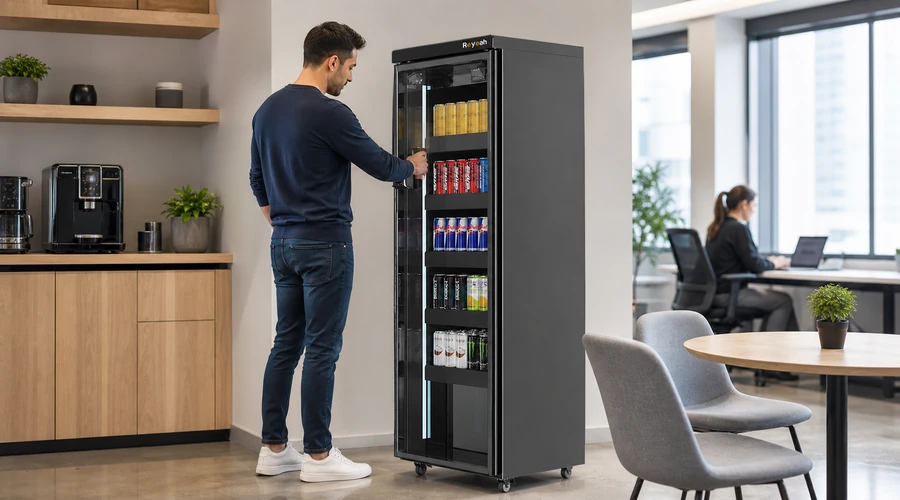
Micro vending is a compact unattended retail format designed around a limited footprint and a focused assortment. It may use a smart vending cabinet, refrigerated grab-and-go cooler, traditional vending unit, or a small self-service zone. The defining feature is not a specific machine size; it is the deliberate use of restricted space to meet a recurring need.
Compared with a larger micro market, the format usually offers fewer product categories and less room for merchandising. In return, installation and replenishment may be easier to test at lower site complexity. Operators should resist calling every small machine a micro vending business: the concept still needs a demand hypothesis, a service plan and measurable acceptance criteria.
For a controlled-access cabinet format, the CoreLock Basic X12 smart vending cabinet is one current product candidate. Buyers must confirm the quoted footprint, power, connectivity, payment and storage configuration for the intended site rather than relying on a generic web description.
Why Small Footprints Can Improve Revenue Productivity
Place retail closer to the moment of demand
A compact format can be positioned near a break room, lobby, fitness area, production floor or residential common space. Proximity reduces the effort required to buy. The commercial question is whether the site has repeated unmet demand at the hours when alternatives are inconvenient—not simply whether people pass the location.
Focus the assortment on high-probability purchases
Limited facings force discipline. The operator must choose products that fit the audience, dayparts, storage conditions and replenishment cadence. A focused range can improve sell-through and reduce trapped inventory, but a range that is too narrow may reduce basket size or fail to meet dietary and price expectations.
Test a location before adding complexity
A smaller deployment can create a practical test of demand, payment behavior, service time and product velocity. Expansion should follow evidence: stable availability, manageable waste, acceptable exception rates and repeat purchasing. Adding more units before the route economics are understood can multiply weak sites rather than improve performance.
A Revenue Model Without Invented Numbers
Build the model from site-specific inputs. Start with eligible users or observed demand, then estimate purchase frequency, conversion and average basket. Separate revenue from profit: subtract product cost, payment fees, location commissions where applicable, spoilage, shrink, service labor, transport, software, connectivity, maintenance and financing.
The U.S. Small Business Administration explains that break-even analysis requires fixed costs, selling price, projected unit sales and variable cost per unit. That principle applies here even if the buyer uses a different local accounting framework. The inputs must come from current supplier quotes, payment contracts, route observations and a representative pilot.
| Revenue driver | What to measure | Why it matters |
|---|---|---|
| Qualified traffic | People with a recurring reason and permission to buy | Raw footfall can overstate real demand. |
| Conversion | Completed purchases divided by eligible visits | Shows whether access, assortment and price fit. |
| Average basket | Items and sales value per transaction | Affects sales productivity per visit. |
| Gross margin | Net sales less product cost and direct transaction charges | Sales volume alone does not equal profit. |
| Availability | Sellable facings available when customers arrive | Stockouts cap conversion and trust. |
| Service efficiency | Travel, restock and support effort per visit | Small sites can become expensive when routes are poor. |
Site Selection: The First Profitability Decision
- Confirm who can access the site and at what hours.
- Observe recurring demand by daypart instead of relying only on total footfall.
- Map nearby food, beverage and convenience alternatives, including delivery.
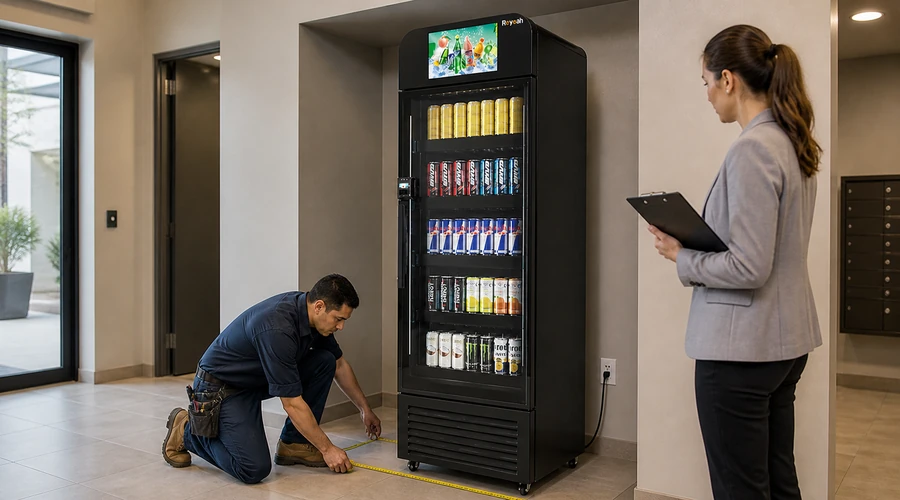
- Verify power, connectivity, ventilation, accessibility and safe service access.
- Agree on space, commission, utilities, cleaning, security and contract exit terms.
- Estimate route time from the nearest service stop, not from a map alone.
- Define a pilot period and success thresholds before installation.
Market research should combine available data with direct observation. The SBA notes that research helps identify customers, demand, location, saturation and pricing. For micro vending, direct evidence can include site interviews, short surveys, observation by daypart and a limited pilot with documented stock and transaction data.
Choose Equipment Around the Use Case
Equipment should follow the assortment and customer journey. Refrigerated fresh food needs different controls from shelf-stable snacks. An advertising display may help a high-visibility public site, while a straightforward cabinet may better suit an employee location. More screens, zones or capacity are useful only when they solve a measured need.
| Candidate | Potential fit | Buyer verification |
|---|---|---|
| CoreLock Basic X12 | Focused grab-and-go cabinet for offices or controlled sites. | Confirm assortment, recognition, payment, cooling and service configuration. |
| AdScreen Elite X13 | Locations where digital promotion is part of the merchandising plan. | Validate the screen workflow and whether attention converts at the site. |
| VisionCool Pro X14 | Projects needing chilled and frozen categories in one concept. | Confirm temperature zones, power, product fit and local service. |
| DualVision Max X15 | Higher-capacity or multi-zone deployments after demand is proven. | Check footprint, access pattern, replenishment time and route economics. |
Review the AdScreen Elite X13 advertising vending machine when the site has a defined promotion plan; consider the VisionCool Pro X14 AI smart cooler for chilled/frozen assortment needs; and reserve the DualVision Max X15 dual-door smart vending machine for sites whose demand justifies greater capacity or separation.
Operations That Protect the Business Case
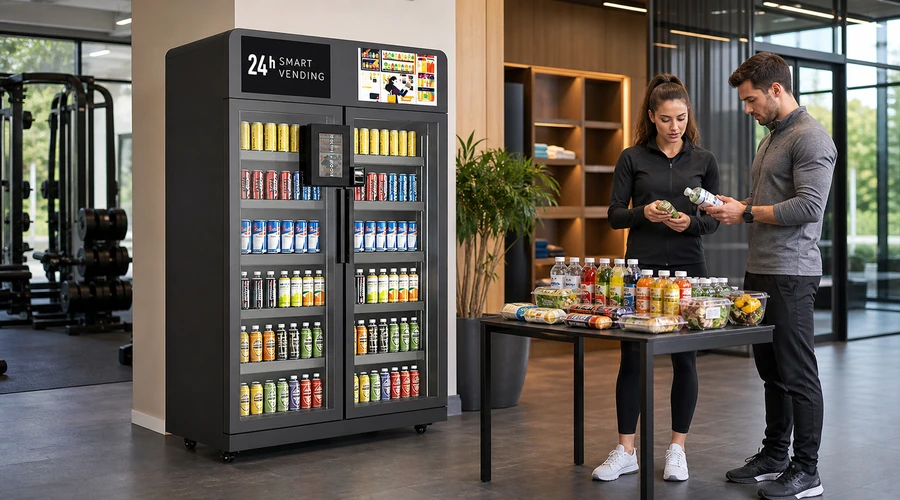
The small footprint does not remove operational work. Each site needs a replenishment standard, product-location map, date and temperature controls where applicable, cleaning, payment reconciliation, customer support and exception handling. The cost of these tasks must be included in the model.
Use inventory alerts to prioritize work, but verify replenishment physically. Track stockouts, waste, shrink, refunds, device downtime and service minutes by site. A product can sell well and still be unattractive if it creates frequent emergency visits or waste.
Review the assortment on a regular cadence. Remove slow products only after checking whether poor placement, price, availability or awareness caused the result. Protect a controlled test period before changing several variables at once.
Risks and Limits
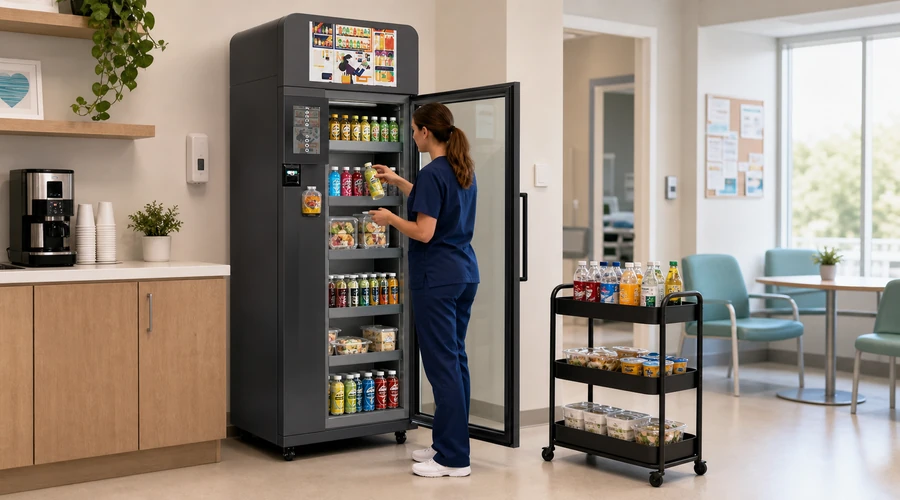
- Low or irregular demand can leave the equipment underused.
- Small capacity can create frequent stockouts when replenishment is poorly timed.
- Fresh food can increase waste and handling requirements.
- Payment, network, refrigeration or recognition failures can interrupt sales.
- Location commissions and route labor can erase an attractive product margin.
- Security and privacy responsibilities vary by format and jurisdiction.
- A successful pilot at one site does not prove that every similar-looking site will perform the same.
90-Day Pilot and Procurement Checklist
- Record baseline demand, alternatives and service conditions before installation.
- Freeze the initial assortment, pricing and planogram long enough to interpret results.
- Test every payment, access, refund, network and hardware exception.
- Measure sales, availability, waste, shrink, refunds, downtime and service time with clear definitions.
- Compare expected and physical inventory and document adjustment reasons.
- Review customer feedback without collecting unnecessary personal data.
- Calculate contribution and break-even from actual pilot inputs; include downside scenarios.
- Set continue, revise or exit criteria before the pilot begins.
- Confirm supplier support, updates, spare parts and end-of-life responsibilities in writing.
Recommended Reyeah Equipment Formats
Use observed demand, product mix, temperature needs, access and route economics to select a format. Confirm the exact quoted configuration before deployment.
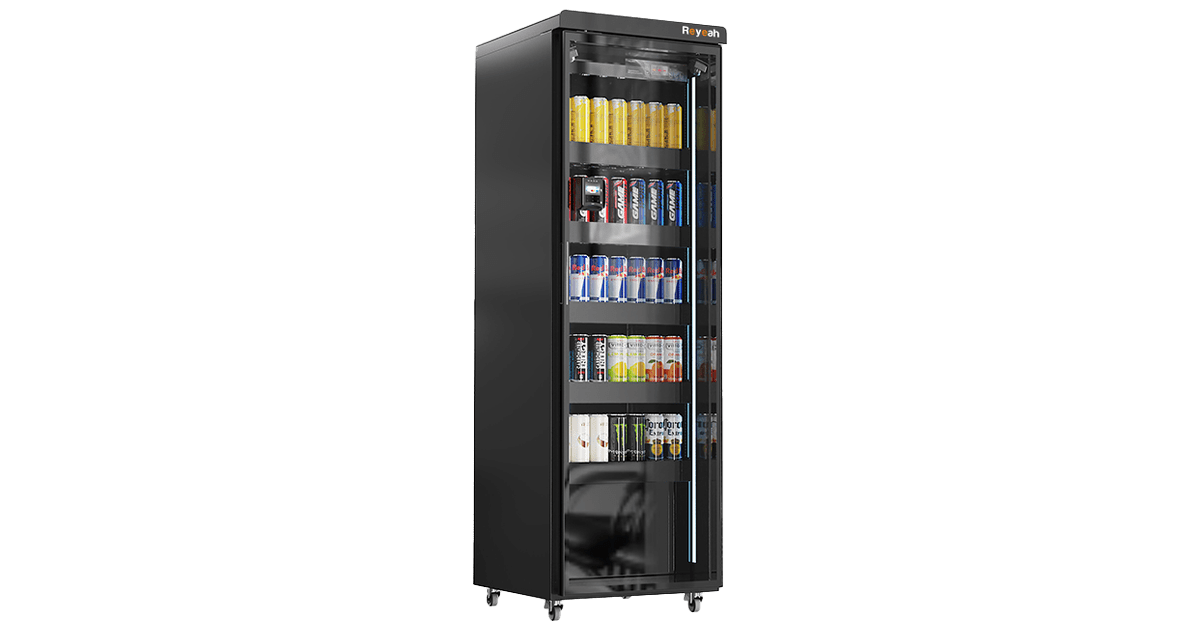
A focused cabinet candidate for offices or controlled small sites. Verify assortment, payment, cooling and service configuration.
View X12 details →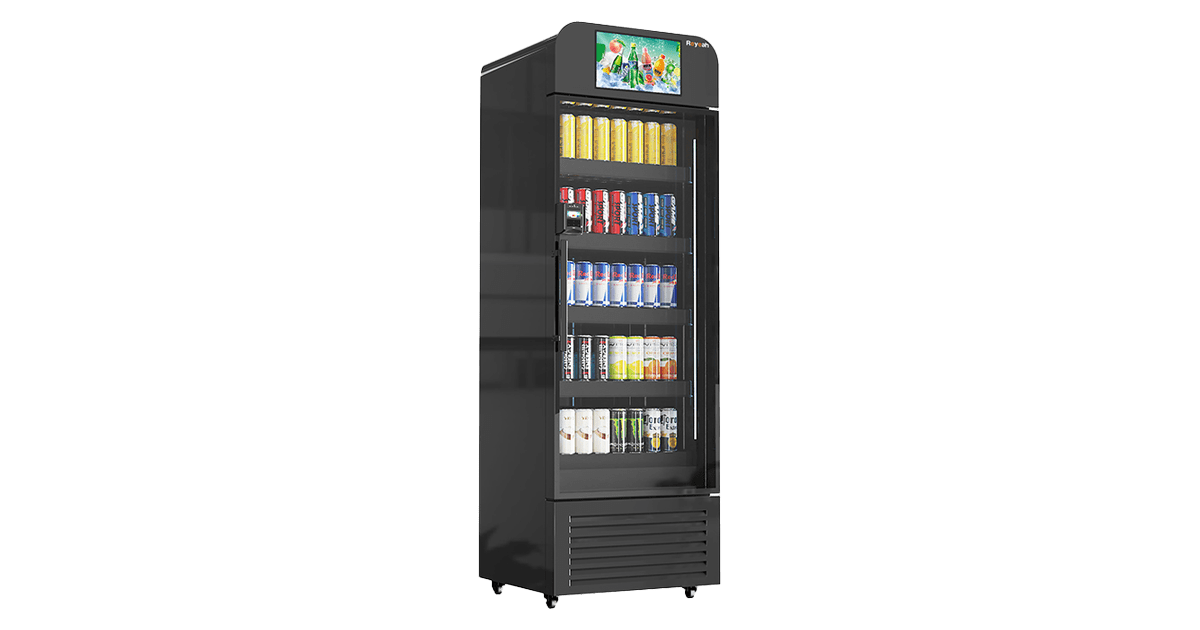
For locations where a top digital display supports a defined merchandising plan, with connected cloud and advertising management.
View X13 details →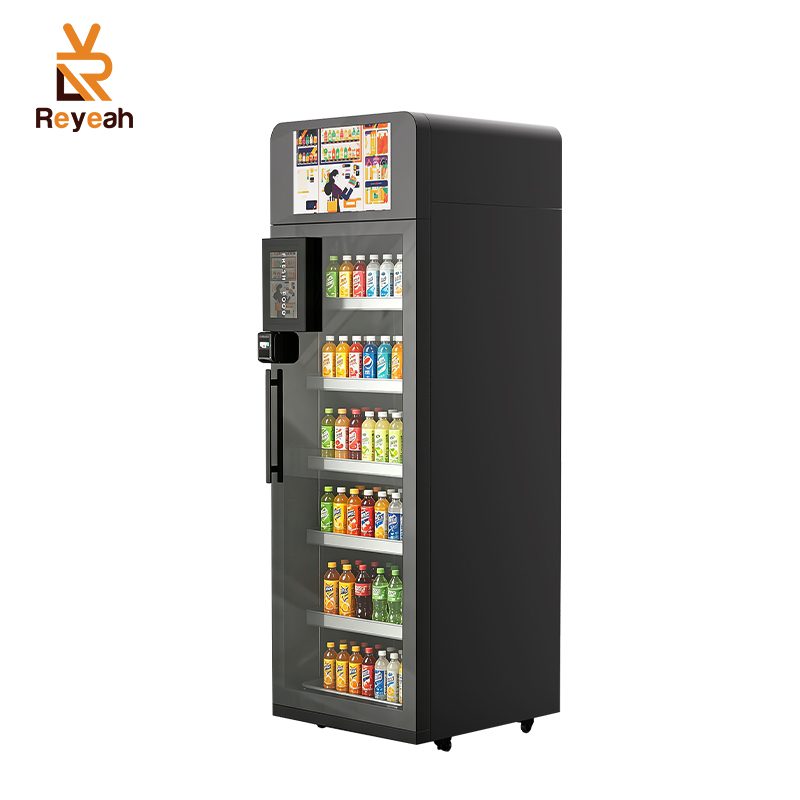
A candidate for chilled and frozen assortment concepts. Verify temperature zones, product fit, power and local service.
View X14 details →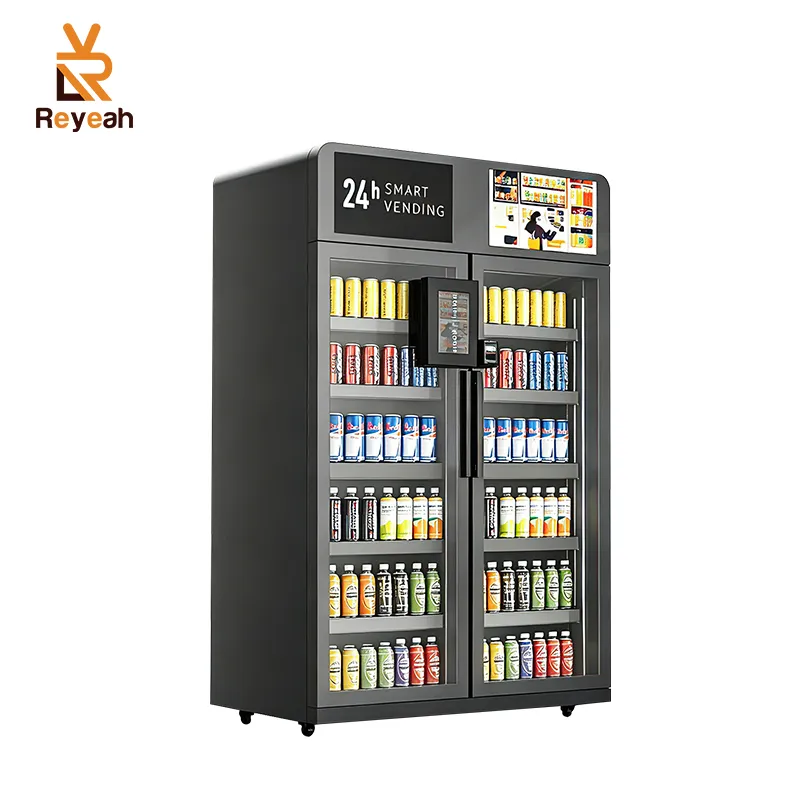
For higher-capacity or multi-zone deployments after demand is proven. Verify footprint, access, replenishment and route economics.
View X15 details →Conclusion: Earn More per Square Foot by Operating Better
Micro vending can make small spaces commercially useful, but size alone does not create revenue. The opportunity comes from locating a focused offer close to recurring demand, keeping products available and controlling the cost of service. Buyers should treat “bigger revenue” as a testable operating thesis, never as a supplier promise.
A disciplined pilot is the best filter. Use real site data, transparent unit economics and written acceptance criteria. Expand only when the location, assortment, equipment and route work together under normal and adverse conditions.
Share your site, assortment, access, payment and service requirements, then request a configuration review.
Request a Configuration ReviewFrequently Asked Questions
Authoritative Sources
U.S. Small Business Administration market-research and startup-cost planning resources are used for general market-research and break-even principles. Product candidates link to their current official Reyeah pages.
