
Unattended Retail: How AI Prevents Theft and Stockouts
A practical B2B guide to layered controls, accurate inventory, exception review and reliable replenishment.
Introduction: AI Works Best as Part of an Operating System
Unattended retail can extend access without placing an employee at every transaction, but it changes how loss and inventory risk must be managed. AI can help identify product movement, connect a shopping session with payment, and create usable inventory events. It cannot guarantee that every theft attempt will be stopped or every item will be recognized correctly.
Reliable performance comes from layers: access control, payment pre-authorization, door and shelf sensors, computer vision, an inventory ledger, exception rules and trained people. Each layer answers a different question. Together, they make suspicious activity easier to review and stock positions easier to trust.
This guide explains how those controls work, where they fail and what a procurement team should verify before deployment. The goal is not a fully automated fantasy; it is a measurable process that keeps customer friction, shrink, stockouts and labor effort in balance.
What Unattended Retail Means in Practice
An unattended store is a retail environment where customers can enter, select products and pay without a cashier handling each purchase. Formats include smart vending cabinets, smart coolers, micro markets and larger cashierless spaces. The technology and risk profile vary: a locked cabinet controls access to one enclosure, while an open store may need zone-level tracking, a checkout station or more extensive identity and security controls.
Before comparing equipment, buyers should select the operating model that fits the location, assortment and service plan. Reyeah's smart store versus vending machine comparison outlines practical differences between store-style and machine-based formats.
A useful design starts with the customer journey and exception journey. Buyers should map what happens when payment is declined, a shopper returns an item, two people reach into a cabinet, the network drops, a shelf reading drifts or the door remains open. If those cases are undefined, headline AI capability will not produce reliable operations.
How AI and Control Layers Reduce Theft Risk
| Control layer | What it contributes | Important limitation |
|---|---|---|
| Door lock / access | Defines who or what credential started a session. | A valid credential does not prove the basket is correct. |
| Payment pre-authorization | Checks payment availability before access. | Issuer holds and failures need clear customer handling. |
| Computer vision | Classifies products and interprets item movement. | Occlusion, lookalike packaging and lighting can cause errors. |
| Weight sensing | Adds shelf-level evidence of quantity changes. | Sensor drift, placement and mixed weights require calibration. |
| Inventory ledger | Turns verified events into on-hand records. | Bad master data or unresolved exceptions pollute the ledger. |
| Human review | Resolves ambiguous events and improves procedures. | Review needs training, privacy controls and response targets. |
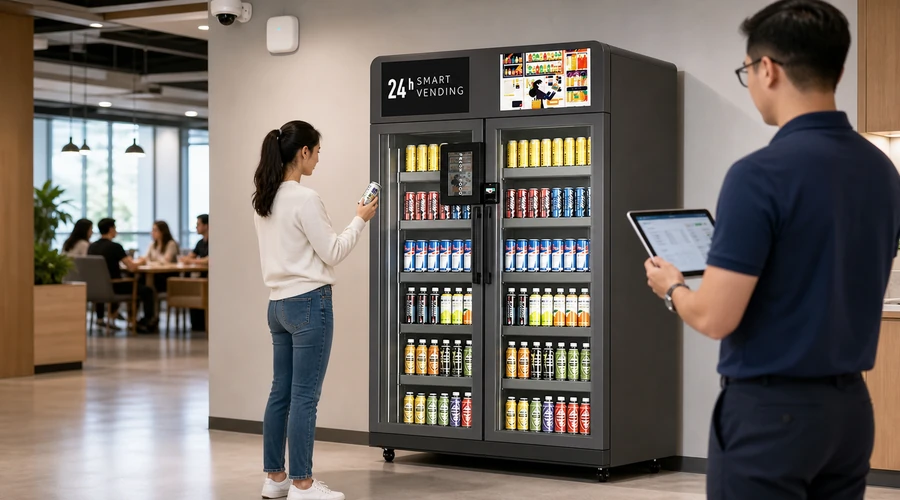
Access control and payment pre-authorization
A locked-door system can require a valid card, app or QR credential before opening. Payment pre-authorization checks whether the payment method can support a transaction and ties the session to a transaction reference. This discourages anonymous access, but it is not proof of identity and does not ensure that the final basket will be recognized.
Operators should document the authorization amount, customer disclosure, decline behavior, reversal logic and final capture timing. A door unlock should create a unique session record that connects access, device events, item decisions and payment status.
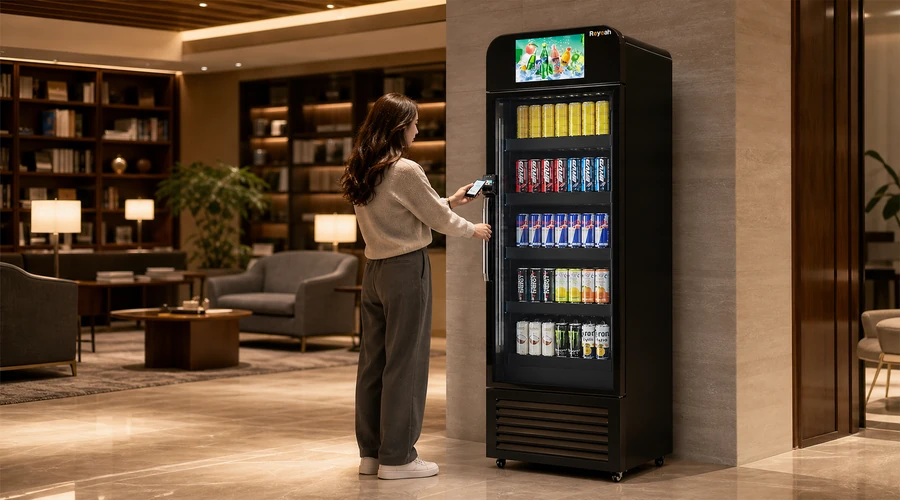
Computer vision and weight sensing
Computer vision can classify products and interpret actions such as taking or returning an item. Weight sensing can detect a change on a shelf and help validate the expected quantity. Used together, the signals can reduce ambiguity: vision suggests what moved, while weight provides another observation about whether and how much moved.
A cabinet format such as the CoreLock Basic X12 smart vending cabinet shows how vision, weight sensing, an electric lock and cloud records can be combined in one shopping flow. Any claimed accuracy still needs to be validated on the buyer's actual packaging, shelf plan, lighting and shopper behavior.
Session reconciliation and exception review
The system should reconcile the access event, sensor observations, recognized basket, payment event and inventory change. Rules can flag mismatches such as an open session without settlement, a large weight change without a recognized product, repeated reversals or an unexpected inventory adjustment. These alerts narrow the review workload; they do not prove intent or theft.
A trained reviewer needs enough context to resolve exceptions without seeing unnecessary personal data. The workflow should support correction, customer service, inventory adjustment and escalation. It should also record who changed the result and why, so repeated model or catalog problems can be found.
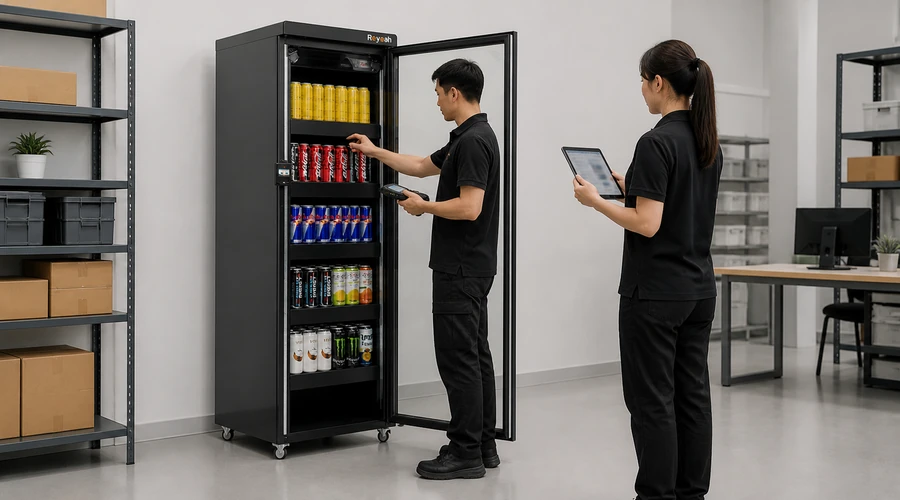
How Better Inventory Data Helps Prevent Stockouts
Stockout prevention begins with a credible on-hand balance. When a session closes, the system should post only the items supported by its decision and retain an exception state when confidence is insufficient. Automatically forcing every uncertain event into a final count can create false accuracy.
Cloud inventory tools can translate reconciled counts into low-stock alerts, replenishment lists and location priorities. For refrigerated and frozen assortments, the VisionCool Pro X14 AI smart cooler illustrates a relevant use case for remote inventory and device-status monitoring. Buyers must still confirm that the proposed configuration, SKU catalog and data integrations fit their operation.
Forecasting can help estimate future demand, but it cannot repair weak event data. Operators should separate three questions: what the system believes is on hand, what physical counts show and what demand is expected before the next service visit. Comparing these values over time reveals whether errors come from recognition, replenishment, spoilage, unrecorded removals or master-data changes.
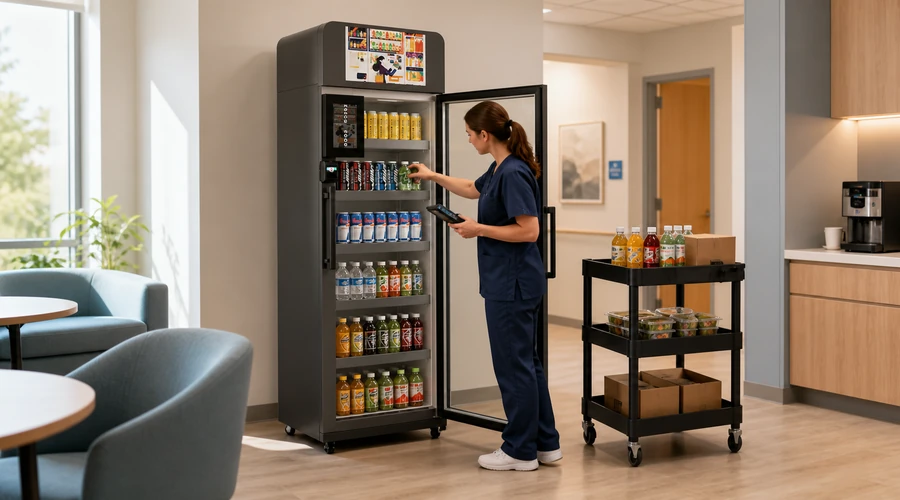
The Daily Operating Workflow
- Review device health, connectivity, door status and payment exceptions before the location's peak period.
- Prioritize exception sessions by financial exposure, confidence level, age and customer impact.
- Generate replenishment work from reconciled on-hand data, sales velocity and the next planned service window.
- Scan or confirm products loaded into each shelf position; do not treat a delivery manifest as proof that the cabinet was filled correctly.
- Complete targeted cycle counts for high-risk, fast-moving or repeatedly mismatched SKUs.
- Track adjustments by reason and investigate repeated patterns by device, SKU, location, time and software version.
This workflow keeps automation accountable. It also helps teams distinguish a true loss issue from an operational problem such as poor planogram discipline, a damaged sensor, an outdated product image or a delayed payment message.
Risks and Limits Buyers Must Plan For
Recognition and sensor errors
Vision may struggle with glare, blocked camera views, similar packages, flexible bags, rapid hand movements or multiple shoppers. Weight sensors may drift or produce ambiguous readings when products have variable weight or are placed across zones. A pilot must include the real assortment and difficult behaviors, not only clean demonstrations.
Network, power and hardware failures
Connectivity loss can interrupt authorization, cloud inference, reporting or remote support. A camera, lock, scale or refrigeration component can also fail independently. The supplier should define degraded modes, customer messaging, alerting, local data buffering, recovery and safe access procedures.
Privacy and human oversight
Video, device, payment and access records can create privacy obligations. Data collection should be limited to a documented purpose, protected with role-based access and retained only as long as justified. Notices, consent or other requirements vary by jurisdiction and use case, so qualified local review may be necessary.
The NIST AI Risk Management Framework is a voluntary, use-case-neutral resource that emphasizes governance, measurement, monitoring and management throughout the AI lifecycle. It also highlights clearly defined human roles. This supports a practical conclusion for unattended retail: automated decisions need performance monitoring, override paths and accountable review rather than blind trust.
Procurement and Deployment Checklist
Ask suppliers to respond in writing and tie answers to the exact hardware, software, payment provider, region and assortment proposed. A demonstration is useful, but acceptance criteria should determine whether the system is ready for rollout.
- Map the full customer, data, payment, inventory and exception flows.
- Define target environments, shopper patterns, SKU count, packaging variations and temperature zones.
- Run a representative pilot with take, return, swap, occlusion, simultaneous-access and abandoned-session scenarios.
- Measure basket accuracy, unresolved exceptions, review time, false alerts, count variance and device availability using agreed definitions.
- Verify access control, authorization, capture, refund and customer-support behavior with the chosen payment provider.
- Document failover for power, network, camera, sensor, lock and cloud-service interruptions.
- Confirm catalog-management, planogram, replenishment, cycle-count and inventory-adjustment procedures.
- Review privacy roles, data locations, retention, permissions, incident handling and subcontractors.
- Set acceptance thresholds and a rollback plan before expanding beyond the pilot.
- Require update, vulnerability, model-change, support and end-of-life policies.
If capacity across multiple doors or product zones is important, review the DualVision Max X15 smart vending machine as one equipment format, then validate the quoted configuration against this checklist.
Recommended Reyeah Equipment Formats
Use the operating model, assortment, temperature needs, capacity and control requirements to select a format. Validate the exact quoted configuration before rollout.
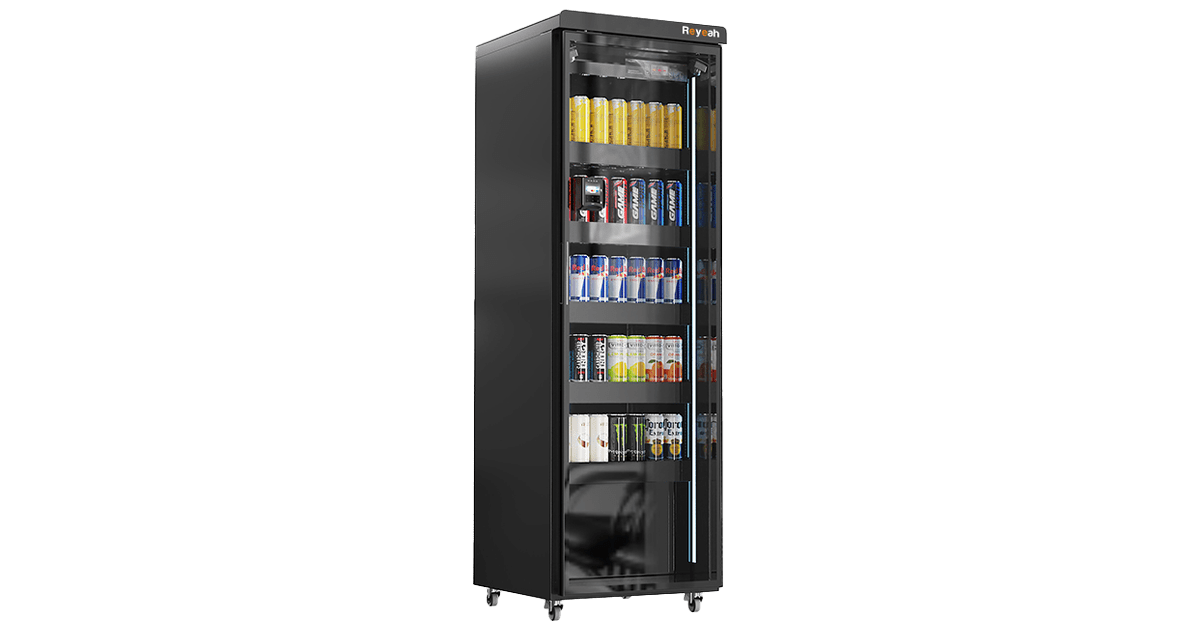
Uses weight shelves for inventory tracking, 4G/Wi-Fi synchronization and a cashless reader supporting NFC, magnetic stripe and chip payments.
View X12 details →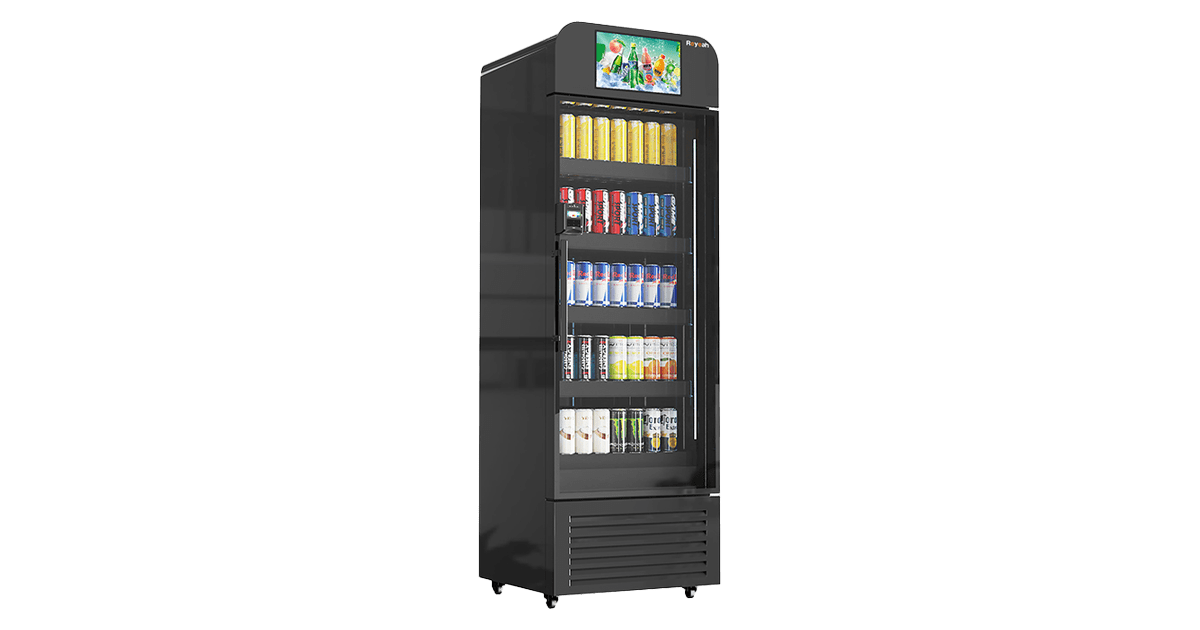
Supports payment pre-authorization unlocking, 4G/Wi-Fi synchronization, Cloud Dashboard and Mobile App management.
View X13 details →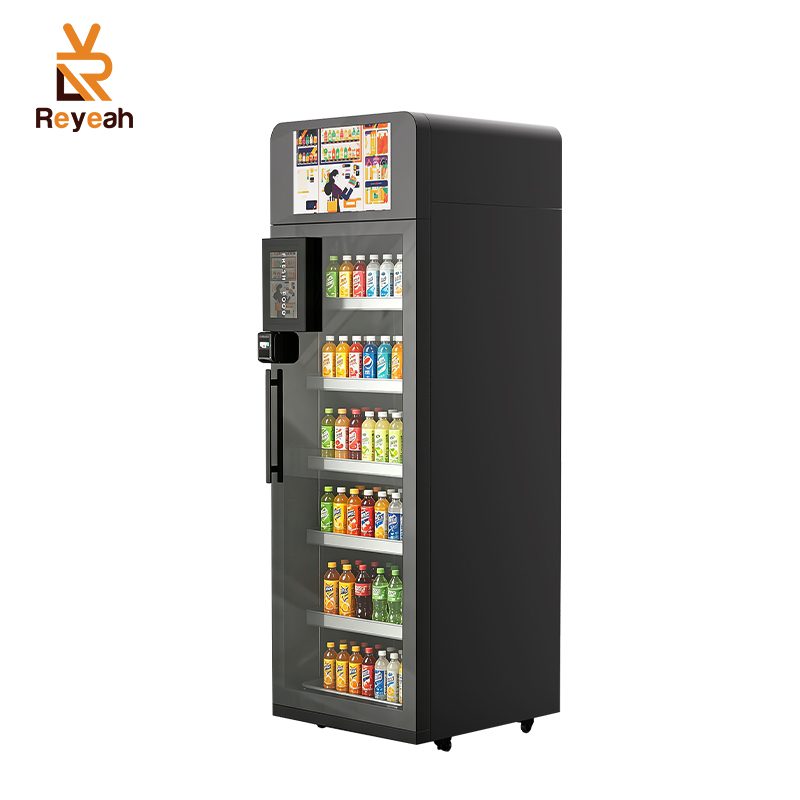
Connects through 4G, Wi-Fi or wired networking, with cloud and mobile visibility into inventory, sales, orders and device status.
View X14 details →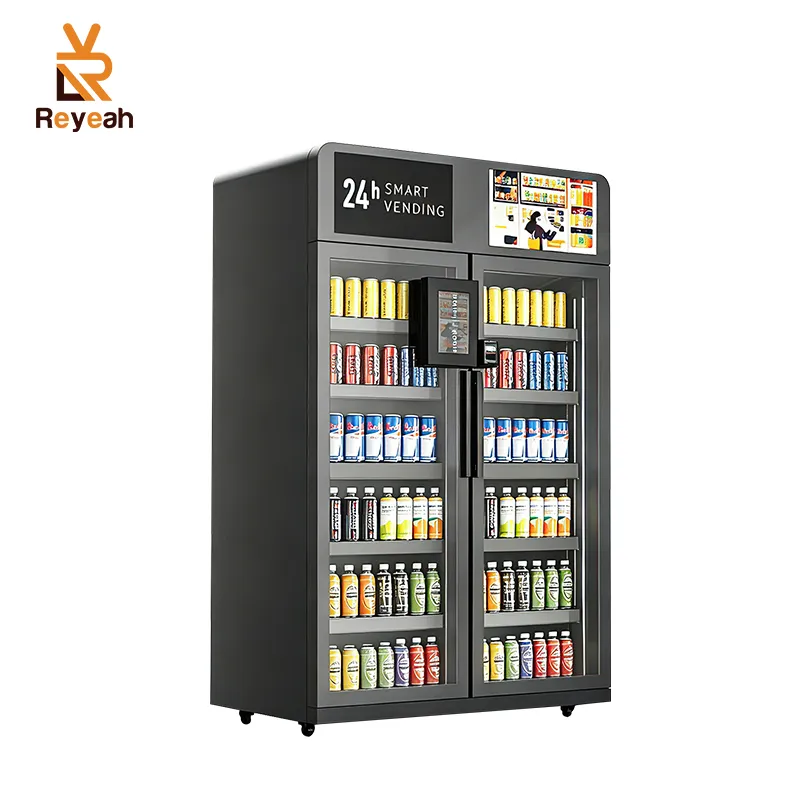
Combines adjustable shelves, 360-degree air-circulation cooling and remote sales, inventory and device-status visibility over 4G, Wi-Fi or wired connections.
View X15 details →Implementation Recommendations for Reliable Scale
Start with a narrow assortment and stable planogram. Capture high-quality product references, calibrate sensors after installation, and define who owns catalog updates. Add difficult packages and broader shopper patterns only after the baseline workflow is reliable.
Treat location operations as part of the system. Restockers should confirm shelf positions, remove obsolete items, record waste and report damage. Customer support should be able to find a session without exposing unnecessary payment or image data. Reviewers need decision guidelines and escalation paths.
Use a staged rollout with version control. When a model, payment setting, shelf layout or hardware component changes, compare performance before and after the change. Keep a small physical-count program even when automated inventory looks stable; independent checks reveal drift that dashboards may hide.
Conclusion: Layered Controls Beat Automation Claims
Unattended retail can reduce theft and stockouts when AI is connected to access, payment, sensing, reconciliation, replenishment and human review. No single camera, scale or accuracy claim is enough. The business result depends on how exceptions are handled and how reliably verified events become inventory actions.
Procurement teams should demand a representative pilot, written data flows, measurable acceptance criteria, failure procedures and clear ownership across the supplier and operator. The strongest solution is not the one that promises zero loss; it is the one that makes uncertainty visible and manageable.
Share your assortment, location, payment flow and service model, then request an unattended retail configuration review with Reyeah.
Request an Unattended Retail Configuration ReviewFrequently Asked Questions
Authoritative Framework Referenced
NIST AI Risk Management Framework (AI RMF 1.0) - voluntary guidance used here for AI governance, measurement, monitoring and human-oversight principles.
