
Latest Vending Machine Technology in 2026: AI Vision, Weight Sensors, IoT and Remote Operations
The latest vending machine technology in 2026 is not a single feature. It is a coordinated operating system that may combine AI vision, weight sensors, digital payments, IoT connectivity, temperature monitoring, remote inventory and role-based access. For B2B buyers, the important question is not whether a supplier uses these labels. It is whether the proposed configuration produces reliable evidence during the exact product, payment, network and replenishment conditions of the planned site.
A practical evaluation therefore connects every technology claim to a test. Computer vision must be checked against real packages and customer actions. Weight events must reconcile with transactions. Payment preauthorizations and reversals must behave correctly. Remote dashboards must show useful, timely information without giving every user excessive access. This guide explains what each layer does, where it can fail and what a buyer should request before approving a pilot.
The latest vending machine technology combines AI vision, weight sensing, connected payments, temperature monitoring and remote operations. Buyers should not evaluate features in isolation. They should test recognition, reconciliation, failure recovery, alerts, permissions and data exports with the exact cabinet, products, payment stack and network planned for deployment.
How the latest vending machine technology works as one system
Modern unattended retail can link a cabinet, sensors, payment terminal, local controller, cloud service and operator dashboard. A customer may unlock a door or begin a session after payment authorization, remove products, return an item, close the door and receive a final charge. The technology stack must convert those physical actions into a transaction that an operator can reconcile.
The value comes from coordination, not from the number of devices installed. A camera without a controlled product model can misclassify packaging changes. A weight sensor without correct shelf mapping can record the wrong item. A connected dashboard without a recovery process can display stale data after an outage. Buyers should require a documented event flow from customer access through settlement and inventory update.
AI vision and product recognition need controlled training
AI vision can help identify which packaged products leave or return to a cabinet. Performance depends on the camera view, lighting, reflections, product orientation, packaging similarity and the quality of the product images used for training. Recognition should never be treated as universally accurate across all assortments or sites.
A supplier demonstration should use the buyer’s intended products, including similar-looking variants and packaging that may change by season or supplier. The test should include normal picks, quick movements, products held together, a returned item and a deliberately misplaced product. The operator should see how low-confidence or conflicting events enter an exception workflow instead of being silently forced into a final result.
The NIST AI Risk Management Framework is voluntary guidance for managing risks and trustworthiness considerations across AI design, use and evaluation. For vending procurement, the practical lesson is to define performance criteria, test conditions, human review and ongoing monitoring before relying on an AI result.
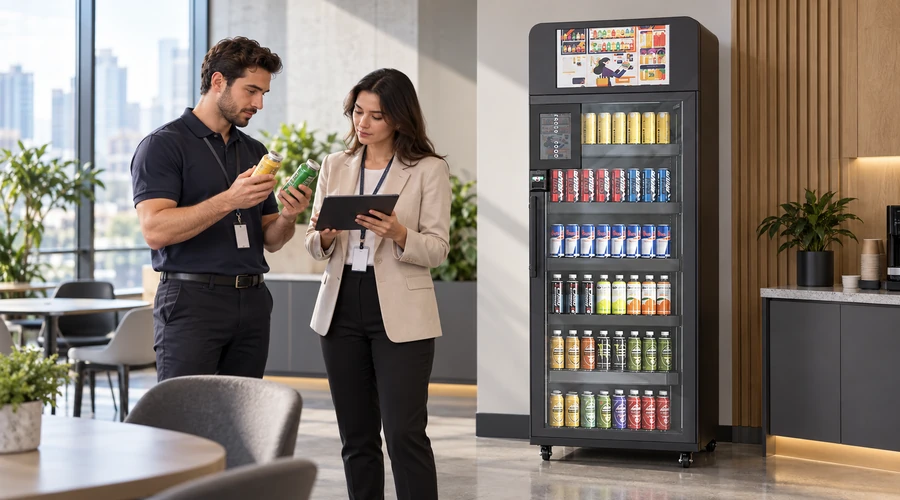
Weight sensors turn shelf movement into evidence
Weight sensing can detect a change on a shelf or product zone, but the change must be interpreted correctly. The system needs a known shelf map, expected item weights, tare values and rules for tolerances. Packaging variation, a product placed on the wrong shelf, a customer touching several items or two customers acting at once can complicate the event.
Buyers should ask how the system calibrates a new assortment and how it detects sensor drift. A good pilot uses known test items, records the expected action and compares the sensor event with the final transaction. The operator should also test a product return, a misplaced item and an inventory correction. Weight data is most useful when it can be reviewed beside payment, door and recognition events rather than as an isolated number.
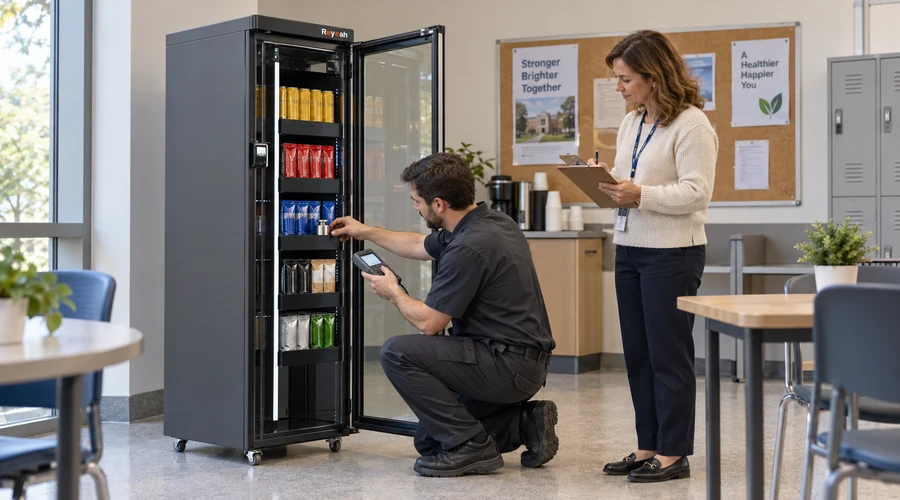
Payment preauthorization and failure recovery matter
Open-door vending often starts with an authorization or preauthorization before the final basket is known. The completed charge may be posted after the door closes and the system resolves the selected items. Buyers need to understand the amount shown to the customer, the timing of completion, how reversals work and what support information is available if the customer questions a transaction.
The exact terminal, acquirer, cards, wallets, network and settlement setup must be tested. Include an approved transaction, a decline, a customer cancellation, a communication timeout, a duplicate tap and a transaction that is interrupted after the door opens. PCI Security Standards Council guidance notes that payment terminals involved in processing account data are in scope for applicable PCI DSS requirements; responsibilities vary with the device and configuration. A supplier claim does not replace the buyer’s own payment and compliance review.
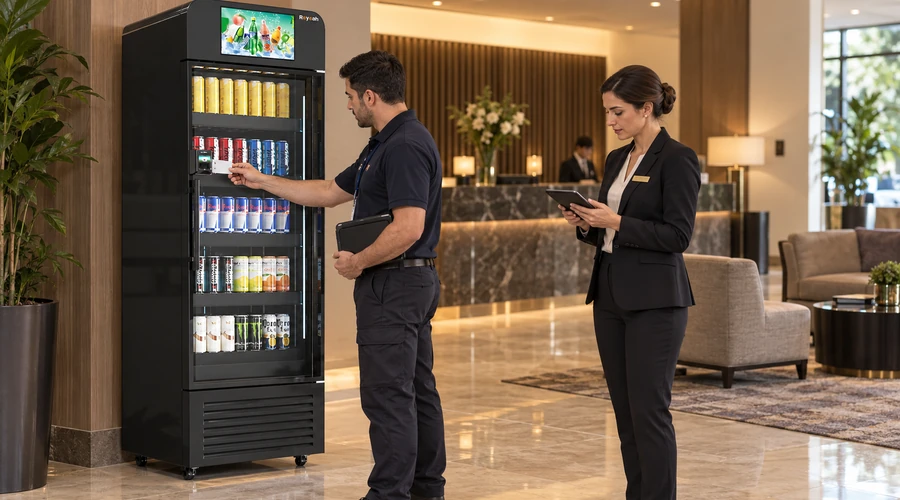
IoT connectivity must include an offline operating plan
IoT connectivity can make inventory, alarms, transactions and device status visible remotely. It can also create dependence on network availability and cloud services. Buyers should identify which functions require a live connection, which actions are allowed offline, how long events can remain queued and what happens when a connection returns.
A controlled pilot should include a planned outage. The team can disconnect the approved network, observe customer-facing behavior, restore the connection and verify whether queued records synchronize once without duplication. Remote recovery should be documented rather than assumed. The NIST IoT core baseline provides a useful procurement reference for device identification, configuration, data protection, logical access, software updates and cybersecurity-state awareness.
Temperature alarms support a process, not a guarantee
Refrigerated vending needs a defined temperature process for the intended assortment. Operators should know where sensors are located, how often readings are recorded, which thresholds trigger an alert and who responds. A dashboard reading is not a substitute for product-specific food-safety responsibilities or applicable local rules.
During a pilot, compare cabinet readings with an independent, suitable instrument for an agreed period. Test a door-left-open condition, loss of power and alert delivery to the responsible person. Define how affected products are evaluated and documented. Technology can make deviations visible, but the operator still needs a written escalation and disposition process.
Remote inventory, accounts and APIs need governance
Remote operations can reduce unnecessary site visits by showing inventory, sales, device alarms and replenishment needs. The information is valuable only when it is current, traceable and assigned to the right users. A route operator, finance reviewer, support technician and administrator do not need the same permissions.
Ask the supplier to demonstrate role-based access, account creation and removal, audit logs, export fields and the API scope included in the quotation. Confirm rate limits, authentication, error handling and data ownership before connecting the vending platform to another system. Use test accounts and sample records instead of granting production access during an early demonstration.
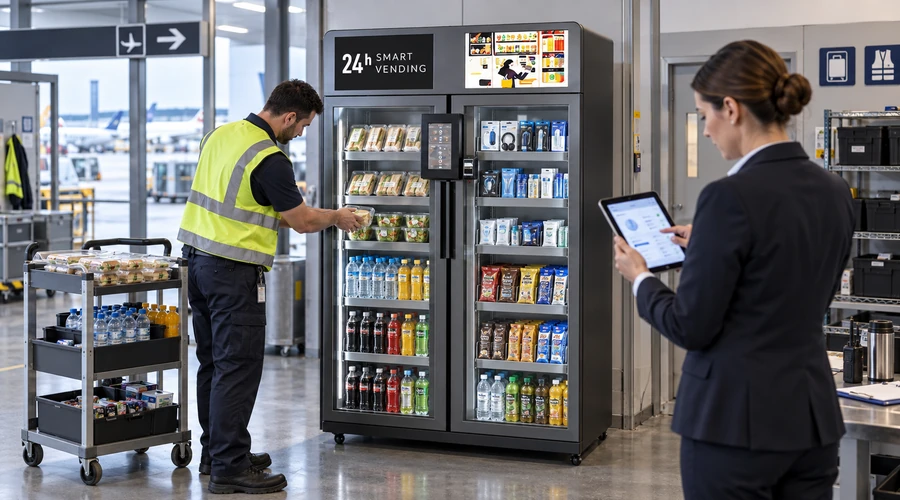
Buyer demonstration checklist for 2026 vending technology
A structured demonstration helps a buyer compare evidence instead of presentations. Use the same assortment, actions and acceptance criteria across shortlisted configurations. Record every exception, the information available to support staff and whether the expected recovery was completed.
| Technology layer | Evidence to request | Pilot test |
|---|---|---|
| AI vision | Recognition accuracy by SKU, package variation, lighting and occlusion | Run a controlled pick-and-return test with known products and review exception handling |
| Weight sensing | Shelf mapping, tare values, drift, misplaced items and simultaneous picks | Calibrate with approved test items and reconcile sensor events with transaction records |
| Payment | Preauthorization, completion, reversal, refund and interrupted sessions | Test the exact terminal, acquirer, cards and wallets intended for deployment |
| Connectivity | Online functions, offline behavior, recovery and queued events | Disconnect the approved network in a pilot and document what continues, stops and resynchronizes |
| Temperature | Sensor location, alert thresholds, history and escalation ownership | Compare cabinet records with an independent instrument during an agreed test window |
| Remote operations | Inventory, alarms, user roles, audit logs, exports and APIs | Demonstrate each buyer role with test accounts and sample data |
Reyeah cabinet formats to evaluate
The right cabinet depends on the assortment, temperature range, location, capacity and customer flow. X12, X13, X14 and X15 provide four different formats for project comparison. Buyers should confirm the quoted sensors, payment terminal, cooling, software and integrations for the selected configuration rather than assuming that every feature is included in every model.
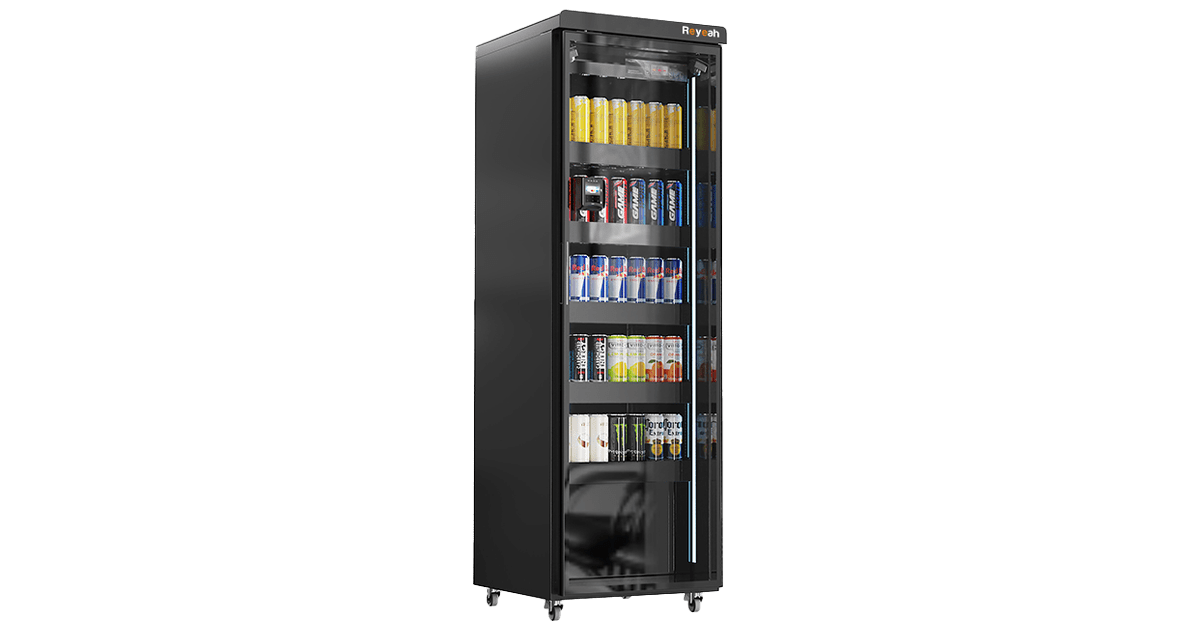
X12 Industrial Smart Vending Machine
A compact cabinet format to evaluate for controlled access, documented workflows and site-specific payment integration.
View details X12 →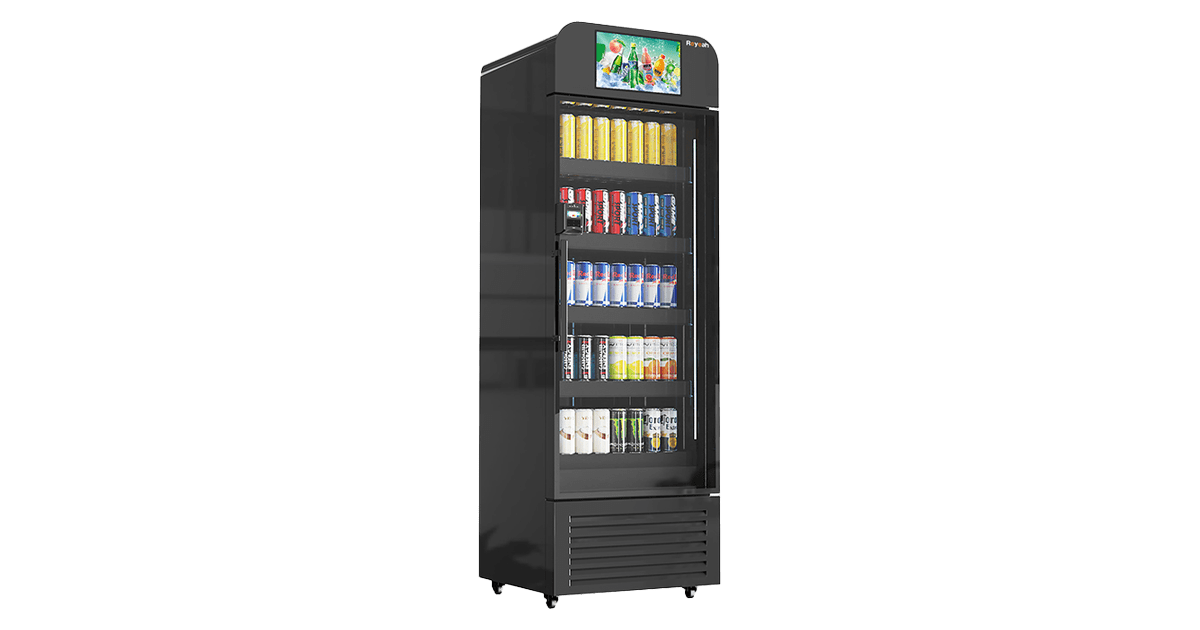
X13 Advertising Vending Machine
A display-led format to evaluate where customer communication and a visible media surface are part of the site brief.
View details X13 →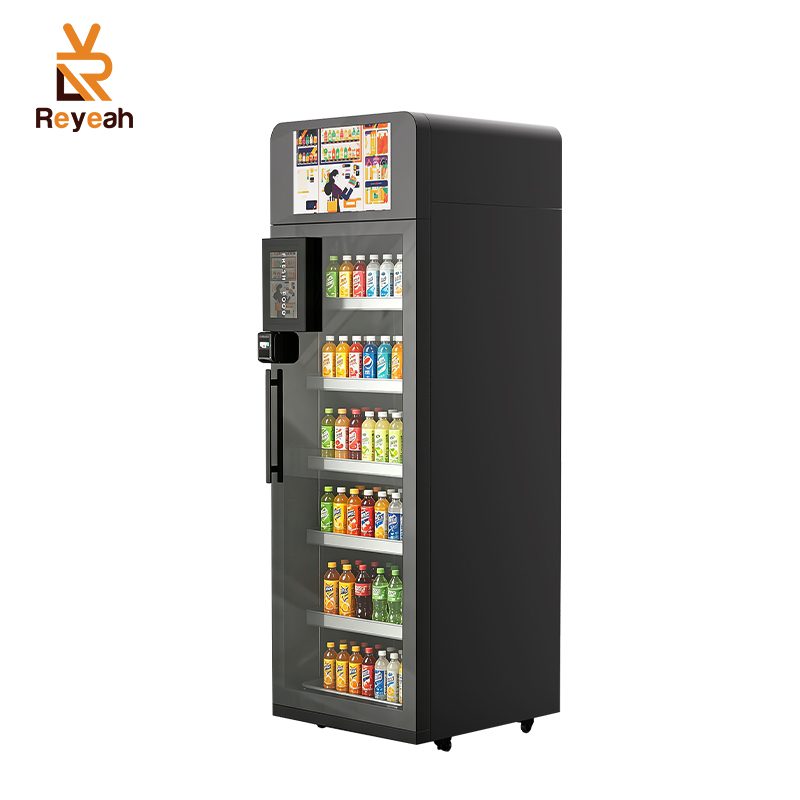
X14 AI Smart Cooler Vending Machine
A refrigerated smart-cooler format to evaluate for chilled assortments, temperature processes and replenishment workflows.
View details X14 →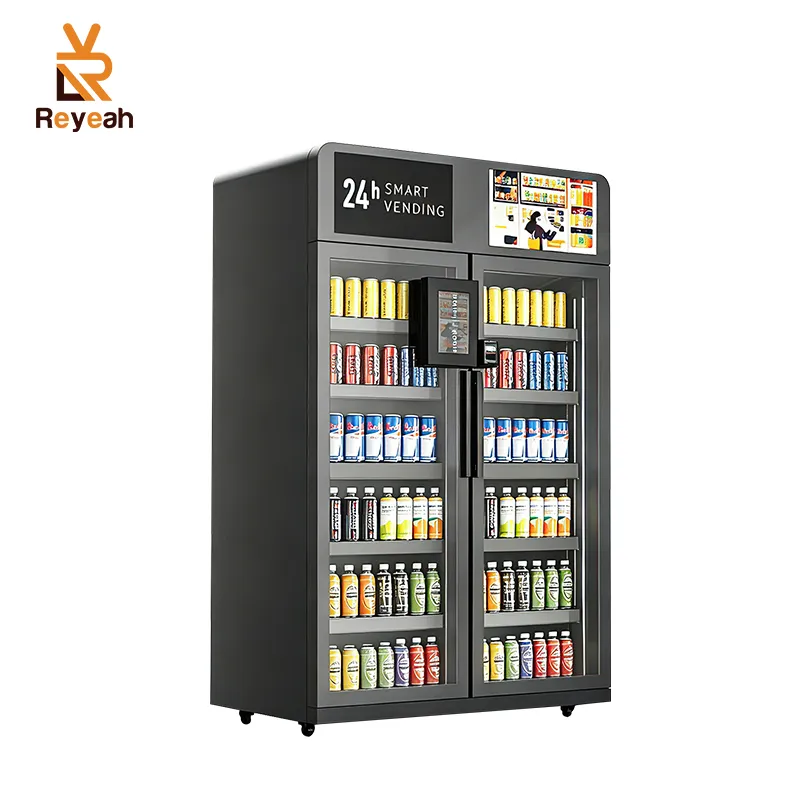
X15 Dual Door Smart Vending Machine
A dual-door format to evaluate where assortment breadth, capacity and service access are important to the project.
View details X15 →Conclusion: validate technology through a controlled pilot
The latest vending machine technology can connect recognition, sensing, payments, temperature and remote operations, but a feature list is not proof of operational fit. Buyers should define the exact products, customer journey, network, payment stack, user roles and exception process, then verify them in a controlled pilot.
A strong procurement decision is based on reconciliation records, alert tests, recovery behavior, access controls and documented responsibilities. Contact Reyeah with the intended site, assortment and operating workflow to review a suitable configuration and pilot checklist for the latest vending machine technology.
Contact Reyeah about the latest vending machine technology for your site
Contact Reyeah →