
How Micro Market Kiosks That Keep Food Fresh Control Temperature, Expiry and Replenishment
Micro market kiosks that keep food fresh need an operating system around the cabinet, not only a refrigeration claim. Operators must choose chilled SKUs that fit the site, record temperatures, assign food-safety responsibilities, rotate stock by FEFO, act on expiry alerts, clean the touch and product areas, verify packaging recognition and measure waste. This guide gives a practical B2B framework without treating alarms or software as a substitute for local food-safety duties.
Choose chilled SKUs for micro market kiosks that keep food fresh
Start with the product, not the machine. Map sealed chilled drinks, yoghurt, salads, sandwiches and other fresh foods to the proposed temperature range, pack geometry, allergen information, date marking and expected dwell time. Keep ambient snacks and non-food items in separate planogram zones. A product that fits the shelf may still be unsuitable if the route, opening time, shelf life or local handling procedure cannot support it.
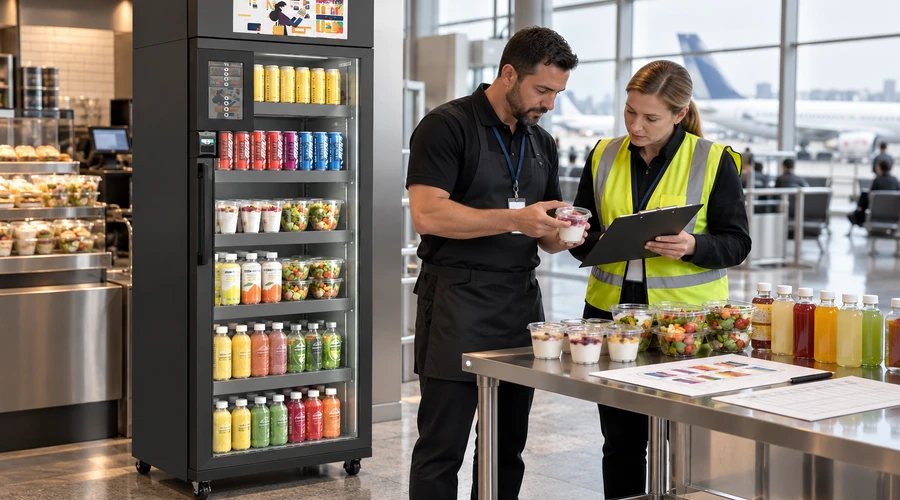
Build temperature logs, alarms and response ownership
Define what is measured, where the probe sits, how often the reading is recorded and who responds to an exception. A dashboard alarm can flag a possible problem; it cannot prove that every product remained safe. Document a response path for power loss, door left open, sensor fault, network outage and a reading outside the operator’s approved range. Retain calibration, maintenance and corrective-action records where required by the local food business plan.
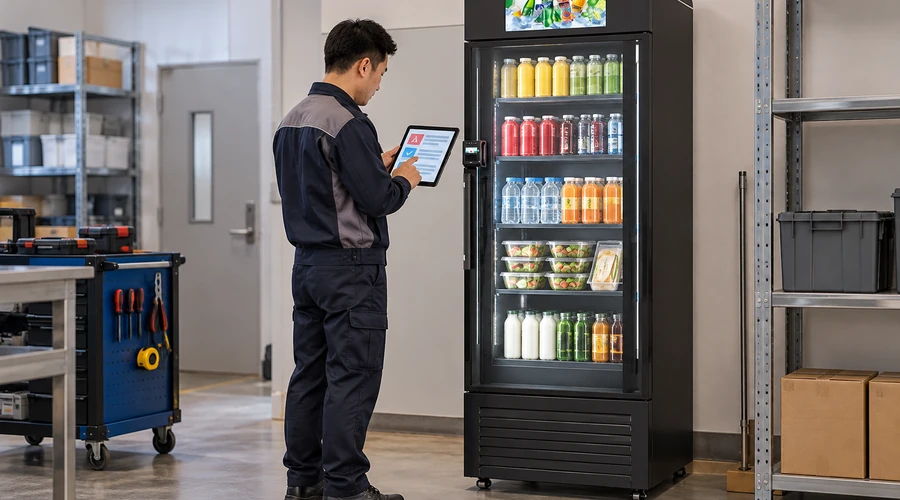
Define food-safety, labelling and cleaning responsibilities
The cabinet supplier may provide hardware, telemetry or a control interface, but the operator still needs a local procedure for receiving, storage, cleaning, date checks, allergen information, withdrawal and disposal. EU food-hygiene and labelling sources are useful references, yet national rules and the exact food category can change the obligation. Use the responsible authority and a qualified food-safety adviser for the final interpretation.
Run FEFO replenishment, expiry alerts and packaging checks
Use first-expiry-first-out (FEFO) as a route discipline: record lot or date information when stock arrives, place the nearest date in the next pick position and remove products before the defined action point. Expiry alerts should create a task, not an automatic claim that a product is saleable. Packaging recognition can help reconcile a SKU, but verify pack changes, glare, occlusion, look-alike products and manual exceptions. The operator remains responsible for the decision to sell, withdraw or dispose.
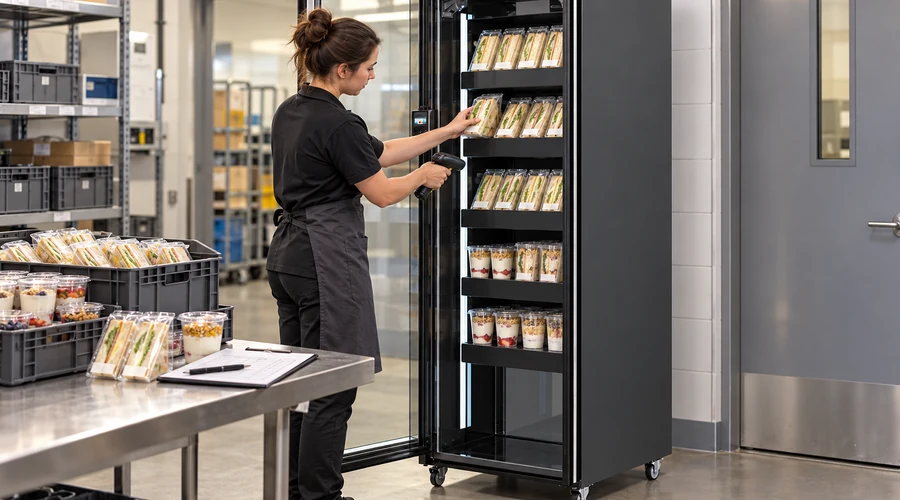
Track waste and use a pilot QA checklist
Create a cleaning schedule for handles, doors, shelves, seals, payment touchpoints and any food-contact surface. Record who cleaned, what was used and what corrective action followed a failed check. Track waste by reason: expired, damaged, temperature excursion, returned, packaging mismatch or unaccounted variance. This separates a cold-chain issue from an assortment or route issue and gives the pilot a fact base for changes.

Reyeah products as quote and pilot candidates
Use these models as quote and pilot candidates; verify the exact configuration, temperature controls, payment flow and local service scope in writing.
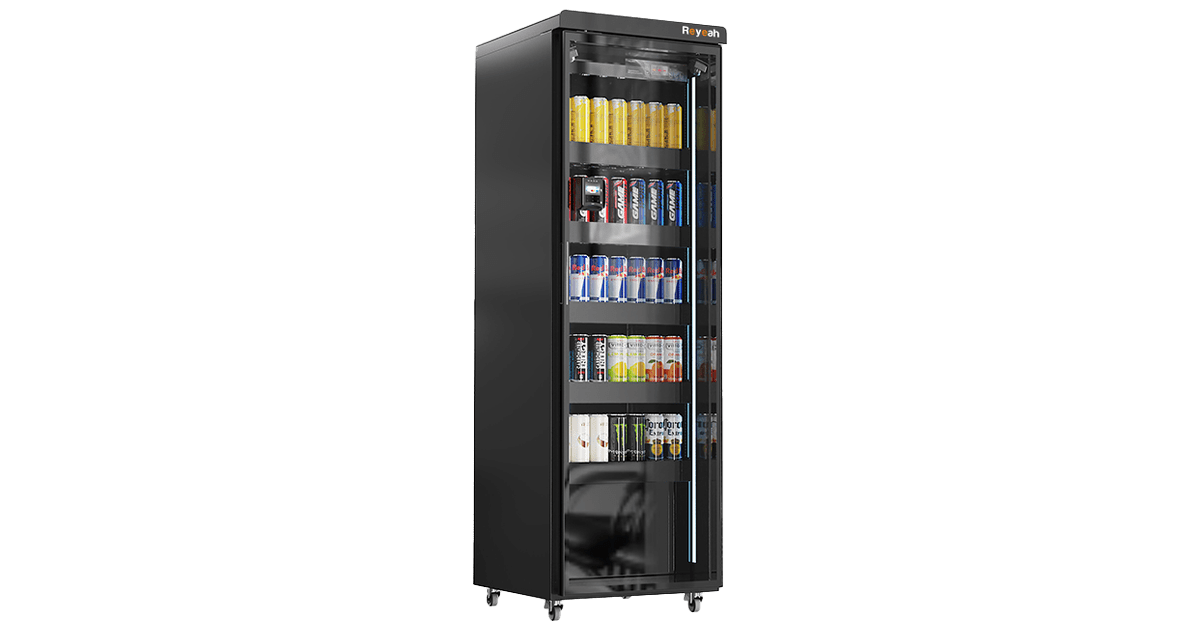
Candidate for ambient or controlled-access assortments; verify temperature, payment and service scope.
View details →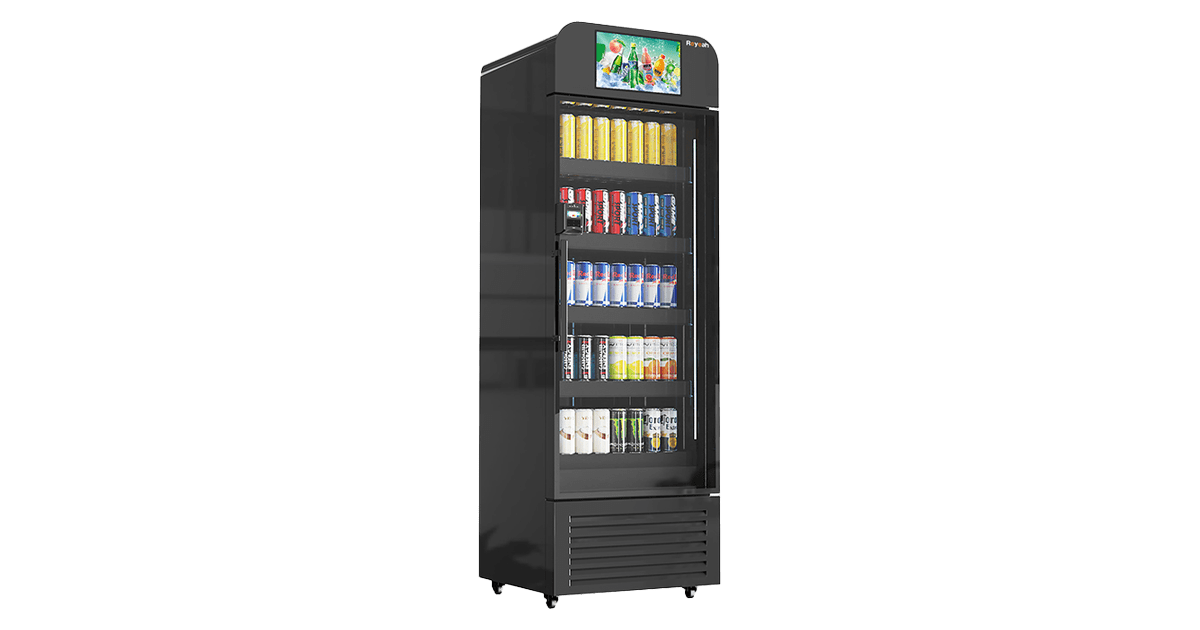
Candidate where display-led communication supports the operating plan; verify payments, data and service scope.
View details →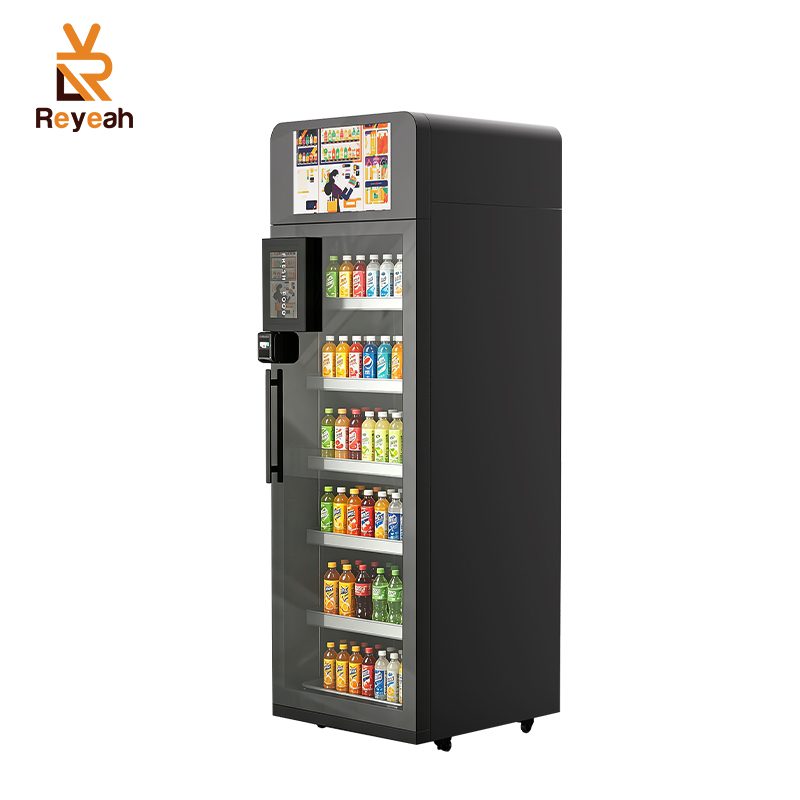
Candidate for sealed chilled products; verify temperature controls, cleaning ownership and recognition workflow.
View details →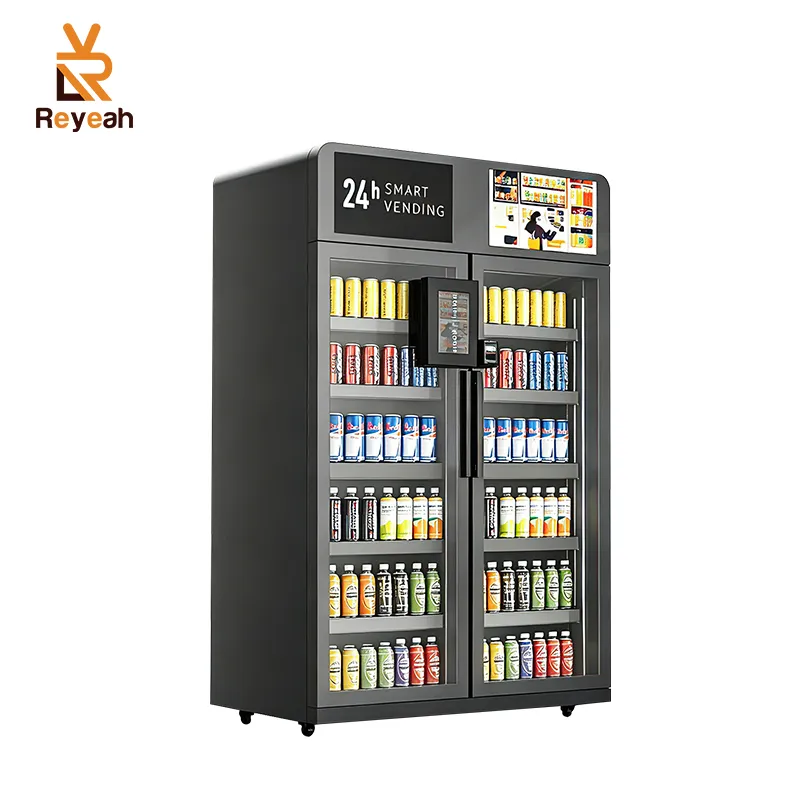
Candidate for broader assortments; verify layout, temperature zones, payment flow and acceptance criteria.
View details →| Control | What to record | QA question |
|---|---|---|
| Chilled SKU fit | Pack size, temperature assumption, date mark, allergen and dwell time | Does the product and route fit the approved handling plan? |
| Temperature | Probe location, reading time, alarm recipient, action log and calibration | Who responds when a reading or sensor is abnormal? |
| Food responsibility | Receiving, storage, cleaning, labels, withdrawal and disposal owner | Which local procedure and authority define the decision? |
| FEFO and expiry | Lot/date capture, pick order, alert task and removal proof | Can the operator show why the next product was selected? |
| Packaging recognition | SKU image/catalogue, pack-change review and manual override | How are glare, occlusion and look-alike packs handled? |
| Waste | Reason code, quantity, time, disposition and reconciliation | Can waste be separated from stock or route variance? |
| Pilot gate | Test case, evidence, owner, threshold and decision date | What evidence permits the next site or corrective action? |
| Pilot test | Evidence to retain | Decision use |
|---|---|---|
| Temperature and alarm | Log export, sensor event, response ticket and corrective action | Check whether the response process works under a controlled exception |
| FEFO and expiry | Pick list, date-marked stock, alert task and removal record | Verify rotation and safe withdrawal workflow |
| Packaging and labels | Recognition result, catalogue version, photo review and override | Separate software assistance from human food-safety judgement |
| Cleaning and hygiene | Schedule, sign-off, failed-check action and supplies record | Confirm routine ownership and auditability |
| Waste and reconciliation | Reason-coded waste, stock count, sales and refund records | Decide whether loss is caused by product, route or process |
| End-to-end pilot | Issue log, support response, export and written gate | Go, fix or stop the next deployment |
Conclusion and CTA
Share your chilled assortment, temperature-control plan, expiry workflow and pilot QA requirements so the proposed configuration can be reviewed in writing.
Contact Reyeah