
Top 5 Smart Vending Machine Suppliers in Australia: 2026 Buyer’s White Paper
For an Australian operator, a smart vending machine is not just a cabinet with a card reader. It is a food-retail installation that may combine refrigeration, telemetry, payment processing, remote software, customer access and local service. This white paper compares five suppliers worth evaluating, without presenting the order as a ranking. The buyer’s job is to test evidence, configuration and ownership cost for the exact site and product mix.
What a smart vending machine supplier must prove in Australia
The comparison starts with the evidence a supplier must provide for the proposed Australian site, rather than with an unverified ranking.
Start with site and assortment evidence
Record the site address, access hours, power, network coverage, security controls, audience and product categories before comparing models. Chilled or ready-to-eat products require a documented temperature and cleaning plan; ambient packaged snacks have a different replenishment and shelf-life profile. For remote or regional sites, the service route and spare-parts plan can matter more than a screen.
Use a weighted buyer scorecard
A practical scorecard should separate evidence for product fit, payment methods, open-door or dispense workflow, software exports, food and electrical documentation, installation, warranty, service response, data ownership and exit terms. Do not turn marketing language such as “AI” or “24/7” into a guaranteed performance metric. Require a written test plan and acceptance criteria.
Five suppliers worth evaluating
These five entries are suppliers worth evaluating, not a verified ranking. Each summary separates public claims from what a buyer still needs to confirm.
Smart Vending Machines Australia
The Melbourne-based supplier describes smart machines that can accept cash, cashless and mobile payments and be monitored remotely for inventory, stock and security. Buyers should confirm the exact model, payment acquirer, installation geography, food handling scope, software export and service SLA in writing.
M Series / All Round Vending
M Series presents machines for Australian businesses with cash and cashless options, installation, maintenance, remote inventory monitoring and technical support. Treat published warranty and support language as a supplier statement and confirm which parts, labour regions, delivery partners, response times and models apply.
NexVndr
NexVndr describes supply and installation of snack, beverage, combo and smart-fridge equipment, cashless setup, site integration and cloud-connected monitoring of sales, stock and machine health. Ask for network architecture, data retention, payment provider, regional technicians and recovery during an outage.
VendStar
VendStar describes a managed service with installation, replenishment, remote inventory monitoring and support for cash, cards, mobile wallets and QR payments. These claims are useful evaluation prompts, not guaranteed outcomes. Confirm hardware ownership, pricing authority, reporting, cleaning, refunds and contract exit.
AusVend
AusVend describes a nationwide vending and unattended-retail range including vending, micro markets and smart fridges. Its public process covers assessment, solution design, installation, initial stocking, payment configuration and ongoing replenishment. Confirm contracting entity, state coverage, brands, service schedule, data access and local food-business responsibilities.
Compare capability, compliance and economics
| Criterion | What to compare | Evidence to request |
|---|---|---|
| Equipment and assortment | Snack, beverage, combo, chilled, fresh or specialty products | Planogram, temperature range and SKU assumptions |
| Payment and customer flow | Cash, EFTPOS, cards, wallets, QR, dispense or open-door preauthorisation | Acquirer, settlement, refunds, failure and offline tests |
| Software and data | Inventory, sales, health alerts, pricing, exports and permissions | Sample reports, export rights, retention and ownership |
| Compliance evidence | Food labelling, temperature, cleaning, electrical and electronic evidence as applicable | Exact model and state document set |
| Service and logistics | Delivery, installation, regional technicians, spares and replenishment | SLA, escalation, travel charges and continuity |
| Economics | Purchase or managed model, fees, energy, labour and exit cost | Five-year TCO model with assumptions and sensitivity |
Australian food, electrical and privacy checks
Australian food sales sit within the Australia New Zealand Food Standards Code. FSANZ identifies food-safety, labelling and food-business notification requirements, while the exact enforcement pathway can involve a state or territory agency or local council. A supplier should provide a practical document pack for the proposed food categories, but the operator remains responsible for checking the local obligation. A marketing page is not a food-safety approval.
For electrical or connected equipment, ACMA explains that the Regulatory Compliance Mark is used to show that a product is safe to supply to the Australian market and that the EESS is managed by participating jurisdictions. Ask for exact declarations, responsible-supplier details and records for the supplied configuration; do not assume a mark on one component covers the complete installation.
If cameras, customer accounts, loyalty identifiers or demographic analytics are used, review the Australian Privacy Principles with the privacy owner. OAIC describes the APPs as technology-neutral principles governing collection, use, disclosure, security and access. The supplier should state what is captured, where it is stored, retention, access roles and deletion workflow. This is procurement guidance, not legal advice.
Cashless, open-door and software due diligence
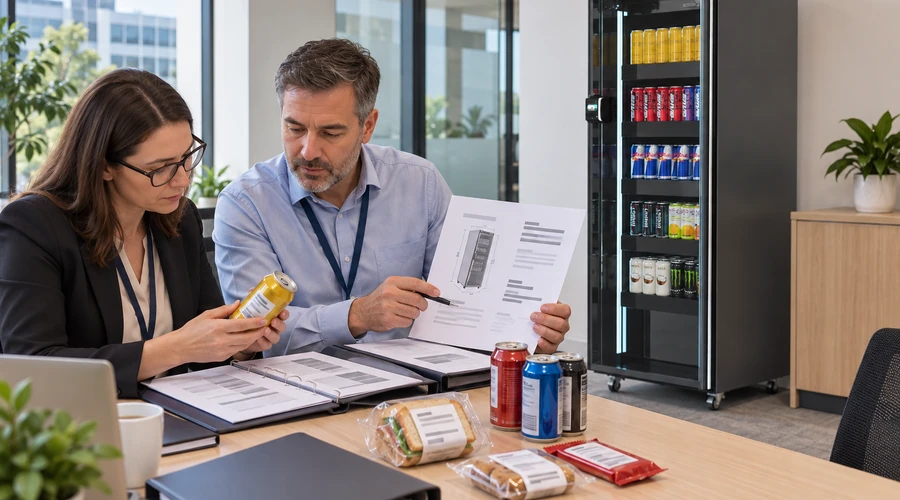
A cashless proposal should map the whole transaction, not just list Visa or Apple Pay. Test card and wallet acceptance, preauthorisation, final capture, decline, reversal, refund, receipt, duplicate prevention and reconciliation. For open-door shopping, observe unlock, pick-up, put-back, close and exception review with agreed test products. For conventional dispense, test a failed vend, jam, refund and inventory event.
Software evidence should include a dashboard view, user roles, export format, timestamps, machine-health events and the process for a software update. Ask how the system behaves during a network outage and how queued events are reconciled. “Cloud-connected” does not by itself define uptime, offline mode, cybersecurity controls or data ownership.
Logistics, support and total cost of ownership
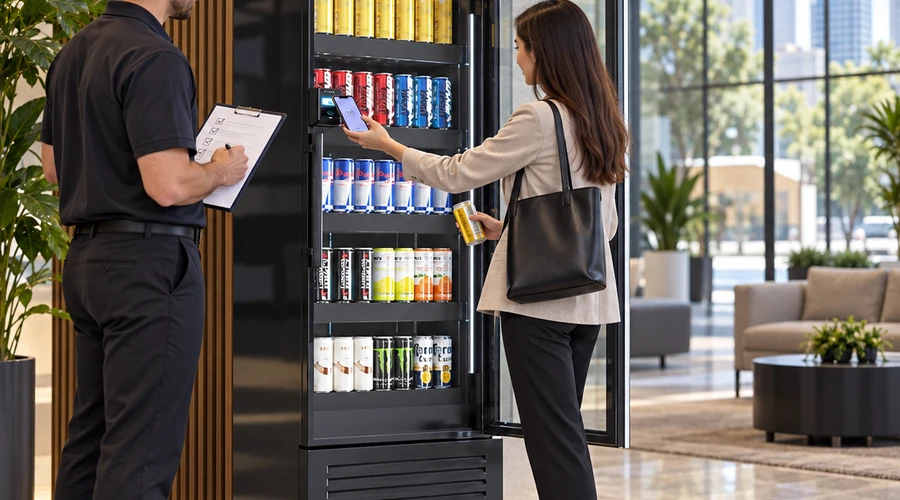
Total cost of ownership should include equipment, freight, installation, site works, payment hardware, transaction fees, software, SIM or network, electricity, cleaning, replenishment labour, warranty exclusions, spare parts, travel, insurance and end-of-term removal. Compare like-for-like assumptions rather than a headline “free” or “from” price.
For regional Australia, request a map of service routes, escalation contacts and critical spares. A remote alert is useful only if someone can respond. Put response targets, planned maintenance, training, refund handling, data export and exit rights in the contract.
Pilot and contract checklist
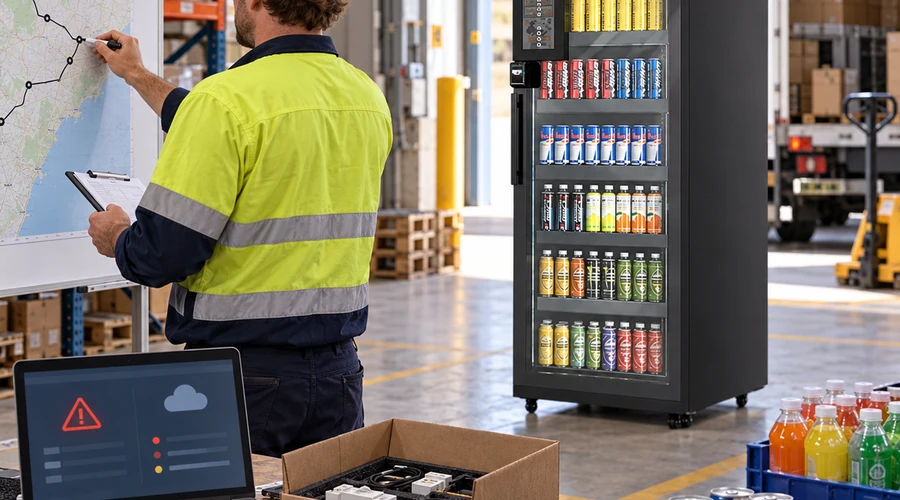
A defensible pilot uses a limited site and a written test matrix. Define products, temperatures, payment methods, network conditions, access rules, refund cases, inventory reconciliation, privacy controls, cleaning, support contacts and acceptance thresholds before deployment. Record baseline assumptions and unresolved questions.
The pilot should produce evidence a buyer can audit: transaction logs, stock movements, exception records, service tickets, temperature records where applicable, and an owner for each issue. A successful demonstration is not proof of universal performance; it is a basis for a documented go/no-go decision.

Reyeah products as quote and pilot candidates
These are quote and pilot candidates, not a ranking or performance promise. Verify final scope, local obligations, payment integration, service coverage and product fit with Reyeah.
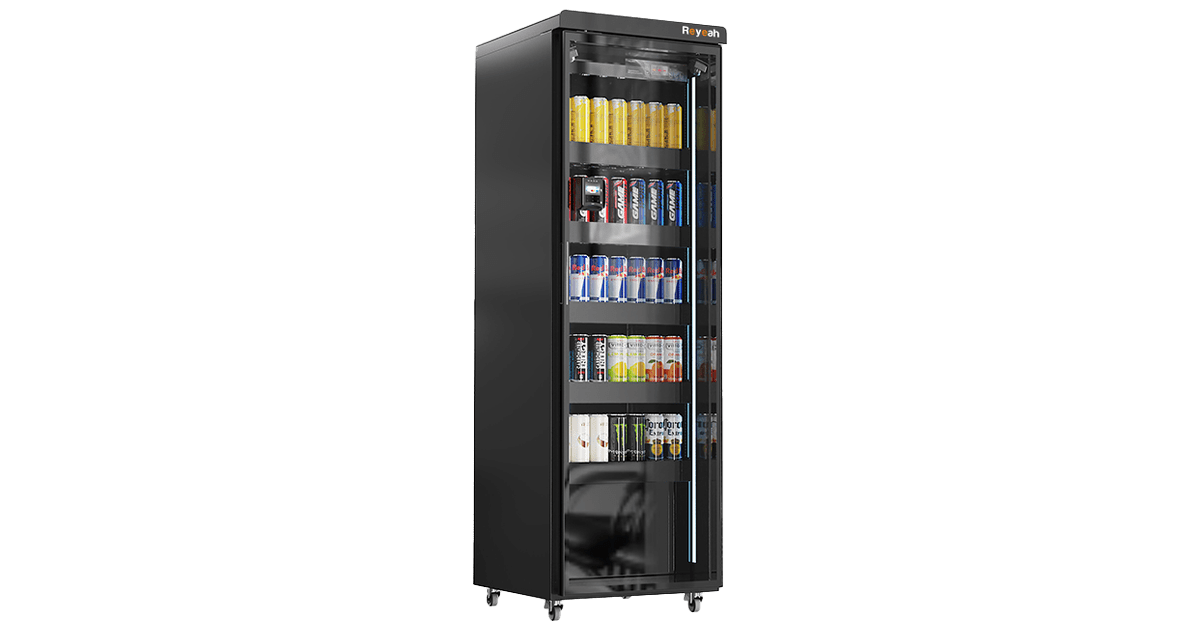
Quote candidate for an industrial smart vending configuration; confirm payment, software, temperature and local service scope.
View details →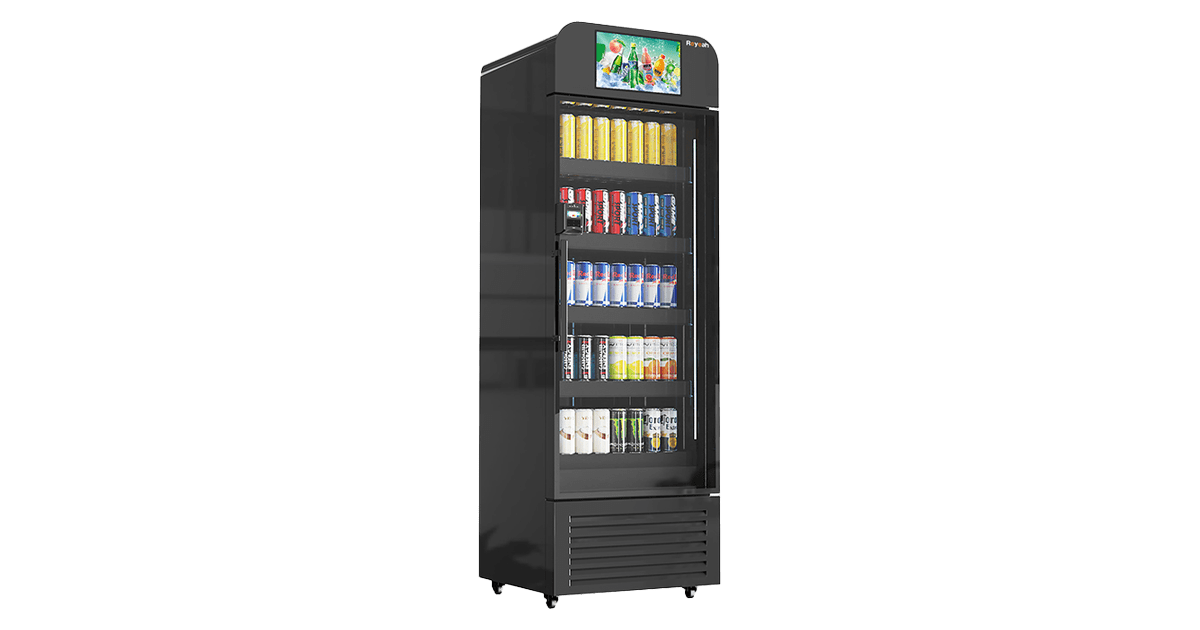
Quote candidate when an advertising screen or branded customer interface is relevant; verify commercial and data scope.
View details →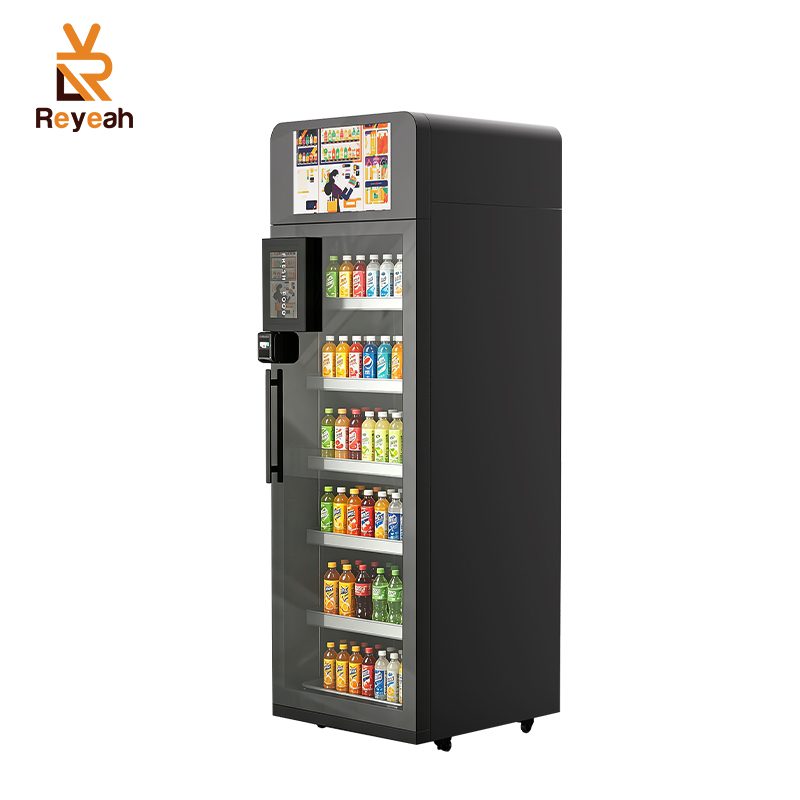
Quote candidate for chilled or AI-oriented evaluation; confirm recognition, temperature and privacy evidence for the final configuration.
View details →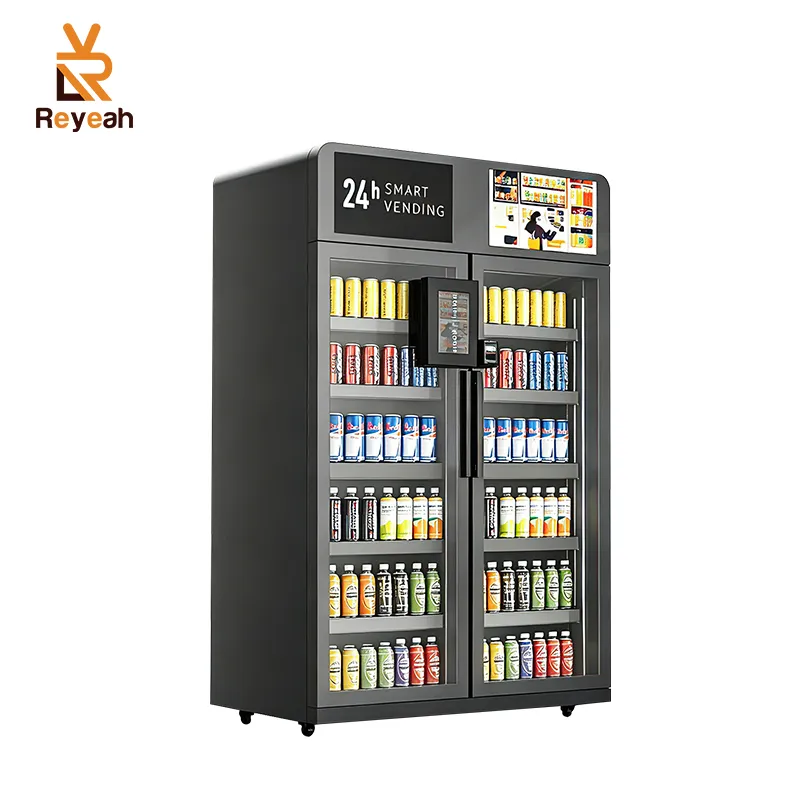
Quote candidate for a dual-door or higher-assortment discussion; verify layout, payment, service and acceptance criteria.
View details →Conclusion and CTA
If you are comparing a smart vending machine for an Australian site, send Reyeah the location brief, product mix, payment requirements, network plan and pilot questions so the proposed configuration can be reviewed in writing.
Contact Reyeah